- Vietnam’s weather system in plain English
- Why Vietnam doesn’t have one “best season”
- What “rainy season” usually feels like
- Dry season vs rainy season by region
- Northern Vietnam (Hanoi / Ha Long / Sapa & mountains)
- Central Vietnam (Hoi An / Da Nang / Hue, central coast)
- Southern Vietnam (Ho Chi Minh City / Mekong / Phu Quoc)
- Month-by-month “where to go” planner
- Costs and crowds: how weather affects your budget
- Peak demand (higher prices + fuller hotels)
- Better-value travel (more deals)
- What to pack: dry season vs rainy season
- Dry-season essentials
- Rainy-season essentials
- Common planning mistakes (quick warning box)
- Optional: FtripVietnam services section
- FAQs
- Conclusion
Vietnam is a year-round destination, but understanding the difference between the dry season and rainy season can make a big difference in how you plan your trip. From the cool, misty mountains of the North to the sunny beaches of Central Vietnam and the tropical rhythm of the South, weather patterns vary significantly by region. This means there is no single “perfect” month for every traveler, only the best time based on where you want to go and what kind of experience you are looking for.
In this guide, FtripVietnam shares a practical weather overview to help travelers compare Vietnam’s dry season and rainy season with more confidence. Drawing on local travel knowledge and real destination experience, we will explain when the weather is most comfortable, when rainfall is more likely, and how each season can affect activities such as trekking, beach vacations, city sightseeing, cruises, and cultural tours. Whether you are visiting Vietnam for the first time or planning a more customized itinerary, knowing the seasonal differences will help you choose the right route, pack properly, and enjoy a smoother journey.
Vietnam is long enough that “rainy season” can be true in one region and totally wrong in another. The smartest trips don’t chase one perfect month, they match regions to seasons so you get good weather where you’ll actually be.
Vietnam’s weather system in plain English
Why Vietnam doesn’t have one “best season”
Vietnam spans multiple climate zones (North/Central/South) with different monsoon influences, so a one-month “best time” answer is usually misleading. Research on Vietnam’s rainy-season onset highlights how north and south commonly shift into wetter conditions around May, while central zones often see rainy-season onset later (around late August), one reason central-coast planning feels different.
What “rainy season” usually feels like
- Not constant rain: In many places (especially the south), rain can be intense but short, often later in the day.
- The real impact is on boats + visibility: rain and wind can disrupt island tours, cruises, and outdoor photography more than city sightseeing.
Dry season vs rainy season by region
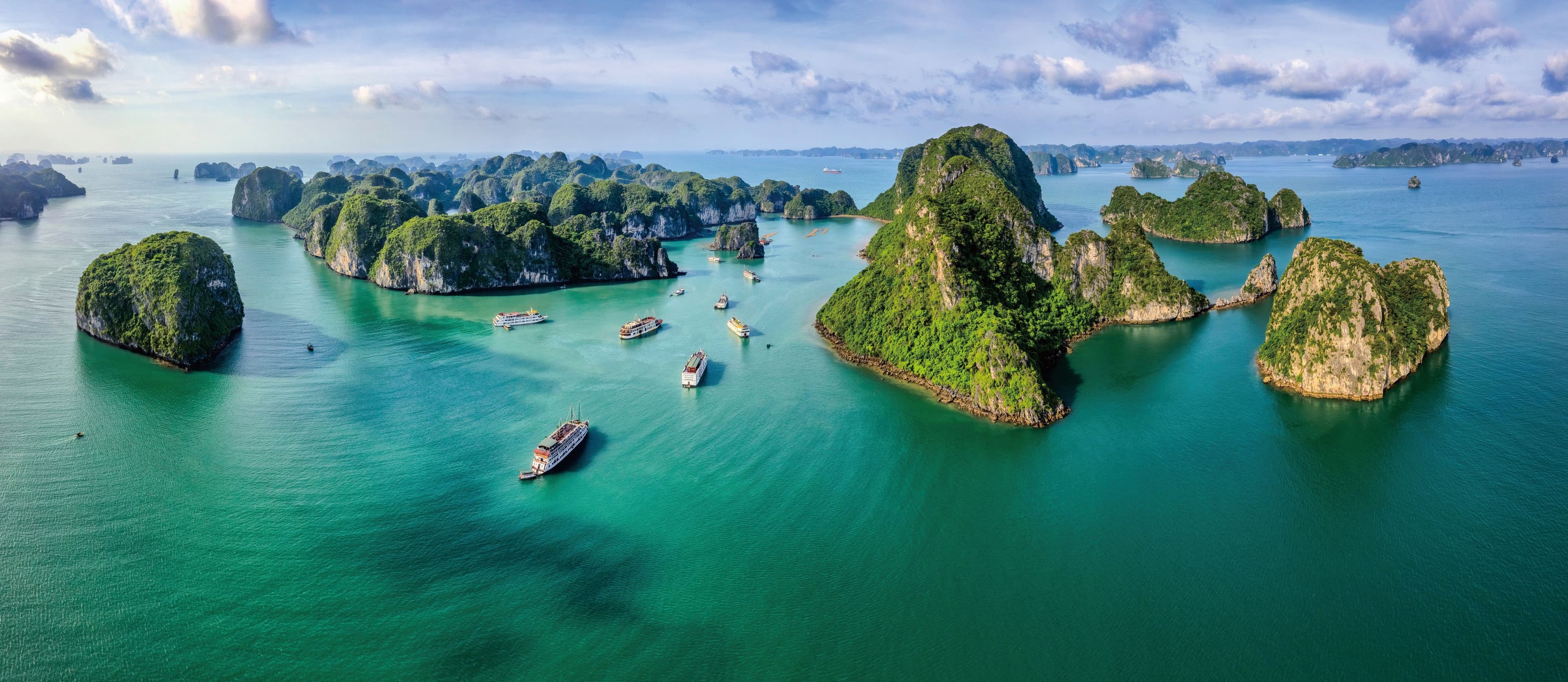
Northern Vietnam (Hanoi / Ha Long / Sapa & mountains)
Typical pattern
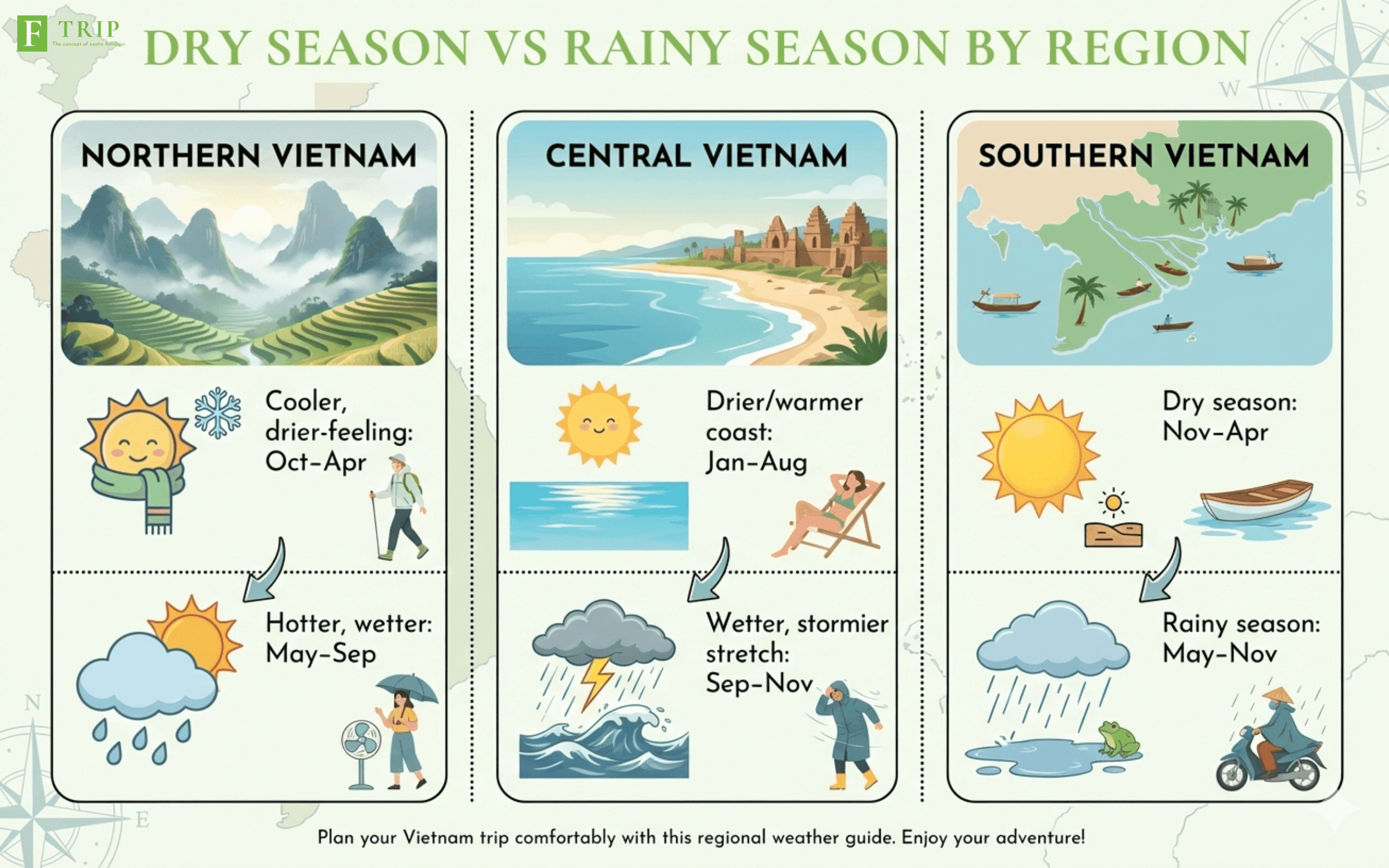
- Cooler, drier-feeling: roughly Oct to Apr (comfortable for walking + mountain views).
- Hotter, wetter: roughly May to Sep, with heavier rain commonly peaking mid-summer.
Best-fit activities
- Oct–Apr: city walks, mountain treks, clearer viewpoints
- May–Sep: greener landscapes + fewer crowds (plan flexible mornings)
Central Vietnam (Hoi An / Da Nang / Hue, central coast)
Typical pattern
- Drier/warmer coast often discussed as Jan - Aug (good for beach plans).
- Wetter, stormier stretch commonly flagged Sep - Nov (plan backup days).
Why this matters Central Vietnam’s late-year rain can be more disruptive for Old Town strolls, beach days, and intercity transfers, so build flexibility if your trip lands in Sep–Nov.
Southern Vietnam (Ho Chi Minh City / Mekong / Phu Quoc)
Typical pattern
- Dry season: commonly Nov - Apr (easier logistics, sunnier feel).
- Rainy season: commonly May - Nov (lush, humid, with frequent showers).
Best-fit activities
- Nov–Apr: city exploring, Mekong day trips, island time
- May–Nov: great value + tropical vibe (carry rain gear, keep outdoor plans flexible)
Read more: Northern Vietnam Best Time to Visit for Cool Weather and Scenic Landscapes
Month-by-month “where to go” planner
Use this as the fast way to match your travel month → the best regions.
- Nov - Feb: Strong for south and many north highlights; central coast can be mixed depending on your exact weeks.
- Mar - Apr: Often one of the best “mix-everything” windows—many routes work well.
- May - Aug: South turns wet; north is hot/rainy; central coast often remains a better bet for beach (region-match your itinerary).
- Sep - Oct: Watch central weather carefully; if you’re set on Vietnam, choose regions strategically and plan indoor alternatives.
- Nov - Dec: Weather improves across many areas; demand rises—book earlier.

Costs and crowds: how weather affects your budget
Peak demand (higher prices + fuller hotels)
Often overlaps with better weather windows in many regions (commonly Nov–Apr). Expect tighter availability around:
- Christmas/New Year
- Tet (Lunar New Year) travel weeks (domestic travel surges, some businesses reduce hours)
Better-value travel (more deals)
Often aligns with wetter months (commonly from May to Oct in many places), with the tradeoff of more weather variability.
Smart-value timing: shoulder periods (often from Mar to Apr or late Aug / early Sep, route-dependent) can balance price + weather.
Read more: When Is Best Time to Visit Vietnam Based on Weather and Travel Style?
What to pack: dry season vs rainy season
Dry-season essentials
- Breathable outfits + sun protection (hat, sunscreen)
- Comfortable walking shoes
- Light layer for evenings (especially in the north)
Rainy-season essentials
- Light rain jacket/poncho
- Quick-dry clothes
- Sandals with grip
- Waterproof phone pouch + small umbrella
Pro tip: keep one “flex afternoon” open every few days—your trip feels calmer when the weather doesn’t break the schedule.
Common planning mistakes (quick warning box)
- Planning “Vietnam in one month” without splitting north/central/south
- Locking in central-coast beach days in Sep - Nov with no backups
- Scheduling boat-heavy days with zero flexibility in wetter periods
Optional: FtripVietnam services section
If you want the easiest weather planning with the least stress, FtripVietnam can:
- Match your route to the best conditions by month (north/central/south season-smart design)
- Build a flexible day structure (outdoor mornings + indoor backups)
- Recommend the right experiences at the right time (cruises, beach days, mountain views, festival nights)
- Coordinate transport and timing so weather disruptions don’t domino your itinerary
FAQs
When is the rainy season in Vietnam? It depends on region: the south is often wetter May–Nov, the north is commonly wetter from May to Sep, and the central coast often sees a wetter/stormier stretch around Sep to Nov.
Is Vietnam’s rainy season all-day rain? Often no, many places get short, intense showers. The bigger issue is timing (boats, visibility, outdoor plans), not constant rain.
Which part of Vietnam is best to visit in October? October can work well in the north (cooler feel returning) and sometimes parts of the south, but the central coast can be risky, plan based on your exact route and keep backups.
When is Central Vietnam’s wettest period? Many travel planners flag Sep to Nov as the most caution-worthy window for central-coast rain/storm risk.
Conclusion
Vietnam’s “dry vs rainy season” only makes sense by region: the south is typically easiest in Nov - Apr, the north is commonly wetter in May–Sep, and the central coast often has its rainier, stormier stretch around Sep–Nov.If you match your route to these patterns, you’ll get more sunshine, fewer weather disruptions, and a trip that feels effortless, even if you travel outside classic peak months.


Founder & Photography Guide
Specialties: Culture, landscape, portrait, hiking, active and adventurous tour
Besides my unlimited passion for traveling, a professional tour guide for over a decade, I have been taking photographs since sitting at Hanoi of the University of Culture in the early 2000s. Photography started as a hobby but it was seriously taken due to my work relations and my significant passion for the beauty of our world, especially in Southeast Asian parts such as Vietnam, Laos, Cambodia, and Myanmar.
Within a few years of taking photographs, my works began to be recognized by many reliable international publications such as AFAR Travel, The Times, and The Daily Telegraph newspaper. In addition, I continuously add to my growing profile by winning numerous major awards: 3rd Position of The Independent Photographer 2018, 1st Position of Amateur Photographer of the year 2018, Grand Prize Winner of the AFAR Travel Photography 2019, and a Gold Award of San Francisco Bay International Photography 2020.
I photograph a wide variety of subjects, from travel to landscapes to street scenes. I enjoy documenting the East’s rich cultural heritage and its land soaked in glorious sunrise or sunset light in remote and secluded spots. And, I am very happy to share my knowledge and experience with you. You can visit Luminousvietnamtour to explore tour!