- Why timing matters in Hoi An
- Understand Hoi An's seasons fast
- Dry season (best for first-timers)
- Rainy season (plan flexible + watch flood risk)
- Hoi An Lantern Festival: what it is and when it happens
- What it is
- When it happens
- Where it’s most photogenic
- Best months to visit Hoi An (by traveler goal)
- Best for first-time visitors: weather + walking comfort + lantern nights
- Best for beach + sunshine (plus lantern night as a bonus)
- Best for deals (with realistic expectations)
- Month-by-month planner (quick table)
- The perfect Lantern Night itinerary
- Dry-season tips (so the trip feels effortless)
- Rainy-season tips (if your dates can’t move)
- Best add-on activities to pair with Hoi An
- FtripVietnam services
- FAQs
- Conclusion
Hoi An is at its most magical when the air is warm, the streets glow with lanterns, and you can wander the Old Town without planning your night around rain. The best time to go is when dry-season comfort overlaps with full-moon lantern nights.
Why timing matters in Hoi An
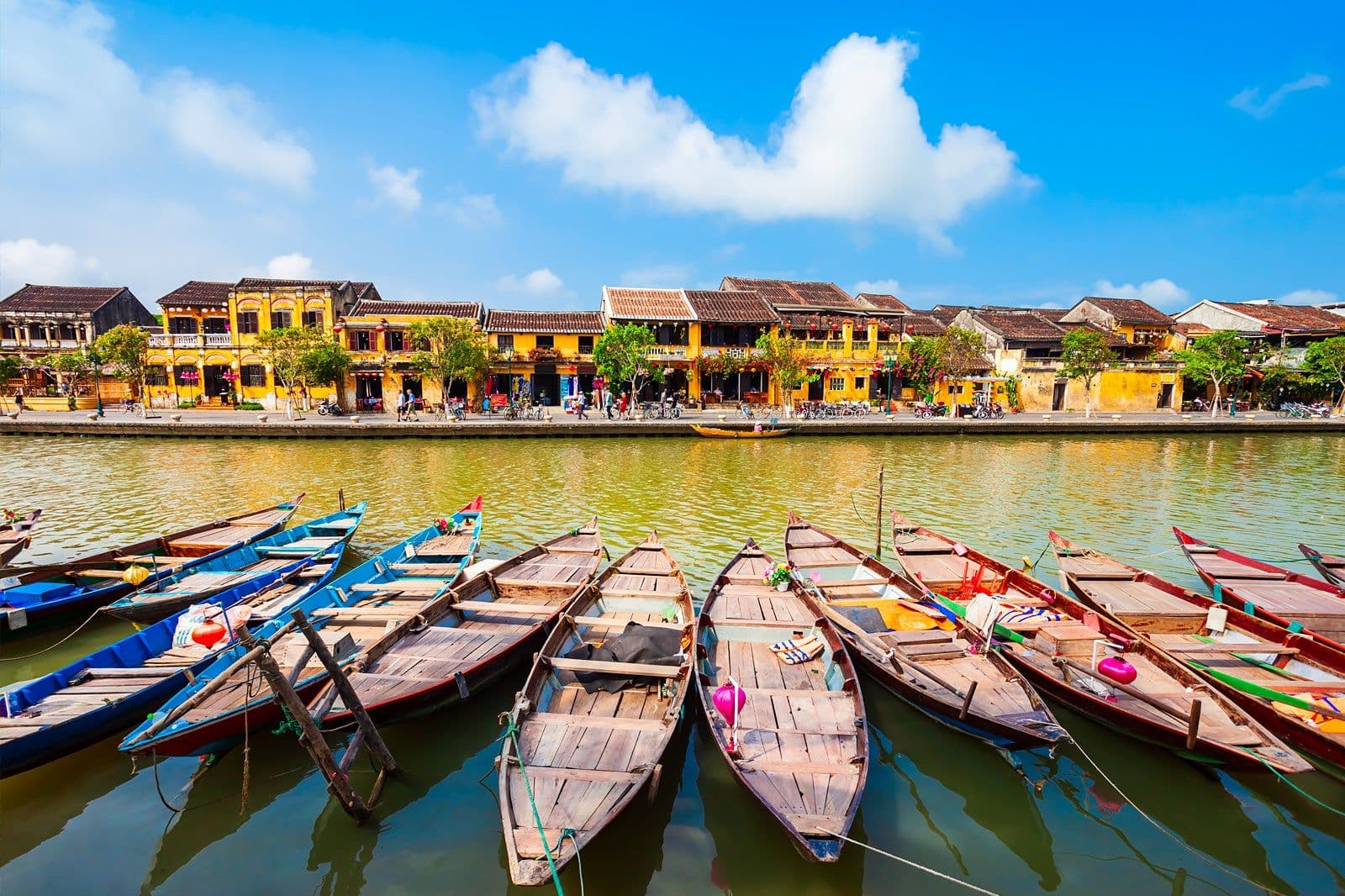
Hoi An’s vibe is outdoors-first: slow walking streets, river reflections, lantern-lit lanes, and short evening photo loops. If you time it wrong, the same “romantic night” can become a damp, crowded shuffle—especially if rain pushes everyone under the same covered streets.
Also, Hội An Ancient Town is a UNESCO World Heritage Site, which is why the atmosphere feels uniquely “historic glow,” not just “pretty lights.”
Understand Hoi An's seasons fast
Dry season (best for first-timers)
Most travel planners describe a more visitor-friendly, sunnier stretch from late winter through summer—often framed as February–August—which aligns with lower rainfall patterns in Hoi An’s climate data.
What it’s best for:
- Old Town walking + lantern photos
- Beach add-ons (especially An Bang Beach)
- Day trips without constant weather pivots
Rainy season (plan flexible + watch flood risk)
A wetter stretch is commonly discussed from September–December, with October–November frequently showing the highest rainfall in climate datasets. Hoi An and Central Vietnam can also experience serious flooding during extreme rain periods, so don’t lock “must-do” outdoor plans into those weeks.
Hoi An Lantern Festival: what it is and when it happens
What it is
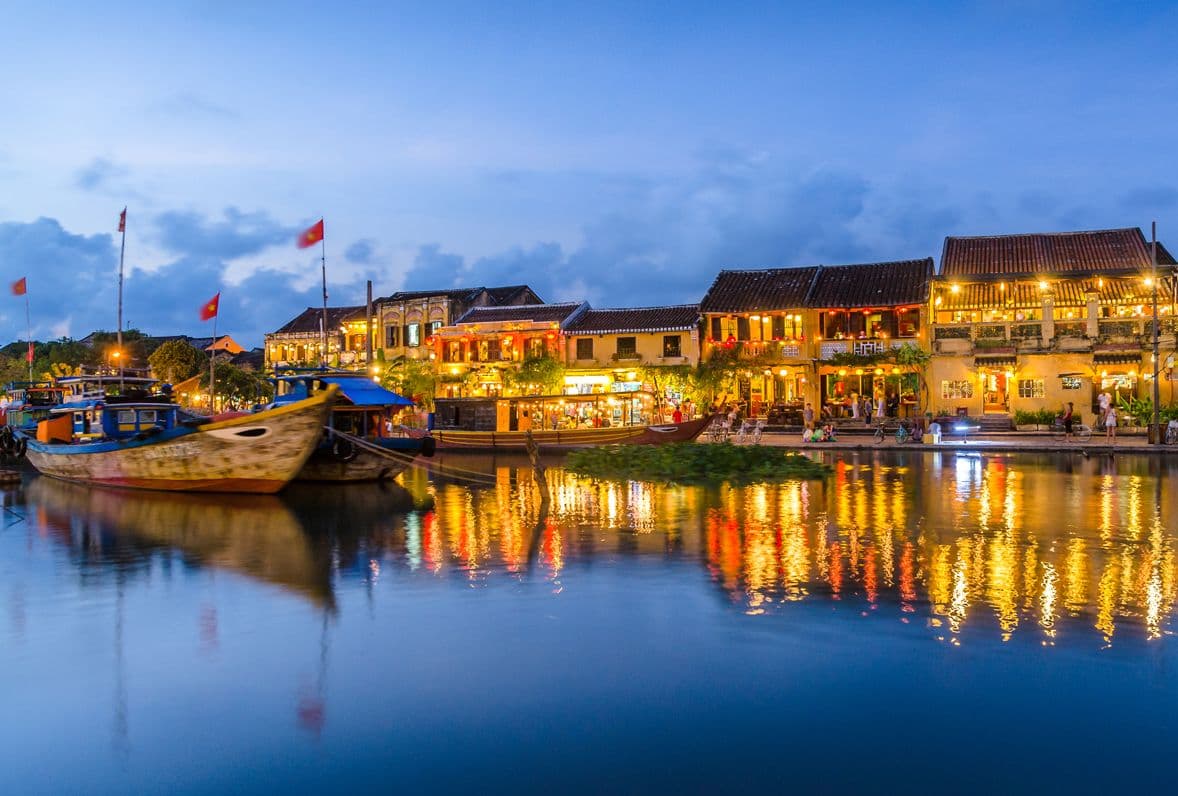
The monthly lantern night is widely described as a full-moon-focused evening where the Old Town leans into lantern light—creating the classic river-reflection scene most travelers picture.
When it happens
- Commonly described as the 14th day of each lunar month (some local descriptions reference the 14th–15th).
- Because lunar dates shift on the Western calendar, your “festival night” changes month to month.
How to check your exact date (the reliable way):
- Look up “Hoi An full moon date + your travel month/year” in a current lunar calendar listing.
- Confirm again with your hotel or local operator when you arrive (it avoids calendar confusion).
Where it’s most photogenic
- Hoai River riverfront for reflections
- Japanese Covered Bridge area for iconic angles
- Old Town walking streets and lantern stalls for that “glow corridor” feel
Best months to visit Hoi An (by traveler goal)
Best for first-time visitors: weather + walking comfort + lantern nights
February–April is the safest “sweet spot” for Old Town exploration and photos with fewer weather disruptions.
Best for beach + sunshine (plus lantern night as a bonus)
May–August is warmer and beach-friendly. Plan early mornings for Old Town photos and save midday for shade, cafés, tailoring, or the pool.
Best for deals (with realistic expectations)
September–December can be cheaper, but rain and river-level issues are more likely—especially in October–November. If you go, build indoor alternatives and keep your lantern night flexible.
Month-by-month planner (quick table)
| Month | Weather feel | Lantern-night experience | Best for |
|---|---|---|---|
| Jan | Transition, can be damp | Less predictable comfort | Quiet Old Town + cafés |
| Feb | Drier, comfortable | Great | First-timer “easy mode” |
| Mar–Apr | Prime comfort | Great | Photos + walking + day trips |
| May–Aug | Hotter, sunnier | Great | Beach + island/day trips (plan heat breaks) |
| Sep | Rain increases | Still possible | Value travelers with flexibility |
| Oct–Nov | Wettest / highest disruption risk | Can be moody, but risky | Spa/food focus; don’t “bet the trip” on perfect nights |
| Dec | Cooler, rain can linger | Atmospheric | Vibe seekers + fewer crowds |
Read more: Best Time to Visit Hue Vietnam for Heritage, Festivals, and Comfortable Weather
The perfect Lantern Night itinerary
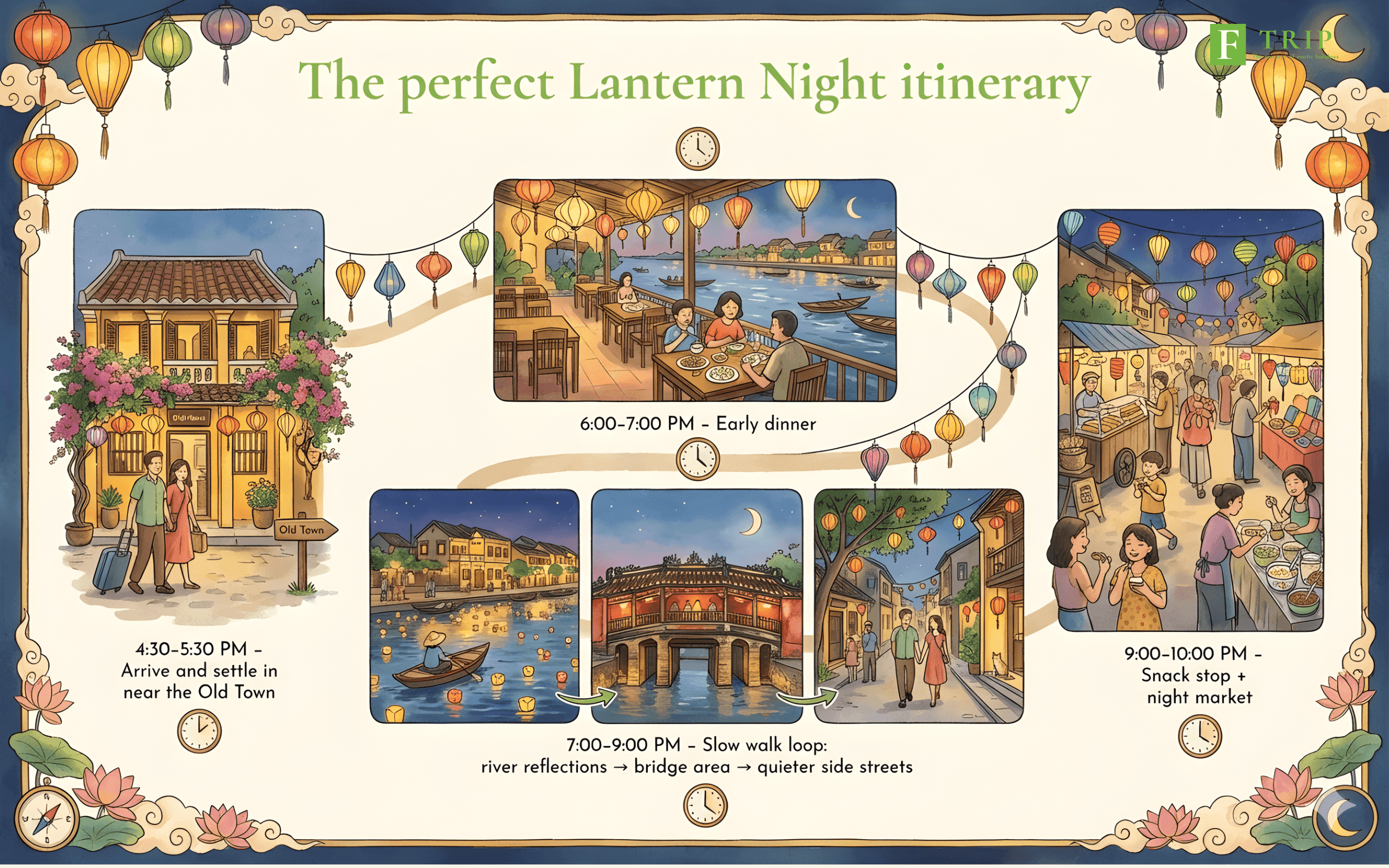
4:30–5:30 PM – Arrive and settle in near the Old Town (less stress, better light). 6:00–7:00 PM – Early dinner (so you’re free during peak glow). 7:00–9:00 PM – Slow walk loop: river reflections → bridge area → quieter side streets. 9:00–10:00 PM – Snack stop + night market browsing, then exit via calmer lanes.
Crowd hacks that actually work:
- Shoot reflections from the riverbank instead of squeezing into the tightest lanes.
- If you hate crowds, pick one strong photo zone and linger—don’t try to “do everything.”
Dry-season tips (so the trip feels effortless)
- Start early: morning heritage walks are cooler and less crowded.
- Heat strategy (May–Aug): midday = cafés, tailoring, museums, spa; evenings = Old Town + lanterns.
- Stay location-smart: walkable Old Town proximity matters most on Lantern Night.
Rainy-season tips (if your dates can’t move)
- Choose a hotel with reliable comfort during storms (good staff support, easy access, solid reviews).
- Keep one buffer evening around your lantern night in case rain hits hard.
- Prioritize indoor-friendly options: cooking class, craft workshops, cafés with river views.
- Monitor forecasts and local advisories during heavy rain/flood weeks.
Read more: Best Time to Visit Vietnam: Weather, Costs, and Travel Activities
Best add-on activities to pair with Hoi An
- Beach reset at An Bang Beach (best in the sunnier months)
- Day trip to My Son Sanctuary (weather-dependent)
- Quick logistics pairing via Da Nang for flights and coastal day trips
FtripVietnam services
- Date-matching: pick the best week that combines dry-season comfort with your preferred full-moon lantern night.
- Seamless logistics: private transfers timed to arrive before sunset on lantern night.
- Experience planning: crowd-smart walking route + dinner timing + riverfront photo flow.
- Weather-proof options: flexible backups if you’re traveling in September–November, rain windows.
Read more: Best Time to Visit Nha Trang Vietnam for Beaches, Diving, and Sunshine
FAQs
Is the Hoi An Lantern Festival every night? No—it's typically described as a monthly full-moon event tied to the 14th lunar day (dates shift by month).
What months are best for Hoi An weather? February–April is the easiest blend of comfort + low rain risk for most travelers.
When is flood risk highest in Hoi An? Plan most carefully around October–November, when rainfall peaks and Central Vietnam flood disruptions are more likely.
What time is Lantern Night, best? Plan your main Old Town loop roughly 7–9 PM for the strongest glow, photos, and riverfront energy. (Exact “lights” details vary by night and conditions.)
Conclusion
Hoi An’s “best time” is the moment when dry-season walking comfort meets full-moon lantern magic. For most first-timers, that means February to April—easy weather, beautiful evenings, and far fewer rain disruptions. If you want more beach time, May to August stay sunny and lively, just with hotter days. And if you’re traveling in October–November, go with eyes open: rain can be heavy, and flooding can affect plans, so build flexible backups and treat perfect lantern nights as a bonus rather than a guarantee.

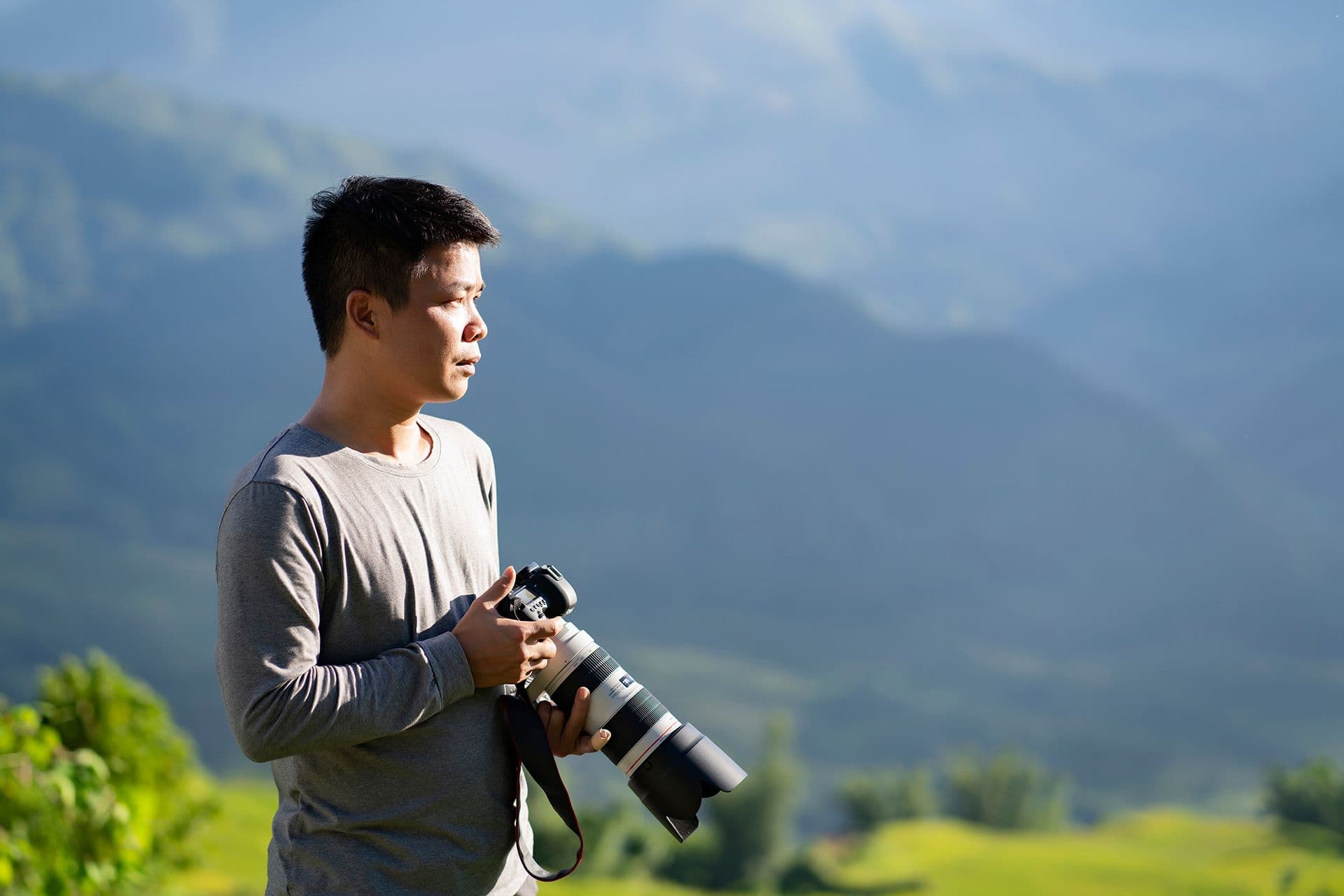
Founder & Photography Guide
Specialties: Culture, landscape, portrait, hiking, active and adventurous tour
Besides my unlimited passion for traveling, a professional tour guide for over a decade, I have been taking photographs since sitting at Hanoi of the University of Culture in the early 2000s. Photography started as a hobby but it was seriously taken due to my work relations and my significant passion for the beauty of our world, especially in Southeast Asian parts such as Vietnam, Laos, Cambodia, and Myanmar.
Within a few years of taking photographs, my works began to be recognized by many reliable international publications such as AFAR Travel, The Times, and The Daily Telegraph newspaper. In addition, I continuously add to my growing profile by winning numerous major awards: 3rd Position of The Independent Photographer 2018, 1st Position of Amateur Photographer of the year 2018, Grand Prize Winner of the AFAR Travel Photography 2019, and a Gold Award of San Francisco Bay International Photography 2020.
I photograph a wide variety of subjects, from travel to landscapes to street scenes. I enjoy documenting the East’s rich cultural heritage and its land soaked in glorious sunrise or sunset light in remote and secluded spots. And, I am very happy to share my knowledge and experience with you. You can visit Luminousvietnamtour to explore tour!