- Cool, dry season vs “most scenic” season (don’t confuse these)
- 1) Cool-weather season (best for comfort + road trips)
- 2) Scenic “peak moments” (best for iconic photos)
- Best time to visit Northern Vietnam by goal
- Best for cool weather + clear scenic landscapes
- Best for rice terraces (the postcard look)
- Best for seasonal “wow” in Ha Giang
- Month-by-month planner (Northern Vietnam)
- Where to go for the best scenic landscapes (and when)
- Sapa (easy-access mountain scenery)
- Ha Giang Loop (the iconic mountain-road experience)
- Mu Cang Chai (golden terrace geometry)
- Hoang Su Phi (quieter terraces + deeper immersion)
- What to do (activities that match your timing)
- If you’re chasing rice terraces
- If you’re chasing cool weather + dramatic views
- If you want “not too hot, not too colddo ”
- Practical planning (the section that actually saves trips)
- How many days do you need?
- What to pack for cool Northern Vietnam
- The biggest first-timer mistake
- FAQs
- Conclusion
Northern Vietnam is pure magic when the air turns crisp: misty mountain mornings in Sapa, winding passes in Hà Giang, and rice terraces that glow gold for a few short weeks. The trick is timing: cool-weather season isn’t the same as golden-rice season—so the “best month” depends on what you want to see most.
Cool, dry season vs “most scenic” season (don’t confuse these)
1) Cool-weather season (best for comfort + road trips)
October → April is the core window travelers target for cooler air, clearer views, and easier trekking/loop conditions.
2) Scenic “peak moments” (best for iconic photos)
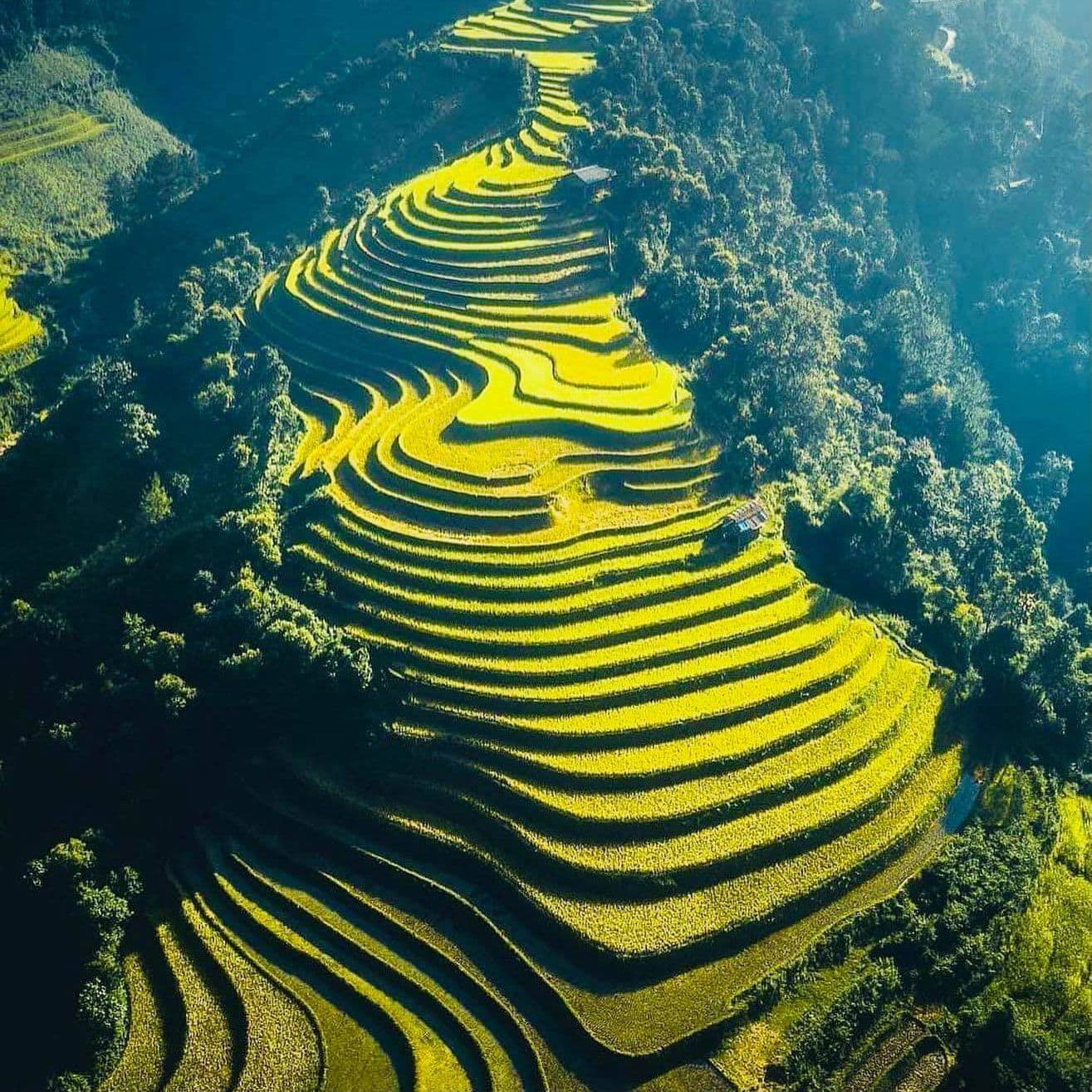
- Golden rice harvest: late Sep → early Oct (short, high-reward window).
- Ha Giang buckwheat blooms: generally Oct–Nov, adding a soft seasonal color layer to the loop.
Quick decision rule:
- Want comfortable mountain travel? Pick Oct–Nov or Mar–Apr.
- Want postcard rice terraces? Aim late Sep–early Oct.
Best time to visit Northern Vietnam by goal
Best for cool weather + clear scenic landscapes
October–November: crisp air, strong visibility, and a very “Northern Vietnam” mountain mood—great for road trips and viewpoints. March–April: spring comfort with fresh landscapes; many travelers find this a sweet spot for mixed itineraries (city + mountains).
Best for rice terraces (the postcard look)
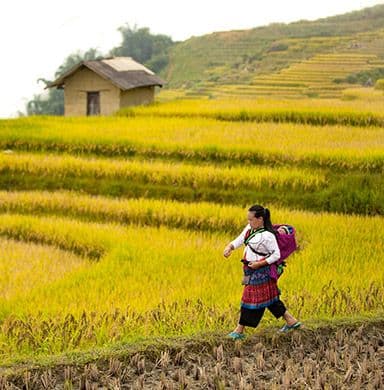
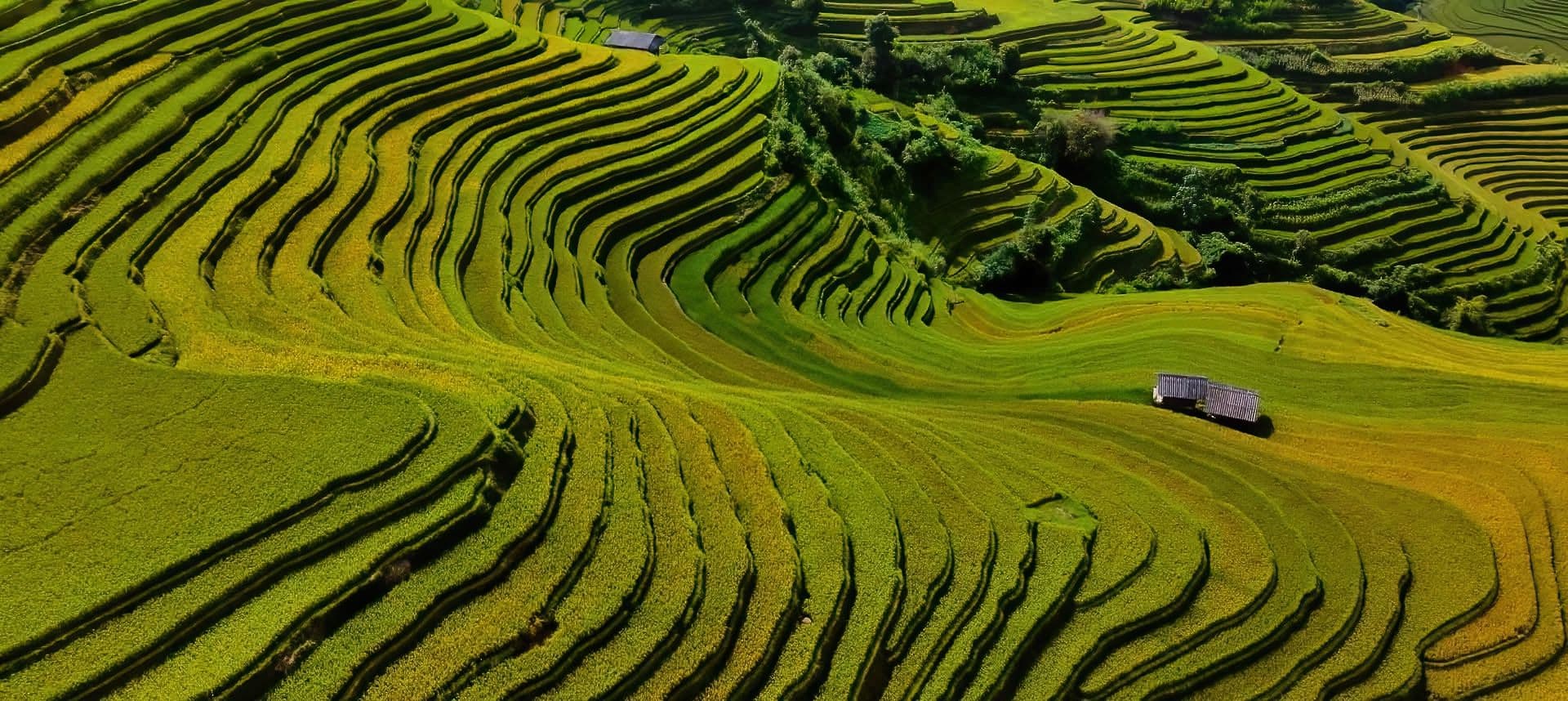
- Mu Cang Chai: late September–early October for the famous golden “waves.”
- Hoang Su Phi: late September–early October for harvest-gold terraces in quieter valleys.
- Sapa / Mường Hoa Valley: commonly highlighted for harvest color around Aug–Sep (exact peak shifts by year and valley).
Best for seasonal “wow” in Ha Giang
If you want the loop to look extra cinematic beyond the limestone scenery, target Oct–Nov when buckwheat flower season is often discussed and celebrated.
Month-by-month planner (Northern Vietnam)
Use this as the scannable section that helps readers pick fast.
| Months | Weather feel | Landscape highlight | Best for |
|---|---|---|---|
| Jan–Feb | Coldest highland nights (Sapa can be very cold) | Crisp air, moody mist | Cozy mountain stays, cafés, light hikes (pack warm layers) |
| Mar | Comfortable spring weather | Fresh green hills | Trekking + road trips without peak crowds |
| Apr | Warmed-up spring, still pleasant | Bright landscapes | Mixed itineraries (Hanoi + mountains), photography |
| May–Aug | Hotter, more humid/rain risk | Lush green terraces | Flexible travelers; mornings outdoors, afternoons indoor breaks |
| Sep | Cooler mornings return | Harvest starts ramping up | Early terrace color + fewer crowds than peak |
| Late Sep–Early Oct | Shoulder-season comfort | Peak golden terraces (short window) | Rice-terrace “dream trip” + best photo light |
| Nov | Crisp + clear (often excellent visibility) | Deep scenic contrast | Ha Giang loop, viewpoints, trekking |
| Dec | Cool season deepens | Misty mountains | Winter vibe, clear-day chasing, warm layers essential |
Read more: Best Time to Visit Northern Vietnam for Mountains, Rice Terraces, and Cool Weather
Where to go for the best scenic landscapes (and when)
Sapa (easy-access mountain scenery)
- Best for cool weather: winter months can be very cold (especially nights), with occasional snow mentioned in peak winter conditions.
- Best for terraces: harvest color is often discussed around Aug–Sep, varying with elevation and valley.
- Best “balanced comfort”: spring (Mar–Apr) or autumn (Oct–Nov) for trekking without extreme heat.
Tip that upgrades the trip: sleep in or near the valley (not just the town center) so you can catch early mist and soft light before day-trippers arrive.
Ha Giang Loop (the iconic mountain-road experience)
- Best for scenery + comfortable riding/driving: Oct–Nov is often treated as prime for crisp air and dramatic vistas.
- Best for seasonal color: buckwheat flower season is commonly linked with autumn (Oct–Nov) and featured in local travel content and festival mentions.
Comfort note: the loop is spectacular, but it’s also long and winding—build buffer time and avoid stacking late-night transfers.
Mu Cang Chai (golden terrace geometry)
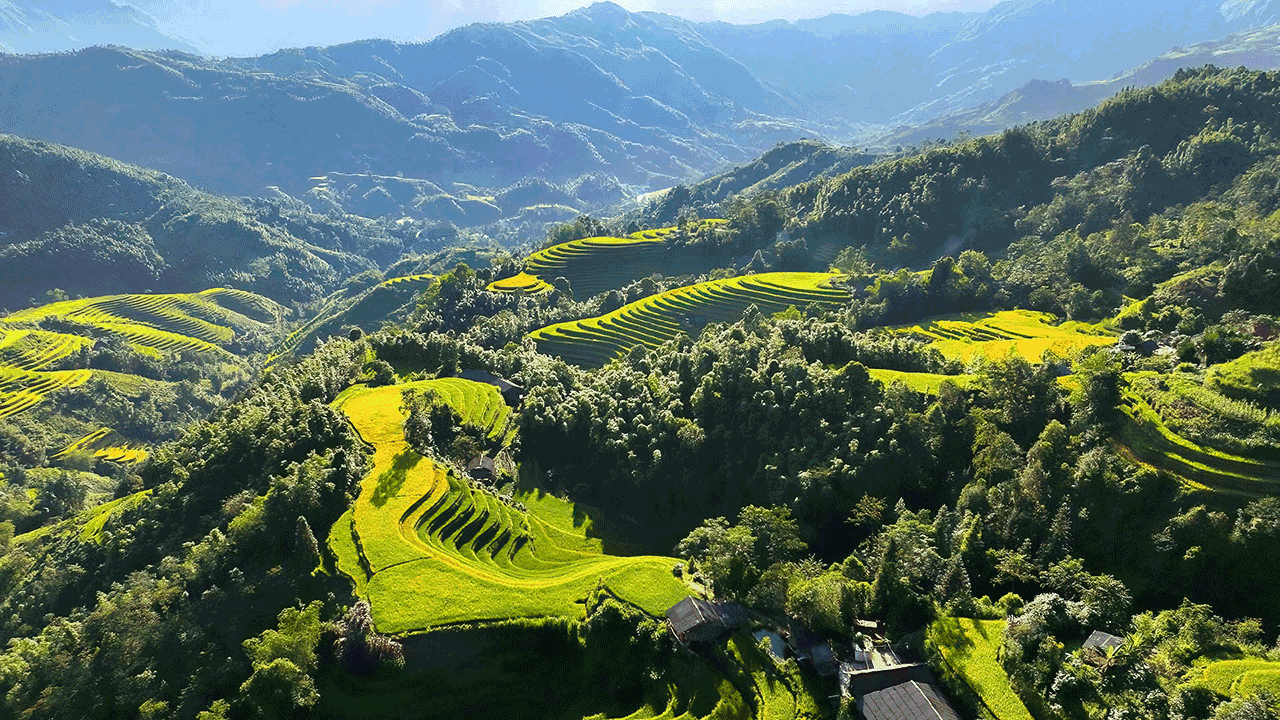
If golden terraces are your #1 priority, this is the “headline” destination. Harvest season is widely described around September–October, with the most iconic gold often late Sep–early Oct.
Hoang Su Phi (quieter terraces + deeper immersion)
Often recommended for travelers who want dramatic terraces with fewer crowds and more homestay trekking. Many guides point to late Sep–early Oct for peak harvest-gold.
What to do (activities that match your timing)
If you’re chasing rice terraces
- Sunrise viewpoints + valley homestays (mist + side-light texture = best photos)
- Golden-hour ridge drives for layered curves (shoot early to avoid haze and traffic)
- Two-location strategy: combine Sapa harvest timing (Aug–Sep) with Mu Cang Chai / Hoang Su Phi peak (late Sep–early Oct) if your dates allow.
If you’re chasing cool weather + dramatic views
- Trekking days (short or long) + market mornings (less exhausting in cool air)
- Scenic drives and high passes (clearer visibility is the “luxury” factor)
- Café-and-viewpoint rhythm: start early, rest midday, return for late-afternoon light
If you want “not too hot, not too colddo ”
Oct–Nov or Mar–Apr are your safest comfort bets for first-timers who want scenery without weather drama.
Read more: Best Time to Visit Vietnam: Weather, Costs, and Travel Activities
Practical planning (the section that actually saves trips)
How many days do you need?
- 3–4 days: pick one anchor (Sapa or a short Ha Giang taste) + one buffer day
- 5–7 days: one mountain base + one terrace region (best balance)
- 8–10 days: the “best scenic” version—Ha Giang loop + one terrace region (or terraces + Sapa)
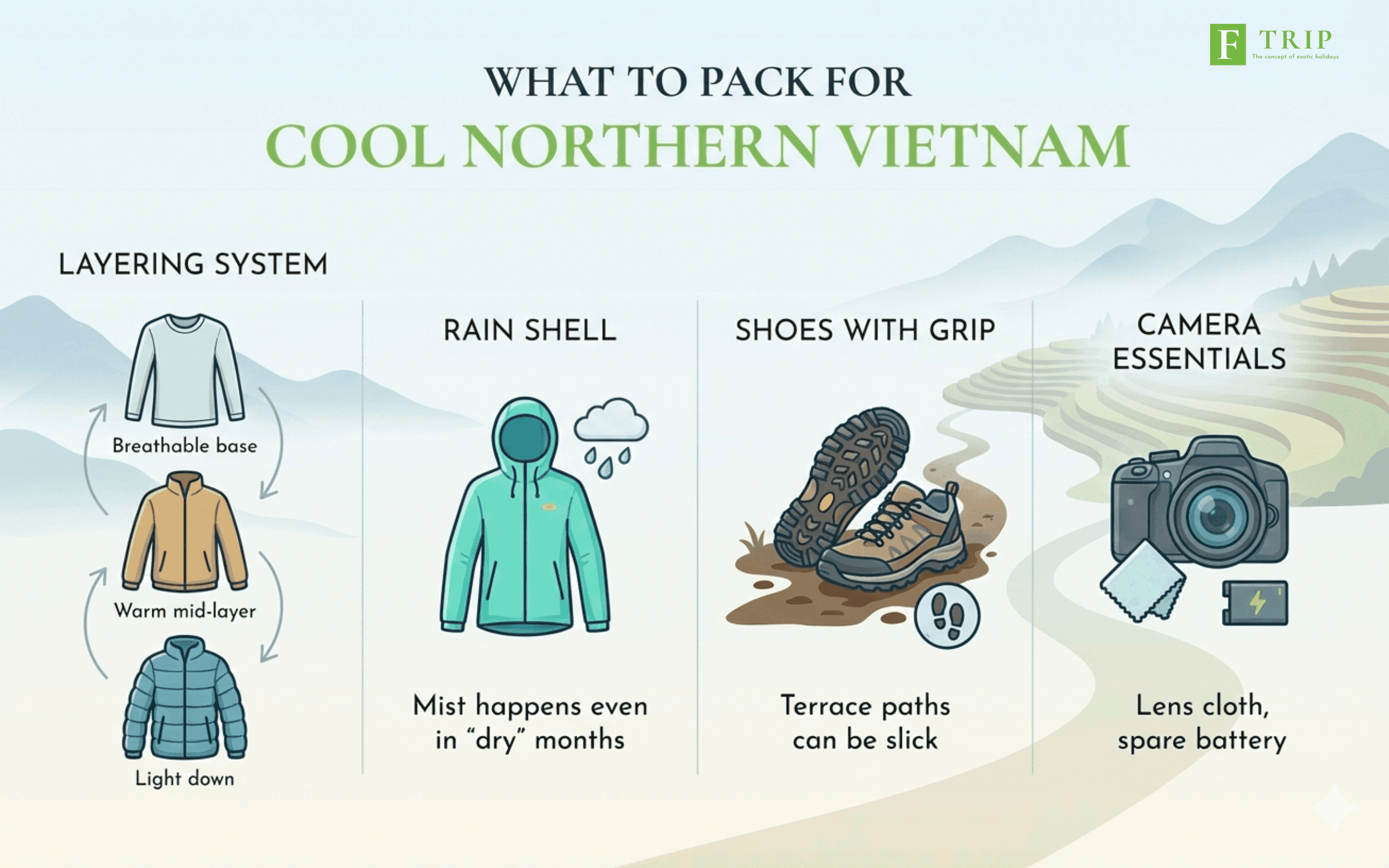
What to pack for cool Northern Vietnam
- Layering system: breathable base + warm mid-layer + light down (winter)
- Rain shell: mist happens even in “dry” months
- Shoes with grip: terrace paths can be slick
- Camera essentials: lens cloth (fog), spare battery (cold drains faster)
The biggest first-timer mistake
Trying to combine cool-season comfort and golden terraces without checking timing. If terraces are the priority, lock the late Sep–early Oct window first—then build the rest around it.
Read more: When Is Best Time to Visit Vietnam Based on Weather and Travel Style?
FAQs
What is the best month for cool weather in Northern Vietnam? For most travelers, October–November and March–April offer the best mix of cool air and clear scenery.
When is the golden rice terrace season in Mu Cang Chai and Hoang Su Phi? Most guides highlight late September to early October as the most photogenic harvest window.
When is buckwheat flower season in Ha Giang? It’s commonly associated with autumn (Oct–Nov), with festivals often referenced in November.
Is April or October better for Sapa? October is great for cooler air and scenic trekking; April is often a comfortable spring choice with fresh landscapes. (Exact conditions vary by year.)
Conclusion
Northern Vietnam doesn’t have one single “best time”—it has the best time for your goal. For most travelers, October–November is the safest sweet spot for cool weather + dramatic scenic landscapes, while late September–early October is unbeatable if you’re chasing golden rice terraces in Mu Cang Chai and Hoang Su Phi. And if you want the chilliest mountain atmosphere, visit late December–March—just pack warm layers for Sapa’s true highland cold.

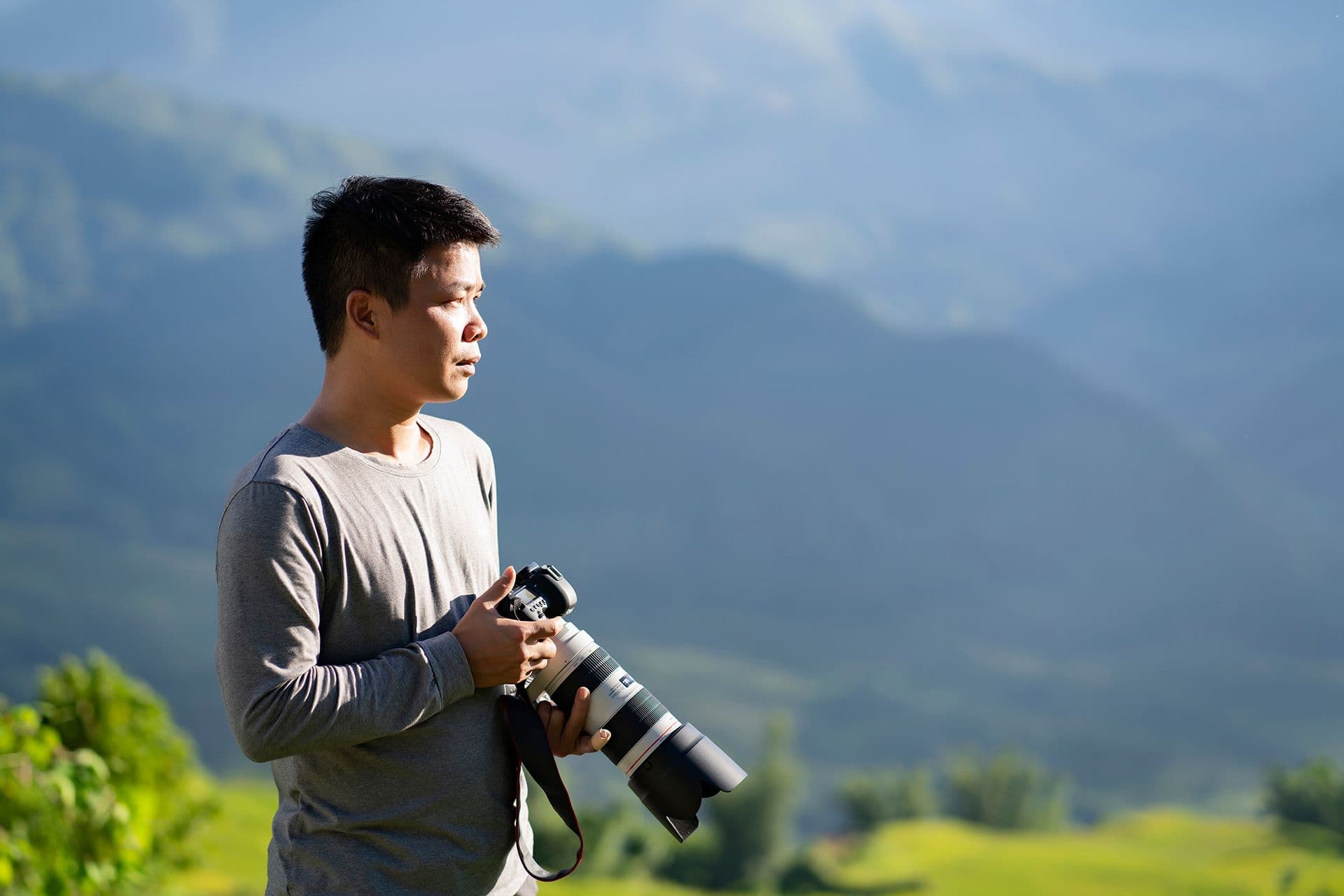
Founder & Photography Guide
Specialties: Culture, landscape, portrait, hiking, active and adventurous tour
Besides my unlimited passion for traveling, a professional tour guide for over a decade, I have been taking photographs since sitting at Hanoi of the University of Culture in the early 2000s. Photography started as a hobby but it was seriously taken due to my work relations and my significant passion for the beauty of our world, especially in Southeast Asian parts such as Vietnam, Laos, Cambodia, and Myanmar.
Within a few years of taking photographs, my works began to be recognized by many reliable international publications such as AFAR Travel, The Times, and The Daily Telegraph newspaper. In addition, I continuously add to my growing profile by winning numerous major awards: 3rd Position of The Independent Photographer 2018, 1st Position of Amateur Photographer of the year 2018, Grand Prize Winner of the AFAR Travel Photography 2019, and a Gold Award of San Francisco Bay International Photography 2020.
I photograph a wide variety of subjects, from travel to landscapes to street scenes. I enjoy documenting the East’s rich cultural heritage and its land soaked in glorious sunrise or sunset light in remote and secluded spots. And, I am very happy to share my knowledge and experience with you. You can visit Luminousvietnamtour to explore tour!