- Quick Answer
- What “Authentic” Actually Means in Vietnamese Dining
- Regional Accuracy
- Technique-First Cooking
- Focused Menu Philosophy
- Local Rhythm
- Decide What You Mean by “Most Authentic” (Choose Your Goal)
- The Authenticity Checklist (Fast, Practical Signals)
- Green Flags
- Red Flags (Often “Tourist Vietnamese”)
- The #1 Way to Find the Most Authentic Spots: Follow the Signature Dishes
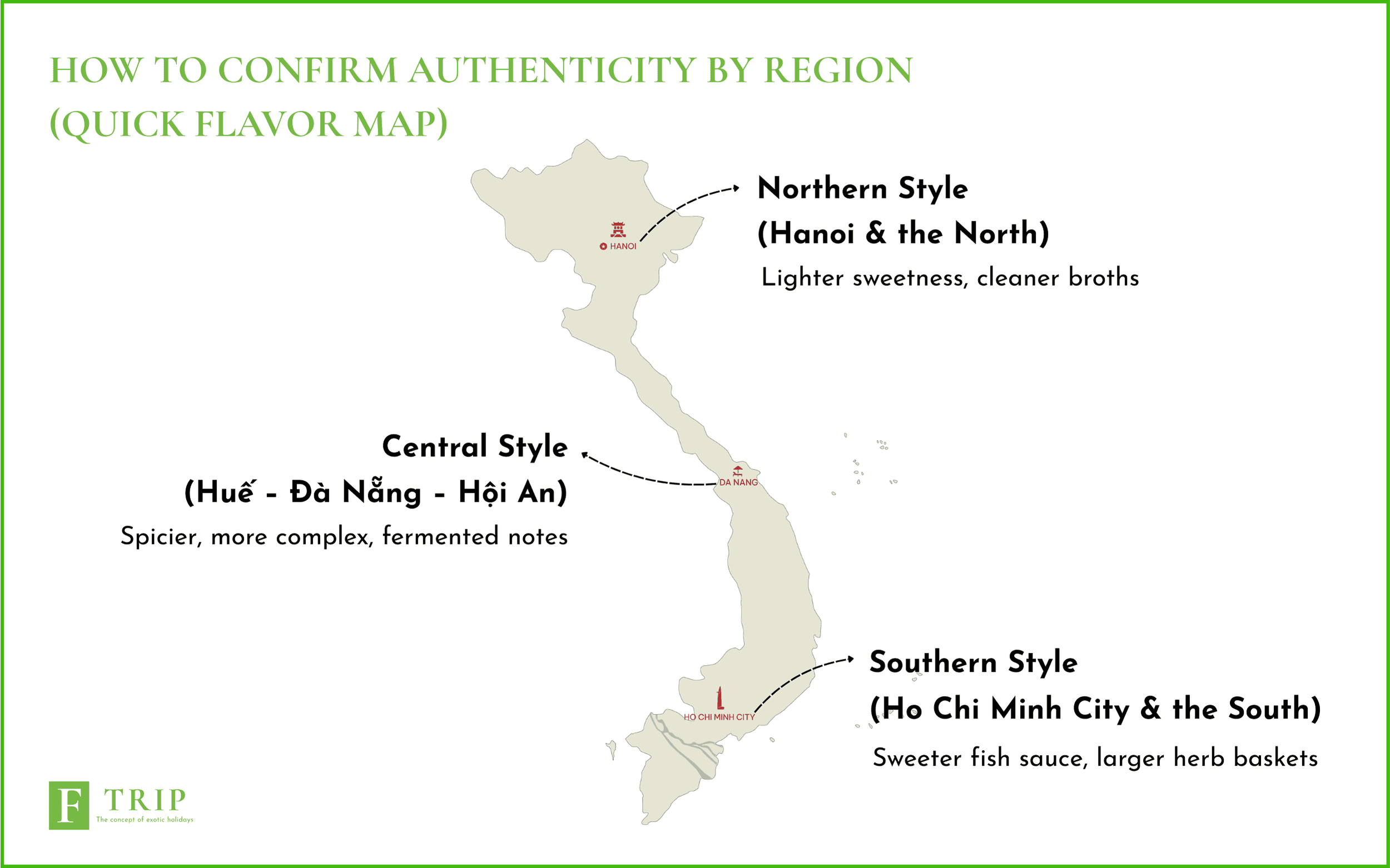
- How to Confirm Authenticity by Region (Quick Flavor Map)
- Northern Style (Hanoi & the North)
- Central Style (Huế – Đà Nẵng – Hội An)
- Southern Style (Ho Chi Minh City & the South)
- The “Most Authentic Experience” Isn’t Only the Food
- Best Times to Go (Authenticity Timing Hack)
- How to Judge Authentic Vietnamese Food Outside Vietnam
- Mini Frameworks You Can Use Anywhere
- The 3-Step Authenticity Test
- The Two-Backup Rule
- FtripVietnam Services
- FAQs
- Conclusion
“Authentic” Vietnamese dining isn’t about décor or a bamboo wall. It’s about the broth that’s been simmering since dawn, the menu that’s intentionally short, and the regulars who don’t need to look at it.
This guide shows you how to identify truly authentic Vietnamese restaurants—in Vietnam or abroad—using clear, repeatable signals. You’ll learn what to look for, what to avoid, when to go, and how to order so you get real flavor instead of a tourist-menu version.
Quick Answer
The most authentic Vietnamese restaurants are usually specialists: they focus on one region (North, Central, or South) or one hero dish such as phở, bún chả, cơm tấm, or bún bò Huế. Look for short menus, fresh daily prep, high local turnover, and transparent pricing. Authenticity shows up in regional flavor markers—herb sets, fish sauce balance, broth style—not in English fluency or interior design. For the best experience, go at the restaurant’s peak purpose time (phở mornings, bún chả lunch, seafood evenings) and order the dish the place is known for.
What “Authentic” Actually Means in Vietnamese Dining
Authenticity in Vietnamese food is practical and precise, not performative.
Regional Accuracy
- Northern style: subtle seasoning, cleaner broths, restrained sweetness
- Central style: spicier, layered flavors, fermented notes
- Southern style: sweeter fish sauce, abundant herbs, tropical notes
Technique-First Cooking
- Long-simmered broths
- Charcoal grilling
- Pickles and fresh herbs prepared daily
- Dipping sauces balanced to the dish, not generic
Focused Menu Philosophy
- Fewer dishes usually mean deeper mastery
- One kitchen, one rhythm, one purpose
Local Rhythm
- Opening hours follow local eating habits
- Many kitchens are early-morning or one-shift operations
- Sell-outs are common—and a good sign
Decide What You Mean by “Most Authentic” (Choose Your Goal)
Not all “authentic” experiences are the same. Decide what you value most:
- Most traditional flavors: family recipes, long-running shops
- Most local atmosphere: busy, no-frills, quick service
- Most regional-specific: true Huế, Hà Nội, or Sài Gòn style
- Most from-scratch: fresh noodles, grilled meats, house-made sauces
- Most comfortable authenticity: real food with a clean, relaxed setting
Your definition determines where you should eat.
The Authenticity Checklist (Fast, Practical Signals)
Green Flags
- Short menu (1–3 core dishes with variations)
- Clear hero dish (most tables order the same thing)
- High turnover (freshness + consistency)
- House-made components (broth, pickles, sauces, grilled meats)
- Correct regional garnishes and condiments
Red Flags (Often “Tourist Vietnamese”)
- Huge laminated photo menu with dozens of items
- “Authentic Vietnamese Food” as the entire branding, but no specialty
- Aggressive street pull-ins or empty dining room at local peak hours
- Over-sweetened sauces and generic “Asian” seasoning
- One menu trying to cover North, Central, South, Thai, and Chinese at once
The #1 Way to Find the Most Authentic Spots: Follow the Signature Dishes
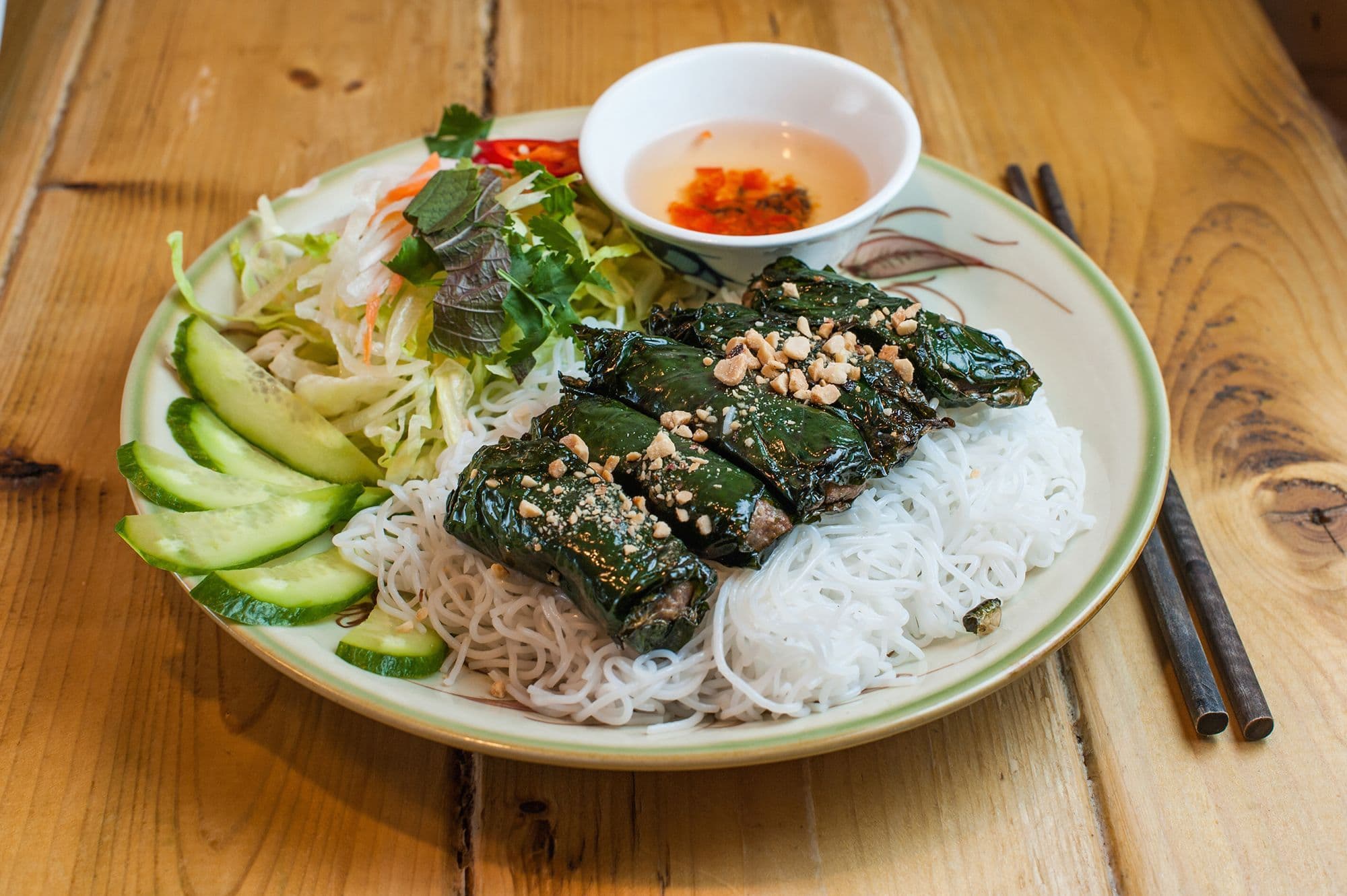
Instead of searching for “best Vietnamese restaurant,” search for the dish.
High-intent authenticity anchors include:
- Phở: clear broth, correct beef cuts, minimal herbs in the North
- Bún chả: charcoal aroma, balanced dipping sauce
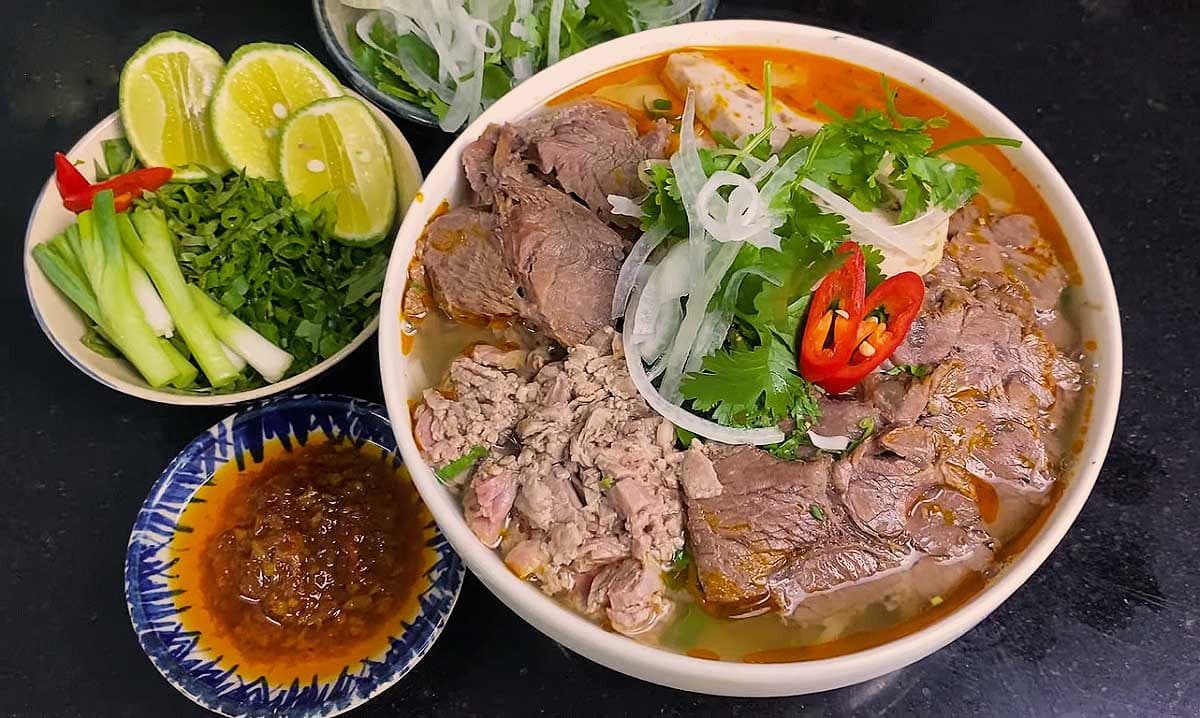
- Bún bò Huế: lemongrass–chili depth, thicker noodles, shrimp paste note
- Cơm tấm: broken rice texture, grilled pork, sweet-savory fish sauce
- Cao lầu / Mì Quảng: distinctive Central noodle textures and herbs
- Bánh xèo: crisp edges, herb-wrap style, light dipping sauce
- Seafood: freshness first, simple preparation
- Chè & coffee: regional dessert styles; egg coffee where relevant
Restaurants that do one of these exceptionally well are usually authentic.
How to Confirm Authenticity by Region (Quick Flavor Map)
Northern Style (Hanoi & the North)
- Lighter sweetness, cleaner broths
- Signature dishes: phở, bún chả, chả cá, bún thang
Central Style (Huế – Đà Nẵng – Hội An)
- Spicier, more complex, fermented notes
- Signature dishes: bún bò Huế, mì Quảng, cao lầu, bánh bèo/nậm/lọc
Southern Style (Ho Chi Minh City & the South)
- Sweeter fish sauce, larger herb baskets
- Signature dishes: cơm tấm, hủ tiếu, bánh mì variants, Southern hotpot
If the flavors don’t match the region, authenticity is likely diluted.
The “Most Authentic Experience” Isn’t Only the Food
Expect these to be normal:
- Service: fast, efficient, sometimes blunt
- Seating: plastic stools, shared tables
- Ordering: quick decisions, food arrives fast
- Payment: often at the counter; cash common
Polish is optional. Consistency is not.
Best Times to Go (Authenticity Timing Hack)
Timing matters because many kitchens are purpose-built for one meal window.
- Breakfast (6:00–9:00): phở, bánh cuốn, sticky rice
- Lunch (11:00–13:00): bún chả, cơm tấm, cơm bình dân
- Afternoon (14:00–17:00): coffee, chè, light noodles
- Dinner (18:00–21:00): hotpot, seafood, grilled specialties
Outside these windows, quality often drops.
How to Judge Authentic Vietnamese Food Outside Vietnam
For expats and travelers abroad, use these checks:
- Does the restaurant name the region (Huế, Hà Nội, Hội An, Sài Gòn)?
- Are condiments correct (fish sauce profile, chili, herbs)?
- Are staples done right (broth clarity, rice texture, noodle type)?
- Do Vietnamese diners return regularly at peak times?
- Does the menu avoid pan-Asian “fusion confusion”?
If yes to most, you’re likely in a good place.
Mini Frameworks You Can Use Anywhere
The 3-Step Authenticity Test
- Pick the signature dish
- Order it “standard”
- Taste for balance, freshness, and correct garnish
The Two-Backup Rule
Always shortlist three places:
- One specialist
- One comfortable sit-down
- One budget local
You’ll never get stuck.
FtripVietnam Services
- Curated food experiences by region: Northern classics, Central specialties, Southern street food
- Local guide-led dining: ordering help, hidden spots, cultural context (no tourist-trap pacing)
- Diet & allergy support: vegetarian, halal, no-seafood routes
- Add-ons: market visits, cooking classes, coffee crawls, and signature-dish hunts
FAQs
What makes a Vietnamese restaurant truly authentic? Specialization, regional accuracy, fresh prep, and local customers.
Is a short menu always a good sign? Usually yes—it signals focus and mastery.
What’s the most authentic dish to start with? Phở in the morning or bún chả at lunch.
How do I avoid tourist traps? Short menu, locals eating, clear prices, no street pull-ins.
Can I find authentic Vietnamese food outside Vietnam? Yes—look for regional focus and Vietnamese regulars.
Conclusion
Authenticity in Vietnamese dining is not marketing—it’s specialization, timing, and regional accuracy. Use the checklist to choose confidently, or let FtripVietnam build a food route that matches your city, schedule, and taste—so every meal counts.

Founder & Photography Guide
Specialties: Culture, landscape, portrait, hiking, active and adventurous tour
Besides my unlimited passion for traveling, a professional tour guide for over a decade, I have been taking photographs since sitting at Hanoi of the University of Culture in the early 2000s. Photography started as a hobby but it was seriously taken due to my work relations and my significant passion for the beauty of our world, especially in Southeast Asian parts such as Vietnam, Laos, Cambodia, and Myanmar.
Within a few years of taking photographs, my works began to be recognized by many reliable international publications such as AFAR Travel, The Times, and The Daily Telegraph newspaper. In addition, I continuously add to my growing profile by winning numerous major awards: 3rd Position of The Independent Photographer 2018, 1st Position of Amateur Photographer of the year 2018, Grand Prize Winner of the AFAR Travel Photography 2019, and a Gold Award of San Francisco Bay International Photography 2020.
I photograph a wide variety of subjects, from travel to landscapes to street scenes. I enjoy documenting the East’s rich cultural heritage and its land soaked in glorious sunrise or sunset light in remote and secluded spots. And, I am very happy to share my knowledge and experience with you. You can visit Luminousvietnamtour to explore tour!