- Quick Answer
- How to Use This Guide
- Quick Glossary
- What Makes Vietnamese Street Food “The Best”
- Essential Street Food Rules (Avoid Tourist Traps)
- Green Flags
- Red Flags
- Best Vietnamese Food by Region
- Northern Vietnam: Clean Broths & Subtle Classics
- Central Vietnam: Bold, Spicy, Layered
- Southern Vietnam: Sweet, Fresh, Abundant
- The “Best Dish” Master List (What, Where, When, How)
- Best Street Foods by Time of Day
- Coffee & Dessert Culture (Do Not Skip This)
- Street Food Safety & Hygiene (Traveler-First Tips)
- How to Build a Vietnam Food Itinerary
- 7-Day Food Route (North → South)
- 10–14 Day Ultimate Street Food Route
- Budget Guide: What Street Food Costs
- FtripVietnam Food Experiences
- FAQs
- Conclusion
Vietnam’s best meals don’t always come with a menu. Sometimes they come with a metal pot of simmering broth, a stack of fresh herbs, and a plastic stool that quietly changes how you think about food forever.
Vietnamese cuisine isn’t defined by fancy presentation. It’s defined by timing, balance, regional identity, and repetition—dishes cooked the same way, every day, for decades. This guide shows you what to eat in Vietnam, where to eat it by region, how to order with confidence, how to stay safe with street food, and how to build a food-first itinerary that actually makes sense.
Quick Answer
The best Vietnamese food experiences come from regional specialties: Northern classics like phở and bún chả, Central bold flavors such as bún bò Huế and mì Quảng, and Southern street icons like cơm tấm, hủ tiếu, and bánh mì. Eat soups and steamed dishes in the morning, grilled meats and rice plates at lunch, and seafood, hotpot, or snack crawls at night. Choose places with short menus, high turnover, and clear pricing—these are the strongest signs of authenticity. This guide breaks down exactly what to eat, when to eat it, and where to find real Vietnamese street food across the country.
How to Use This Guide
- Choose your region: North, Central, or South
- Choose your food style: street stalls, family-run shops, or modern Vietnamese
- Use the signature-dish method: find a place known for one dish, order it “standard” first
Quick Glossary
- Quán: small local eatery
- Phở / bún: noodle soups (different noodles)
- Nước mắm: fish sauce
- Nem: spring rolls (fried or fresh)
What Makes Vietnamese Street Food “The Best”
Vietnamese food stands out because of three core strengths:
- Flavor balance: salty, sweet, sour, spicy, fresh herbs
- Build-your-own eating: herbs, sauces, chili, lime at the table
- Regional diversity shaped by climate, history, and ingredients
No two regions taste the same—and that’s the point.
Essential Street Food Rules (Avoid Tourist Traps)
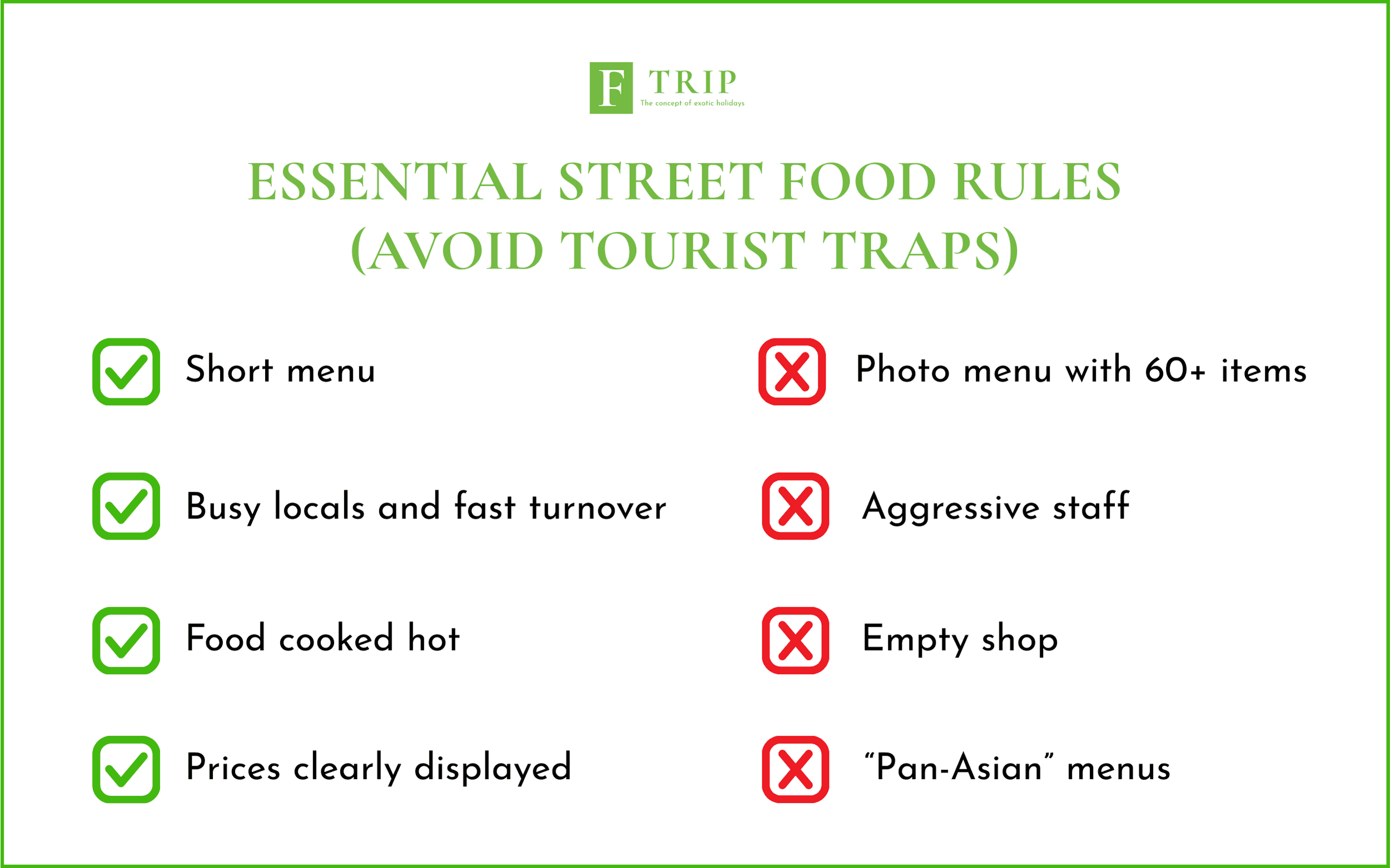
Green Flags
- Short menu (1–5 main items)
- Busy locals and fast turnover
- Food cooked hot and to order
- Prices clearly displayed
Red Flags
- Massive photo menu with 60+ items
- Aggressive staff pulling you in
- Empty shop during local meal times
- “Pan-Asian” menus mixing everything
Best Vietnamese Food by Region
Northern Vietnam: Clean Broths & Subtle Classics
Flavor profile: lighter sweetness, clear soups, restrained herbs
Must-eat dishes
- Phở bò / phở gà
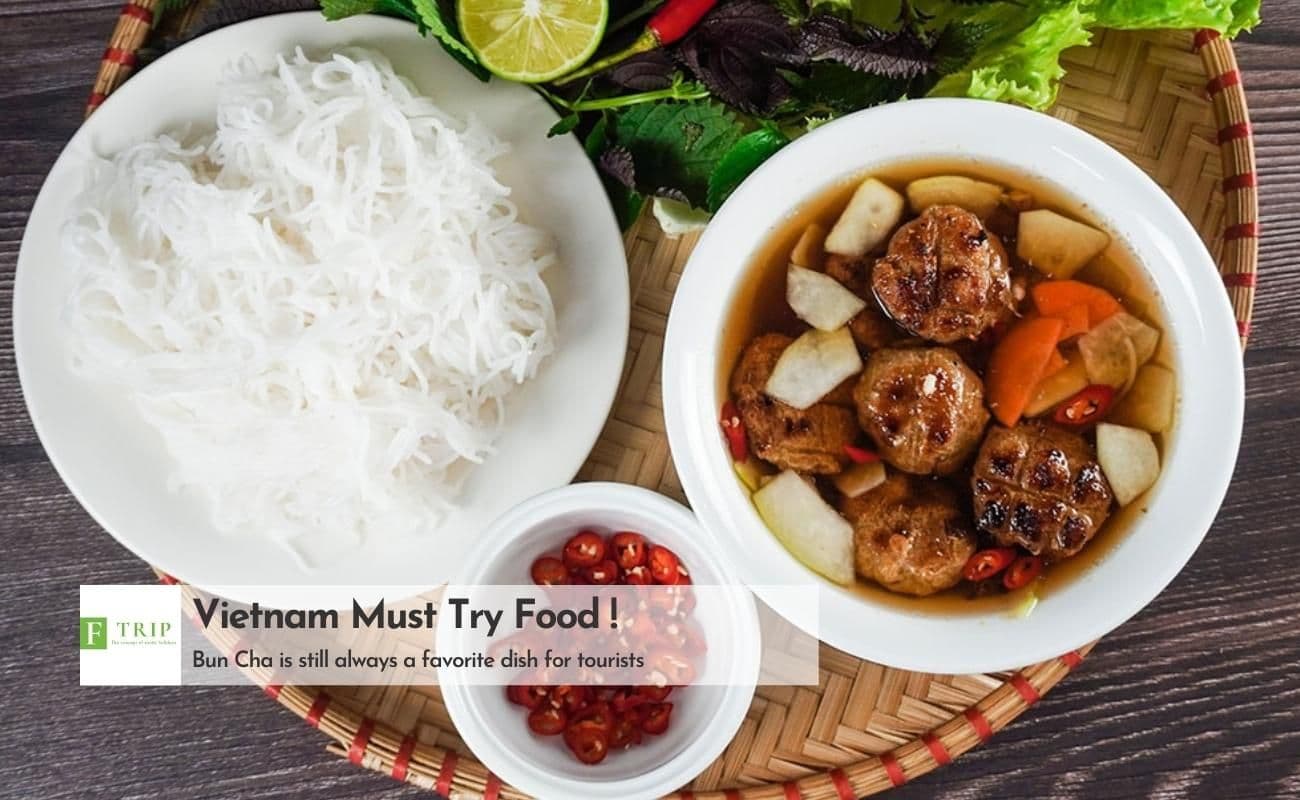
- Bún chả
- Bánh cuốn
- Chả cá
- Bún thang
- Xôi (sticky rice)
Best cities to eat
- Hanoi: Old Quarter food crawls
- Ninh Binh: goat dishes + cơm cháy (crispy rice)
- Sapa / Ha Giang: highland comfort foods, market eats
Central Vietnam: Bold, Spicy, Layered
Flavor profile: chili heat, fermented notes, complex condiments
Must-eat dishes
- Bún bò Huế
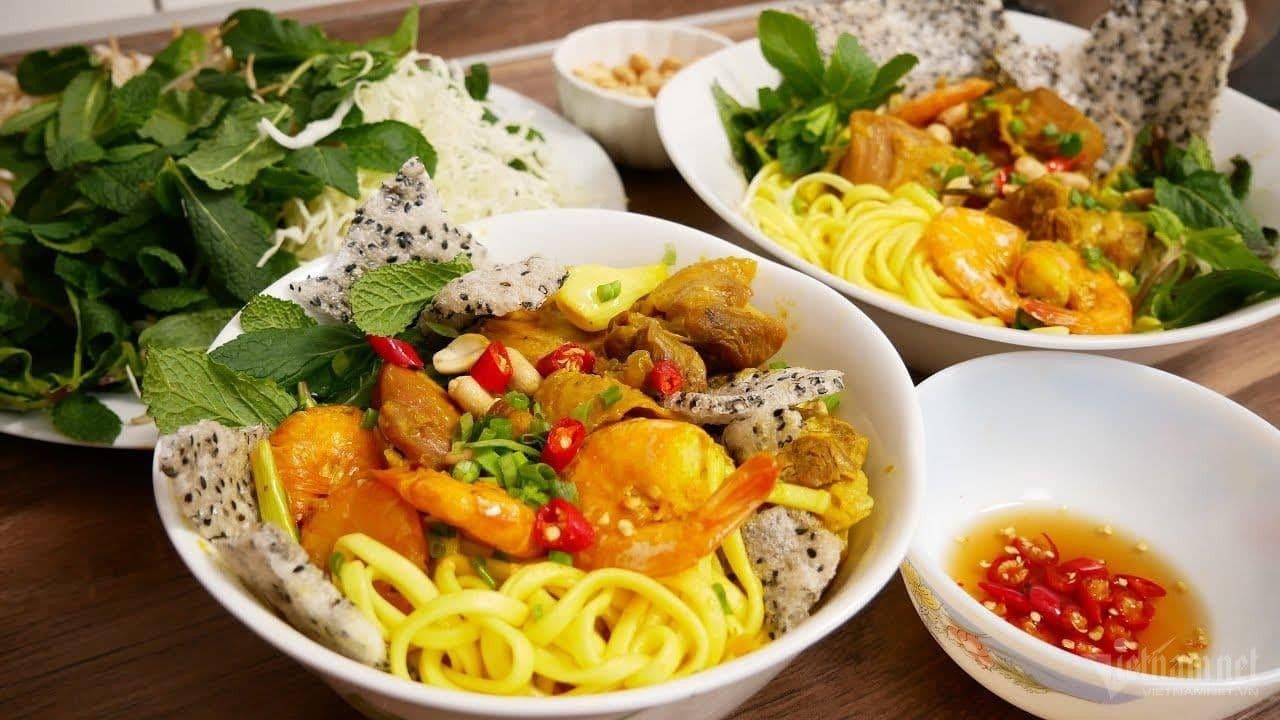
- Mì Quảng
- Cao lầu
- Bánh xèo
- Bánh bèo / bánh nậm / bánh lọc
Best cities to eat
- Hue: imperial cuisine roots
- Da Nang: street seafood, mì Quảng
- Hoi An: cao lầu, market snacks
Southern Vietnam: Sweet, Fresh, Abundant
Flavor profile: sweeter fish sauce, tropical notes, big herb baskets
Must-eat dishes
- Cơm tấm
- Hủ tiếu
- Bánh mì Sài Gòn
- Gỏi cuốn
- Ốc (snail and seafood stalls)
Best cities to eat
- Ho Chi Minh City: street-food capital
- Mekong Delta: fruit, riverside dishes, local noodles
The “Best Dish” Master List (What, Where, When, How)
- Phở – Northern Vietnam (Hanoi) – Breakfast – “Cho tôi phở bò”
- Bún chả – Hanoi – Lunch – Order standard set
- Bánh cuốn – North – Morning / brunch – Pork filling first
- Bún bò Huế – Central – Breakfast / lunch – Ask spice level
- Mì Quảng – Da Nang / Quang Nam – Lunch – Add herbs freely
- Cao lầu – Hoi An – Lunch – Only authentic locally
- Cơm tấm – South – Lunch – Grilled pork combo
- Hủ tiếu – South – Breakfast – Dry or soup style
- Bánh mì – Everywhere – All day – Choose one protein
- Bánh xèo – Central/South – Dinner – Wrap with herbs
- Nem rán / gỏi cuốn – Nationwide – Anytime – Dip generously
- Ốc – South/Central – Night – Order multiple plates
- Chè – Everywhere – Afternoon – Point-and-order friendly
Best Street Foods by Time of Day
- Morning: phở, bánh cuốn, xôi, bún riêu
- Lunch: bún chả, cơm tấm, mì Quảng
- Afternoon: bánh mì, snacks, chè, coffee
- Night: seafood, ốc, hotpot, grilled skewers
Coffee & Dessert Culture (Do Not Skip This)
- Egg coffee (Hanoi)
- Salt coffee (Central Vietnam)
- Cà phê sữa đá (everywhere)
- Desserts: chè, yogurt, tropical fruit, sweet soups
Coffee in Vietnam is part of daily rhythm, not a luxury.
Street Food Safety & Hygiene (Traveler-First Tips)
- Follow the turnover rule: busy stalls are safer
- Choose hot food cooked to order
- Avoid tap water; ice is usually factory-made
- Allergies: peanuts, shellfish, fish sauce—state clearly
How to Build a Vietnam Food Itinerary
7-Day Food Route (North → South)
Hanoi food crawl → Ha Long seafood → Hue bún bò → Hoi An cao lầu → Da Nang mì Quảng → Saigon cơm tấm → Mekong fruit & noodles
10–14 Day Ultimate Street Food Route
Add Ninh Binh, Sapa/Ha Giang, Phu Quoc seafood, and market tours.
Budget Guide: What Street Food Costs
- Most dishes: $1–3 USD
- Seafood / specialties: $5–10 USD
- Tourist zones cost more—walk 1–2 streets away
Value comes from timing and location, not bargaining.
FtripVietnam Food Experiences
- Curated food tours by city: Hanoi Old Quarter, Hoi An market + cooking, Saigon street food at night
- Local guide-led signature dish hunts (phở morning → bún chả lunch → seafood night)
- Custom itineraries for vegetarian, halal, no-seafood, family-friendly travel
Add-ons
- Market tour + cooking class
- Coffee & dessert crawl
- Mekong fruit + floating market sunrise tour
FAQs
What is the #1 must-try food in Vietnam? Phở (morning) or bún chả (lunch).
Is Vietnamese street food safe? Yes—choose busy stalls with hot food and fast turnover.
Best food city in Vietnam? Hanoi for classics, Saigon for variety, Hue for depth.
What should first-timers eat? Phở, bún chả, bánh mì, nem rán, egg coffee.
How to avoid tourist traps? Short menu, locals eating, clear prices, no street pull-ins.
Conclusion
Vietnam’s best food is a street-level story—regional, seasonal, and unforgettable. Use the regional map and dish list above, or let FtripVietnam design a food-first Vietnam itinerary that fits your route, timing, and tastes—so every meal becomes a memory.


Founder & Photography Guide
Specialties: Culture, landscape, portrait, hiking, active and adventurous tour
Besides my unlimited passion for traveling, a professional tour guide for over a decade, I have been taking photographs since sitting at Hanoi of the University of Culture in the early 2000s. Photography started as a hobby but it was seriously taken due to my work relations and my significant passion for the beauty of our world, especially in Southeast Asian parts such as Vietnam, Laos, Cambodia, and Myanmar.
Within a few years of taking photographs, my works began to be recognized by many reliable international publications such as AFAR Travel, The Times, and The Daily Telegraph newspaper. In addition, I continuously add to my growing profile by winning numerous major awards: 3rd Position of The Independent Photographer 2018, 1st Position of Amateur Photographer of the year 2018, Grand Prize Winner of the AFAR Travel Photography 2019, and a Gold Award of San Francisco Bay International Photography 2020.
I photograph a wide variety of subjects, from travel to landscapes to street scenes. I enjoy documenting the East’s rich cultural heritage and its land soaked in glorious sunrise or sunset light in remote and secluded spots. And, I am very happy to share my knowledge and experience with you. You can visit Luminousvietnamtour to explore tour!