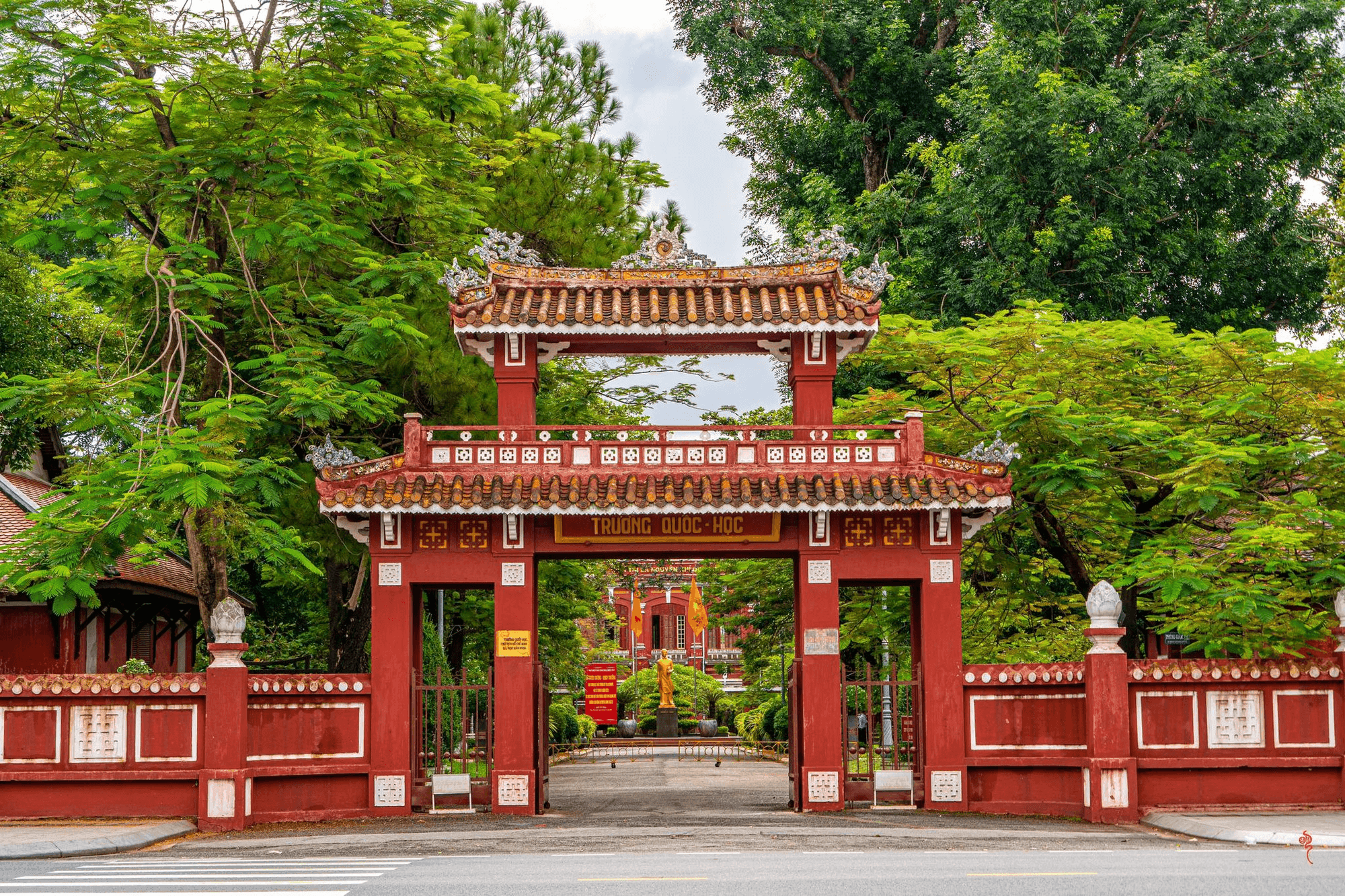
- How Do Nature, Heritage, and Local Life Come Together in One Vietnam Tour?
- Nature as the Scenic Foundation
- Heritage as the Cultural Backbone
- Local Life as the Human Connection
- Best Mountain and Nature Destinations for This Tour
- Ninh Binh: Limestone Scenery and Countryside Calm
- Pu Luong: Rice Terraces, Villages, and Slow Travel
- Mai Chau: Valley Life and Gentle Cultural Encounters
- Sapa: Mountain Views and Ethnic Culture
- Ha Giang: Dramatic Landscapes and Remote Local Life
- Phong Nha: Caves, Forests, and Rural Villages
- Mekong Delta: River Nature and Southern Local Life
- Heritage Stops That Add Depth to the Journey
- Hanoi: Old Quarter, Coffee Culture, and Northern Heritage
- Hue: Imperial History and Quiet Cultural Atmosphere
- Hoi An: Ancient Town, Craft Traditions, and Countryside Life
- My Son Sanctuary: Cham Heritage and Spiritual History
- Ho Chi Minh City: Modern History and Southern Urban Culture
- Local-Life Experiences That Make the Tour More Memorable
- Market Walks and Ingredient Stories
- Village Meals and Home-Style Dining
- Craft Workshops and Artisan Visits
- Cooking Classes and Coffee Culture
- Countryside Cycling and Gentle Walking
- River and Boat Experiences
- Suggested Vietnam Nature and Culture Route by Travel Stage
- Stage 1: Northern Heritage, Limestone Landscapes, and Village Life
- Stage 2: Mountain Culture, Rice Fields, and Scenic Slow Travel
- Stage 3: Central Vietnam Heritage, Caves, Ancient Towns, and Hands-On Culture
- Stage 4: Southern Local Life, River Culture, Food, and Optional Beach Extension
- Sample Route Ideas by Trip Length
- 7-9 Days: Soft Nature and Culture Introduction
- 10-12 Days: Balanced Mountains, Heritage, and Local Life
- 14 Days: Deeper Nature and Culture Journey
- 21 Days: Complete Vietnam Nature and Culture Route
- How to Customize the Tour by Travel Style
- For First-Time Visitors
- For Couples and Honeymooners
- For Families
- For Senior Travelers
- For Photographers
- For Food and Culture Lovers
- Responsible Travel Tips for Nature and Culture Tours
- How Can Travelers Respect Local Communities?
- How Can Travelers Protect Natural Places?
- Why Choose Quality Over Quantity?
- How Can Travelers Show Cultural Sensitivity?
- Planning Tips Before Booking This Tour
- How Should Travelers Match the Route to the Season?
- How Should Travelers Check Activity Level?
- Why Does Route Flow Matter?
- Why Is Guide Quality Important?
- Travel Requirements US Travelers Should Prepare
- What Passport and Vietnam Visa Details Matter?
- Why Is Travel Insurance Important for Outdoor Safety?
- What Money, Connectivity, and Documents Should Travelers Prepare?
- Why Plan a Vietnam Nature and Culture Tour with FtripVietnam?
- FAQs
- What is a Vietnam nature and culture tour?
- Where are the best places for nature and culture in Vietnam?
- How many days do you need for a Vietnam nature and culture tour?
- Can a Vietnam nature and culture tour be customized?
- Conclusion
Vietnam is a country where mountains, rice terraces, rivers, caves, ancient towns, imperial sites, craft villages, food culture, and local communities create a deeply layered travel experience. For many travelers, the beauty of Vietnam is not found in only one place. It appears in the contrast between limestone valleys and market streets, quiet villages and ancient towns, mountain roads and river communities, family kitchens and centuries-old heritage sites.
A Vietnam nature and culture tour is not only about visiting scenic places. It is about understanding how people live within those landscapes. Rice fields are not just beautiful viewpoints; they are part of farming life. Markets are not only colorful photo stops; they show how families shop, cook, and trade. Ancient towns and imperial sites are not only historic landmarks; they reveal how architecture, belief, food, and identity have shaped local communities over time.
The main promise of this tour style is balance. Mountains bring scenery, heritage sites bring history, and local life brings an authentic connection. Travelers can walk through rice valleys, explore old quarters, visit ancient towns, join cooking classes, meet artisans, take scenic boat rides, and understand how daily life changes from north to south.
This travel style works well for first-time visitors, couples, families, seniors, photographers, food lovers, slow travelers, and culture-focused travelers. It can be designed softly with gentle walks and comfortable hotels, or more actively with trekking, mountain routes, caves, and deeper countryside stays.
FtripVietnam helps travelers design customized Vietnam nature and culture tours with trusted local guides, private transfers, suitable hotels, special meals, village experiences, scenic routes, and flexible pacing.
How Do Nature, Heritage, and Local Life Come Together in One Vietnam Tour?
Nature as the Scenic Foundation
Nature is the visual foundation of a Vietnam nature and culture tour. Mountains, rice fields, limestone valleys, rivers, caves, beaches, national parks, and countryside roads create the landscapes that make each region feel distinct.
Nature-focused destinations may include Ninh Binh, Pu Luong, Mai Chau, Sapa, Ha Giang, Phong Nha, Cat Ba, Lan Ha Bay, Da Lat, and the Mekong Delta. Each destination offers a different version of Vietnam’s natural beauty. Ninh Binh has limestone scenery and river routes. Pu Luong and Mai Chau offer rice valleys and village life. Ha Giang brings dramatic mountain passes. Phong Nha adds caves and forests. The Mekong Delta introduces river-based landscapes and southern local life.
These places allow travelers to slow down, breathe, walk, photograph, and observe. A good nature route should not feel rushed or overly commercial. Travelers need enough time to enjoy the scenery without turning every stop into a quick photo opportunity.
Nature becomes more meaningful when connected with local communities. A rice terrace feels different when travelers understand farming seasons. A river ride becomes richer when they learn how families live near the water. A mountain road becomes more memorable when the guide explains local markets, ethnic communities, and daily routines.
Heritage as the Cultural Backbone
Heritage gives structure and depth to the journey. Vietnam’s heritage can be explored through ancient towns, imperial cities, temples, pagodas, old quarters, colonial architecture, craft villages, and regional traditions.
Strong heritage destinations include Hanoi, Hue, Hoi An, My Son Sanctuary, Ninh Binh, Ho Chi Minh City, and selected local villages. These places help travelers understand how Vietnam’s history, belief systems, architecture, food traditions, family customs, and regional identity have developed over time.
A heritage stop becomes more meaningful when travelers have good local explanation. Without context, a temple, tomb, old house, or market may feel like a beautiful place to photograph. With a guide, it becomes a story about people, history, faith, trade, family life, and cultural change.
Heritage adds depth to the natural beauty of the journey. It helps travelers understand not only what they are seeing, but why it matters.
Local Life as the Human Connection
Local life is what gives a nature and culture tour emotional value. These experiences may include market walks, village meals, cooking classes, craft workshops, farming, fishing, coffee culture, river communities, and respectful ethnic minority encounters.
Local interaction helps travelers understand Vietnam through people, not only places. They can learn how food is grown, how crafts are made, how markets work, how families cook, how traditions continue, and how local communities adapt to changing times.
These experiences should be respectful, well-guided, and meaningful. The goal is not to turn local life into a performance. The goal is to create thoughtful encounters where travelers can observe, learn, ask questions, and support local hosts fairly.
When planned well, local life becomes the part of the trip travelers remember most. It adds warmth, personality, and human connection to the landscapes and heritage sites.
Best Mountain and Nature Destinations for This Tour
Ninh Binh: Limestone Scenery and Countryside Calm
Ninh Binh is one of the best soft nature introductions for travelers starting from Hanoi. It offers limestone karsts, rice fields, temples, pagodas, village roads, and scenic boat routes without difficult logistics.
Travelers can add Trang An, Tam Coc, Hoa Lu, local meals, cycling, and photography stops. The scenery is dramatic but the route can still be comfortable, which makes Ninh Binh suitable for couples, families, seniors, photographers, and first-time visitors.
Ninh Binh works well as a day trip or overnight stay. An overnight route gives travelers more time to enjoy early mornings, quieter countryside roads, and a slower pace.
This destination is ideal for travelers who want nature, culture, and countryside calm without committing to remote mountain travel.
Pu Luong: Rice Terraces, Villages, and Slow Travel
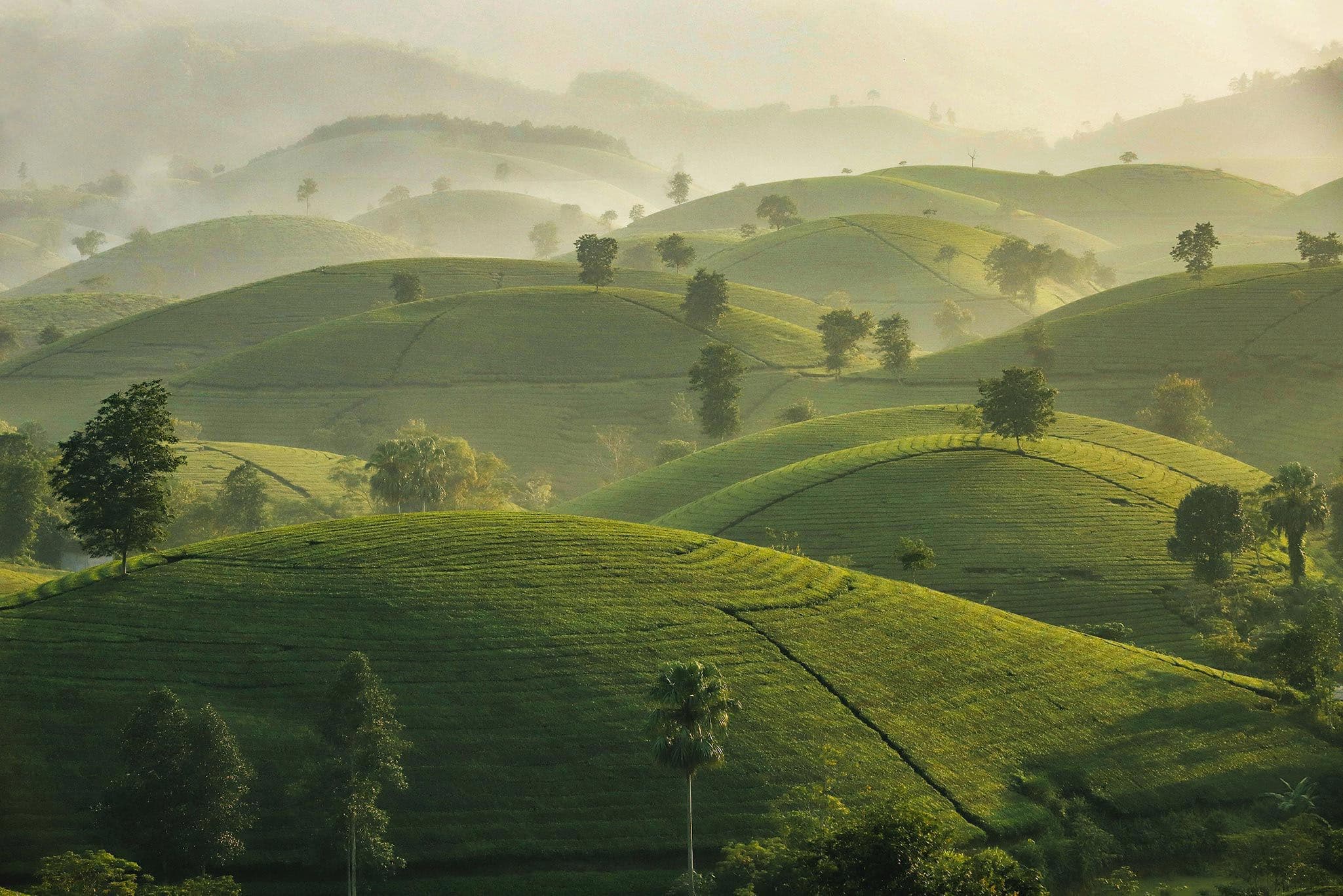
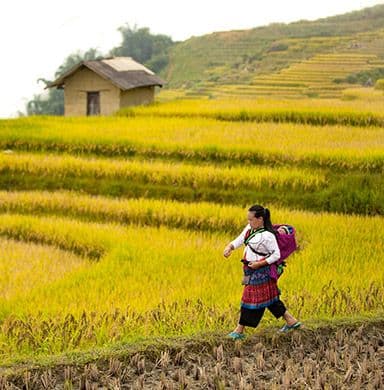
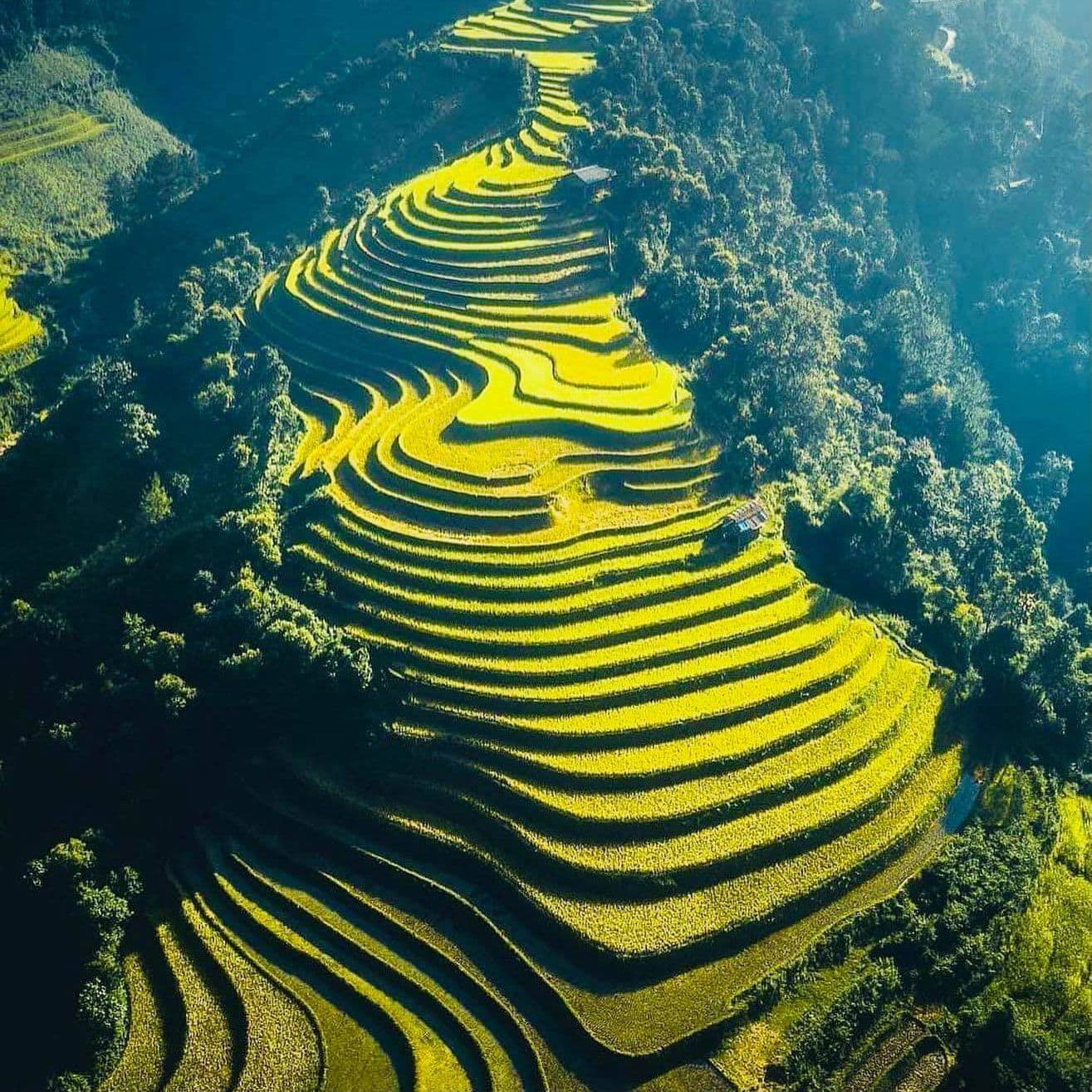
Pu Luong is a strong choice for travelers who want rice terraces, village paths, stilt houses, local meals, water wheels, and mountain views. It offers peaceful countryside with a softer rhythm than more remote mountain destinations.
Travelers can enjoy gentle walking, photography, weaving, local meals, and slow mornings. Pu Luong is especially good for couples, photographers, slow travelers, and nature lovers who want quiet scenery and a local atmosphere.
A 2-3 day extension works well from Hanoi or as part of a northern countryside route. Travelers should not rush Pu Luong because the value comes from slowing down, watching daily life, and enjoying the landscape.
Mai Chau: Valley Life and Gentle Cultural Encounters
Mai Chau offers green valleys, traditional stilt houses, cycling routes, local markets, ethnic culture, and home-style meals. It is suitable for travelers who prefer accessible rural experiences and softer walking.
The valley setting makes Mai Chau a comfortable option for families, seniors, couples, and first-time countryside travelers. It can be combined with Pu Luong or Ninh Binh for a fuller northern nature route.
Cultural activities should be arranged respectfully. Performances, village visits, and local meals should feel natural and community-based, not overly staged.
Mai Chau is a good choice when travelers want a gentle introduction to rural Vietnam with scenic views and easy pacing.
Sapa: Mountain Views and Ethnic Culture
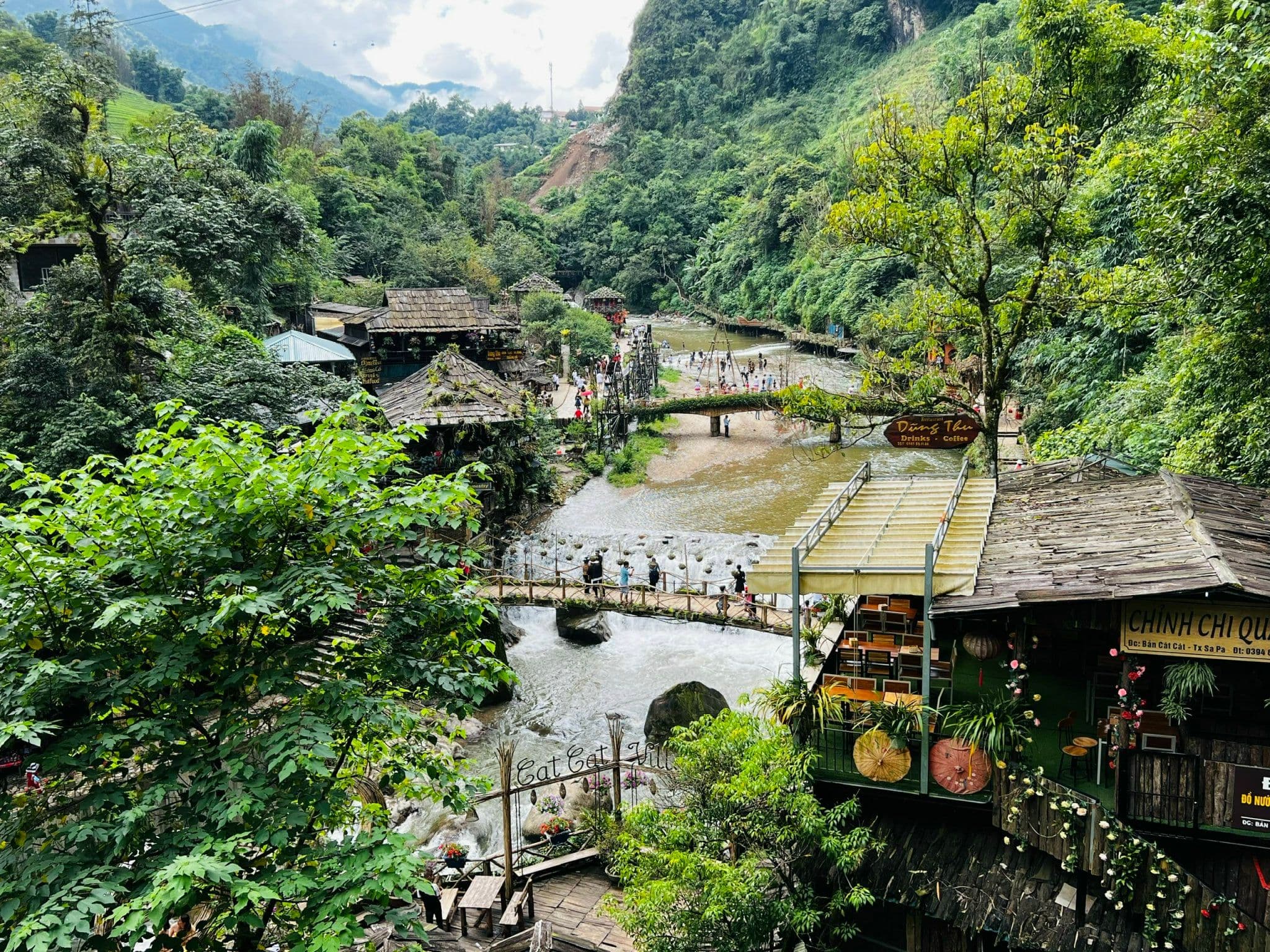
Sapa is known for terraced rice fields, mountain villages, local markets, textiles, and cool-climate scenery. It works well for travelers interested in ethnic culture and scenic trekking.
The walking difficulty should be matched to traveler fitness and weather. Some routes can be gentle, while others may involve steep paths, muddy trails, or longer hiking days. Travelers should be honest about comfort level before choosing a route.
Local guidance is important in Sapa. A good guide can help travelers interact respectfully with communities, understand local traditions, and avoid treating villages only as photo stops.
Sapa is best for photographers, culture seekers, and active travelers who want mountain landscapes with cultural depth.
Ha Giang: Dramatic Landscapes and Remote Local Life
Ha Giang is one of Vietnam’s most dramatic mountain destinations. It offers mountain passes, limestone plateaus, ethnic villages, local markets, and winding scenic roads.
This destination is ideal for travelers seeking a more adventurous nature and culture route. However, Ha Giang requires careful planning because road time can be long and comfort levels vary.
Travelers should consider season, safety, vehicle quality, driver experience, and realistic pacing. Private planning helps balance authenticity with comfort, especially for couples, small groups, photographers, and experienced travelers.
Ha Giang is not the best choice for travelers who dislike long drives or mountain roads. For the right traveler, however, it can be one of the most memorable parts of Vietnam.
Phong Nha: Caves, Forests, and Rural Villages
Phong Nha adds caves, rivers, limestone mountains, national park landscapes, and peaceful countryside to a nature and culture tour. It is ideal for travelers who want geology, adventure, and rural calm.
Activity levels can range from easy sightseeing to more active cave exploration. Families with older children, adventure travelers, and nature lovers can all enjoy Phong Nha when the route is matched to ability and comfort.
Travelers can add gentle cave visits, cycling, local meals, and nature-based activities. The destination works well between northern Vietnam and Central Vietnam if the route is planned carefully.
Phong Nha brings a different type of natural wonder to the itinerary, especially for travelers who want more than mountains and rice fields.
Mekong Delta: River Nature and Southern Local Life
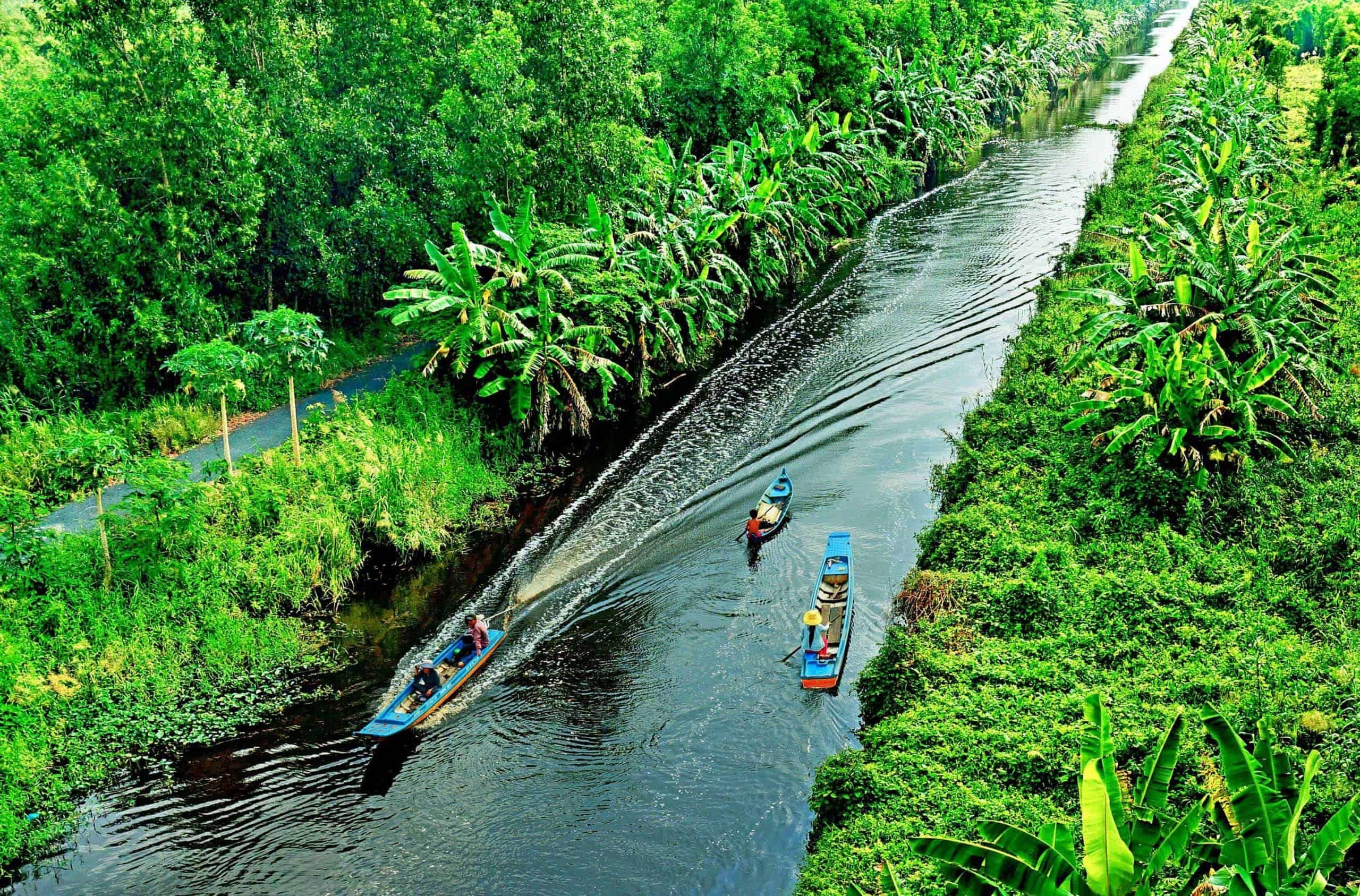
The Mekong Delta offers river-based nature instead of mountain scenery. Travelers can experience canals, fruit gardens, boat rides, riverside homes, local workshops, and home-style meals.
Activities may include coconut candy making, rice paper workshops, fruit tasting, local markets, garden visits, and small boat routes. The Mekong Delta is especially good for families, food lovers, slow travelers, and culture-focused visitors.
It works well with Ho Chi Minh City and southern extensions. A day trip can offer a quick introduction, while an overnight stay allows a deeper experience of river life and quieter local routines.
The Mekong Delta adds warmth and human connection to the final part of a Vietnam nature and culture tour.
Heritage Stops That Add Depth to the Journey
Hanoi: Old Quarter, Coffee Culture, and Northern Heritage
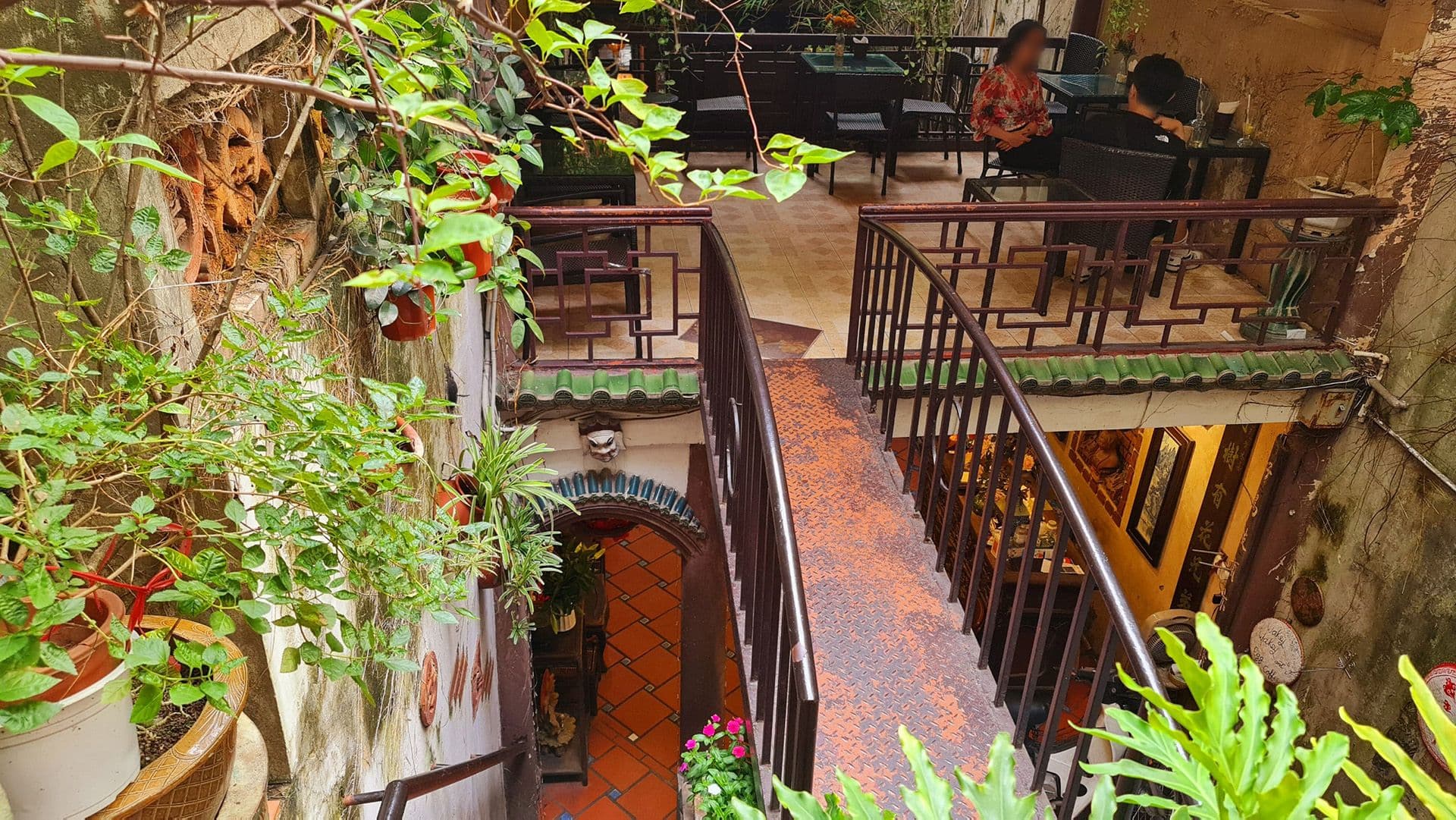
Hanoi is a strong cultural starting point before northern nature routes. The city offers Old Quarter streets, Hoan Kiem Lake, temples, museums, colonial architecture, markets, craft streets, and hidden cafés.
Travelers can add food tours, coffee culture, local-guided walks, and market visits. Hanoi is especially good for first-time visitors, food lovers, photographers, and culture travelers.
A local guide helps connect history, daily life, and food culture. Instead of only seeing busy streets, travelers can understand how neighborhoods developed, why certain foods matter, and how old traditions continue in a modern capital.
Hanoi works well before Ninh Binh, Pu Luong, Mai Chau, Sapa, Ha Giang, or Lan Ha Bay.
Hue: Imperial History and Quiet Cultural Atmosphere
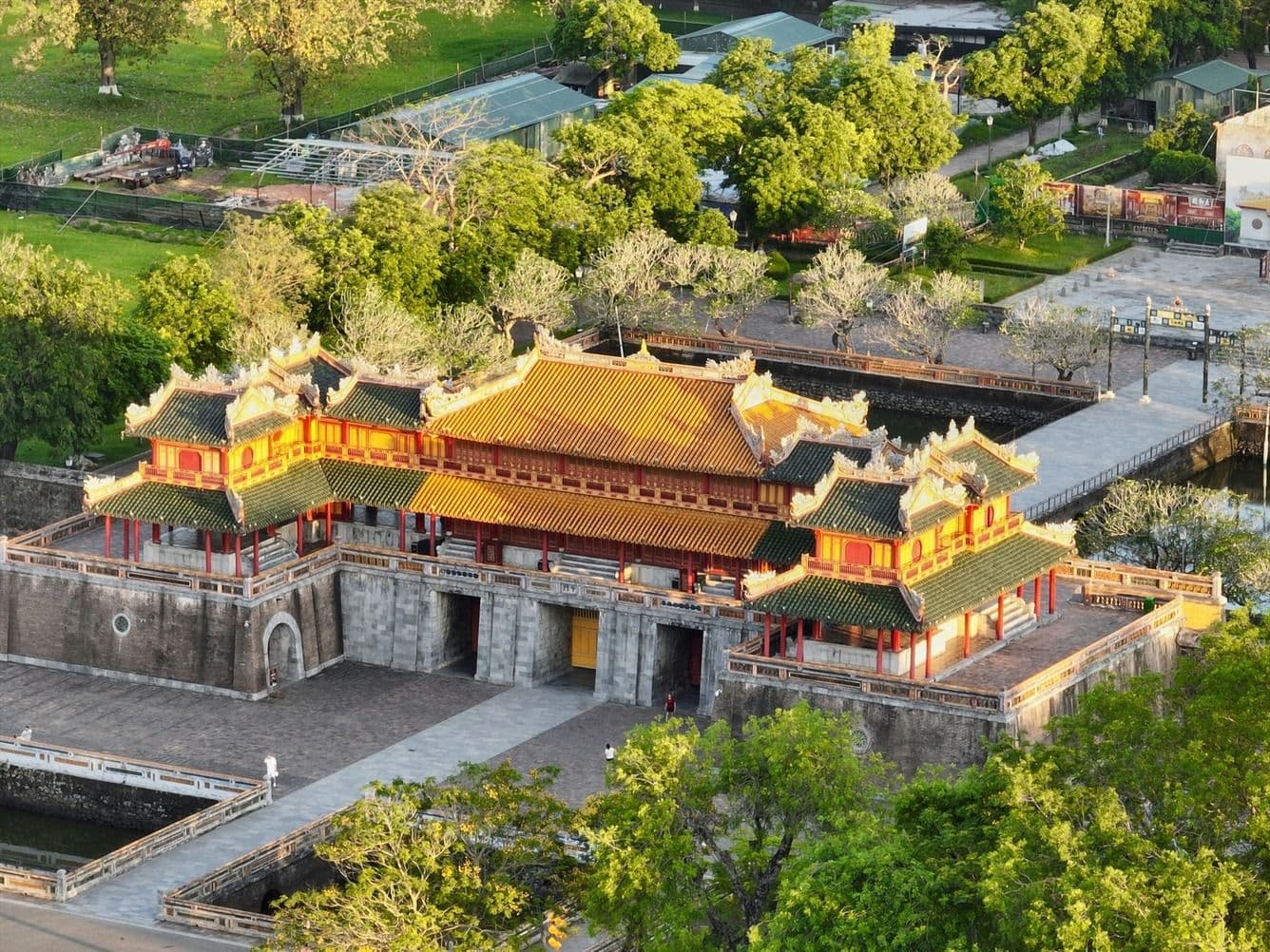
Hue offers imperial history, royal tombs, pagodas, garden houses, local markets, and regional cuisine. It has a slower and more reflective cultural atmosphere than Vietnam’s larger cities.
Travelers can visit Hue Imperial City, explore royal tombs, join a heritage storytelling route, enjoy royal-inspired cuisine, or experience quiet moments along the Perfume River.
Hue is suitable for seniors, history lovers, food travelers, and culture-focused visitors. It works well between Phong Nha, Da Nang, and Hoi An.
A local guide is especially useful in Hue because symbolism, architecture, dynastic history, and spiritual meaning are central to the experience.
Hoi An: Ancient Town, Craft Traditions, and Countryside Life
Hoi An is one of the easiest places to combine heritage with local hands-on experiences. It offers lantern streets, old merchant houses, riverside cafés, markets, temples, craft workshops, and nearby countryside.
Travelers can add cooking classes, lantern making, basket boats, cycling, tailoring, and local food. These experiences make Hoi An suitable for couples, families, photographers, honeymooners, and slow travelers.
Free time is important in Hoi An. The town is best enjoyed slowly, with time for cafés, evening walks, markets, workshops, and spontaneous local moments.
Hoi An adds warmth, creativity, and atmosphere to a nature and culture tour.
My Son Sanctuary: Cham Heritage and Spiritual History
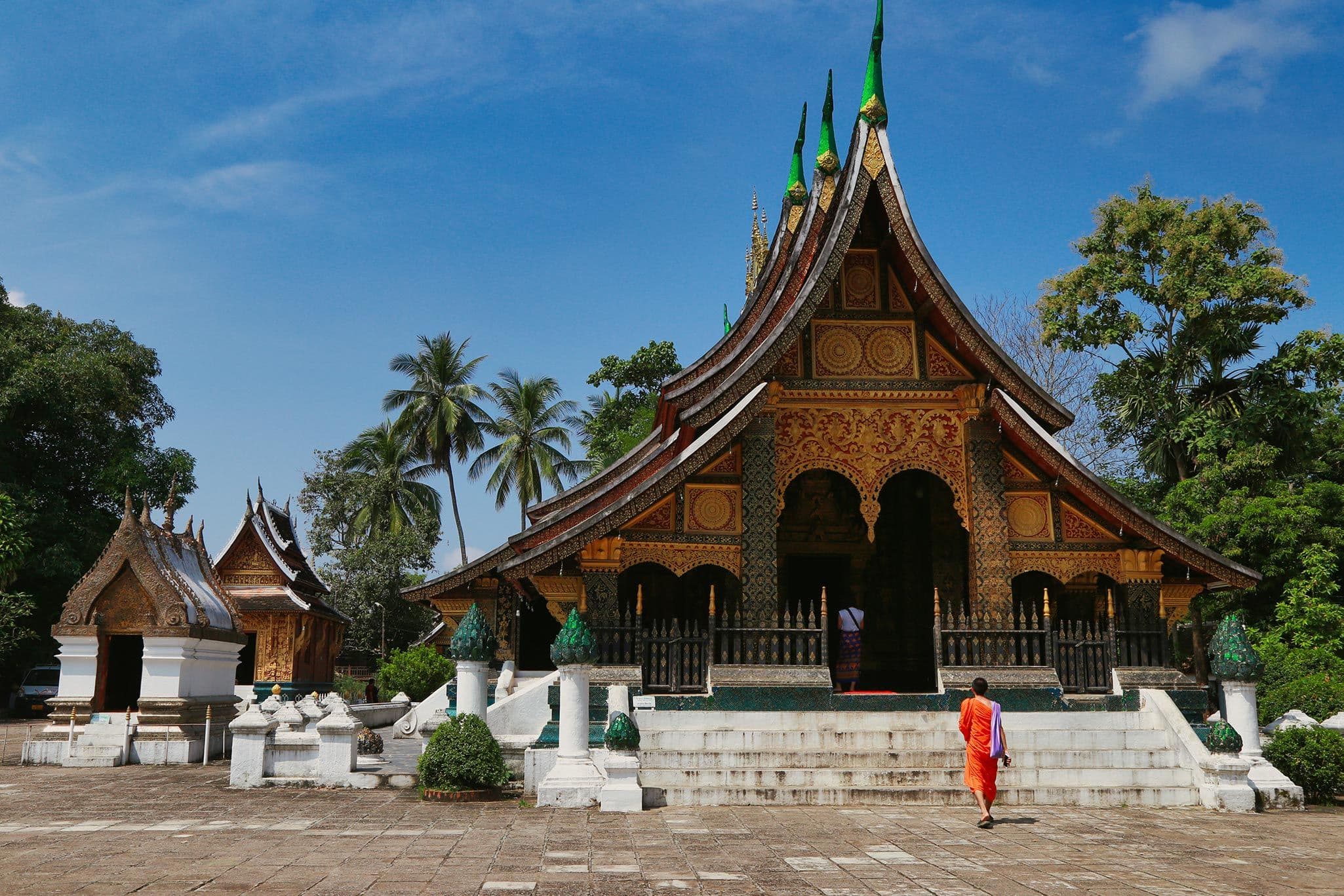
My Son Sanctuary is a meaningful cultural extension for travelers interested in ancient Champa history, architecture, and sacred landscapes. It works well as a half-day trip from Hoi An or Da Nang.
A guide is useful because the site is more meaningful when travelers understand symbolism, history, restoration context, and spiritual background.
My Son is best for history lovers and culture-focused travelers. It should be combined with Hoi An or Da Nang to avoid unnecessary travel complexity.
This stop adds a different cultural layer to the journey and expands the story beyond northern and imperial Vietnamese heritage.
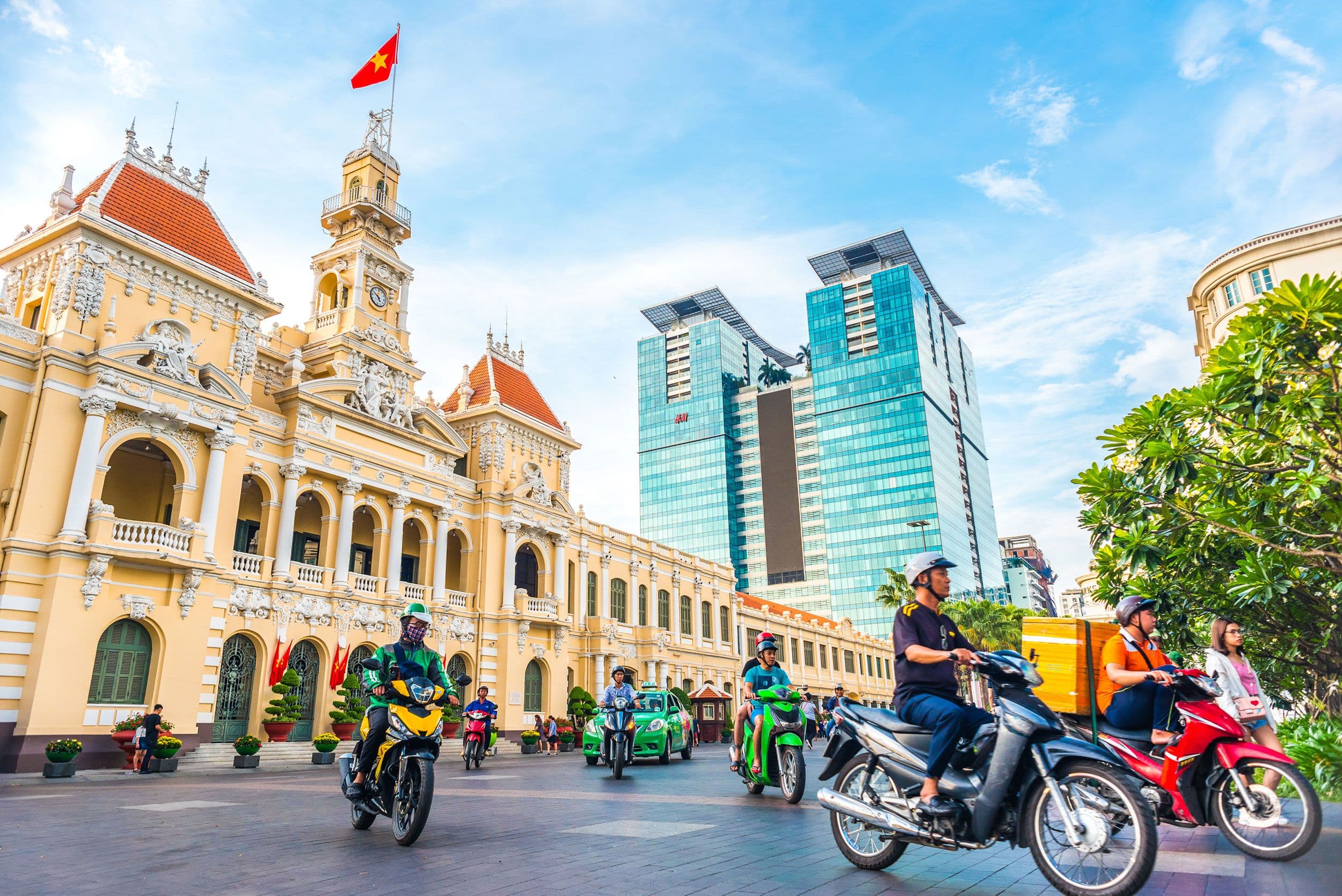
Ho Chi Minh City: Modern History and Southern Urban Culture
Ho Chi Minh City adds modern energy after mountains, heritage towns, and countryside routes. It offers markets, museums, local neighborhoods, cafés, historic buildings, and southern street food.
Travelers can add a private food tour, coffee route, local neighborhood walk, or history-focused visit. The city creates contrast between rural and urban Vietnam.
It works well before or after the Mekong Delta. For travelers who want to understand Vietnam’s modern rhythm, Ho Chi Minh City is an important final cultural layer.
Local-Life Experiences That Make the Tour More Memorable
Market Walks and Ingredient Stories
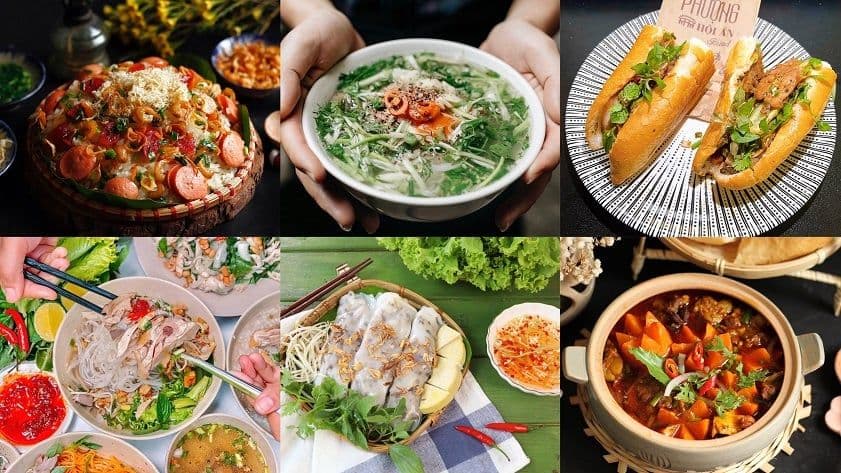
Local markets are some of the best places to understand Vietnam’s food culture and daily routines. Travelers can visit markets in Hanoi, Hue, Hoi An, Ho Chi Minh City, mountain towns, or the Mekong Delta.
Markets reveal how people shop for herbs, vegetables, noodles, rice paper, seafood, fruit, spices, and daily ingredients. They also show regional differences in food and lifestyle.
A guide can explain ingredients, etiquette, bargaining habits, and local cooking traditions. This helps travelers see markets as living cultural spaces rather than only colorful photo stops.
Market walks are especially good for food lovers, photographers, and culture travelers.
Village Meals and Home-Style Dining
Village meals and home-style dining help travelers understand how local dishes reflect landscape, season, and family tradition. Meals may be arranged in countryside homes, river communities, mountain villages, or family-run restaurants.
These experiences should be arranged respectfully with clear expectations. Travelers should understand whether the meal is hosted by a family, a local restaurant, or a community-based experience.
Dietary needs should be shared before booking. This is especially important for Muslim, Judaism, vegetarian, allergy-related, or other special food requirements.
A simple local meal can become one of the most meaningful memories of the journey when it is well guided and thoughtfully arranged.
Craft Workshops and Artisan Visits
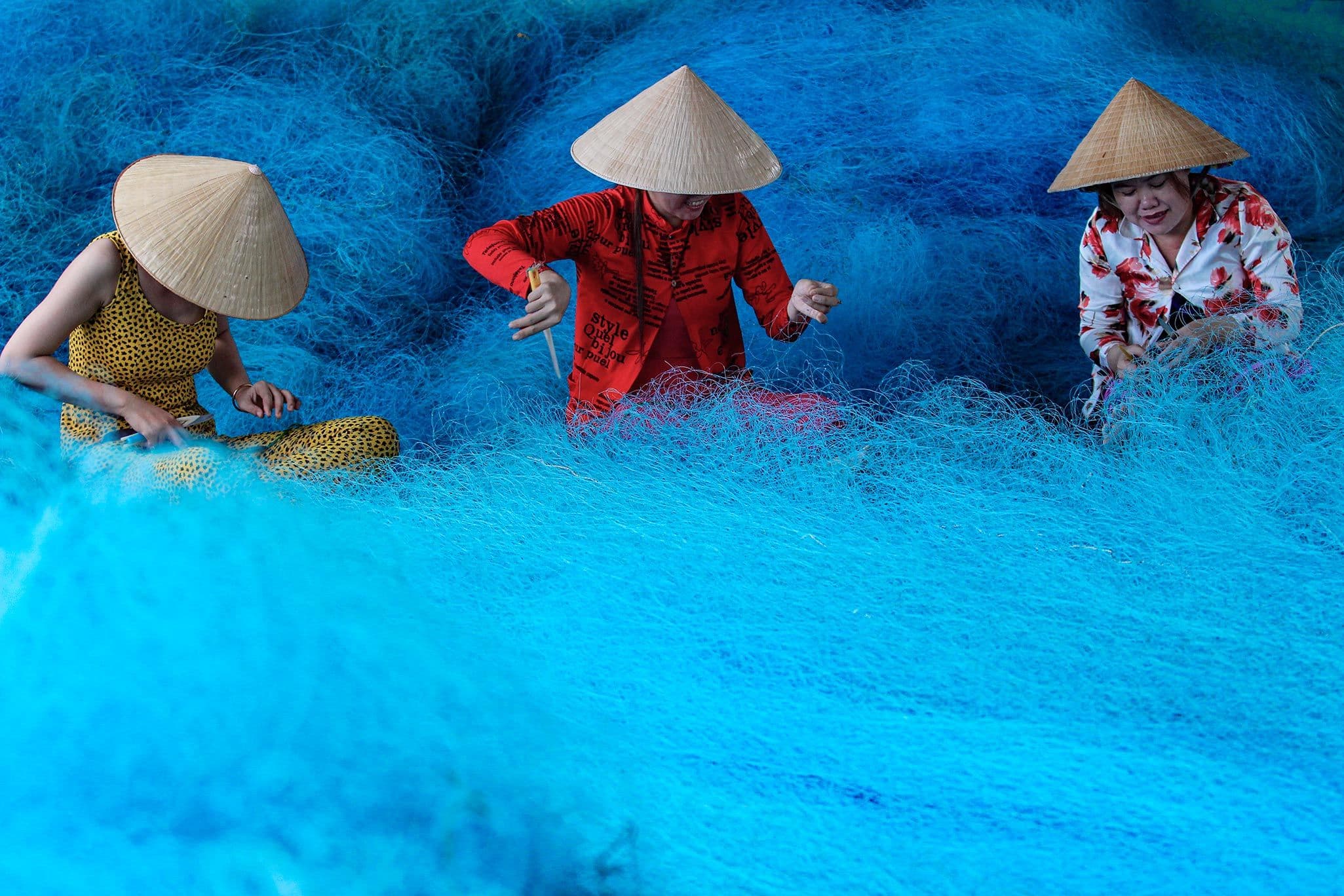
Craft workshops and artisan visits show how skills are passed through generations. Travelers can add pottery, lantern making, silk, incense, weaving, lacquerware, tailoring, bamboo work, or traditional painting.
Hands-on workshops are suitable for families, couples, creative travelers, and photographers. They also help break up the itinerary between nature and heritage sightseeing.
Travelers should choose workshops that support local artisans fairly. A good craft stop should feel educational and respectful, not like a rushed shopping stop.
These experiences add texture to the journey and help travelers understand the link between tradition, daily work, and local identity.
Cooking Classes and Coffee Culture
Cooking classes are a natural fit for Vietnam nature and culture tours because food connects landscape, family life, and regional identity. Classes can be added in Hanoi, Hue, Hoi An, or the Mekong Delta.
A market visit before the class creates a deeper experience. Travelers can learn about herbs, noodles, sauces, rice, seafood, and seasonal ingredients before preparing dishes.
Coffee culture is another meaningful daily-life experience. Hanoi coffee culture, egg coffee, phin coffee, coconut coffee, and hidden cafés help travelers slow down and observe local routines.
These experiences are good for food lovers, couples, families, and first-time visitors.
Countryside Cycling and Gentle Walking
Cycling and walking routes can be added in Ninh Binh, Hoi An countryside, Mai Chau, Pu Luong, or the Mekong Delta. These routes reveal rice fields, village roads, gardens, rivers, and local homes.
The activity level should match the traveler’s age and comfort. Families and seniors may prefer short, flat routes with rest stops, while active travelers may want longer countryside or mountain walks.
Private tours can adjust distance, pace, and timing. This makes countryside activities more flexible and safer.
Gentle movement helps travelers experience landscapes at a human pace rather than only seeing them from a vehicle.
River and Boat Experiences
Boat experiences can be added in Ninh Binh, Lan Ha Bay, Ha Long Bay, Hue, Hoi An, or the Mekong Delta. Water-based routes offer a softer way to experience landscape and local life.
Travelers should choose boat experiences based on safety, comfort, scenery, and crowd level. A peaceful boat route can be ideal for seniors, couples, families, and photographers.
Boat trips should be paced calmly, not rushed. The value comes from watching the landscape, noticing local routines, and enjoying quiet moments on the water.
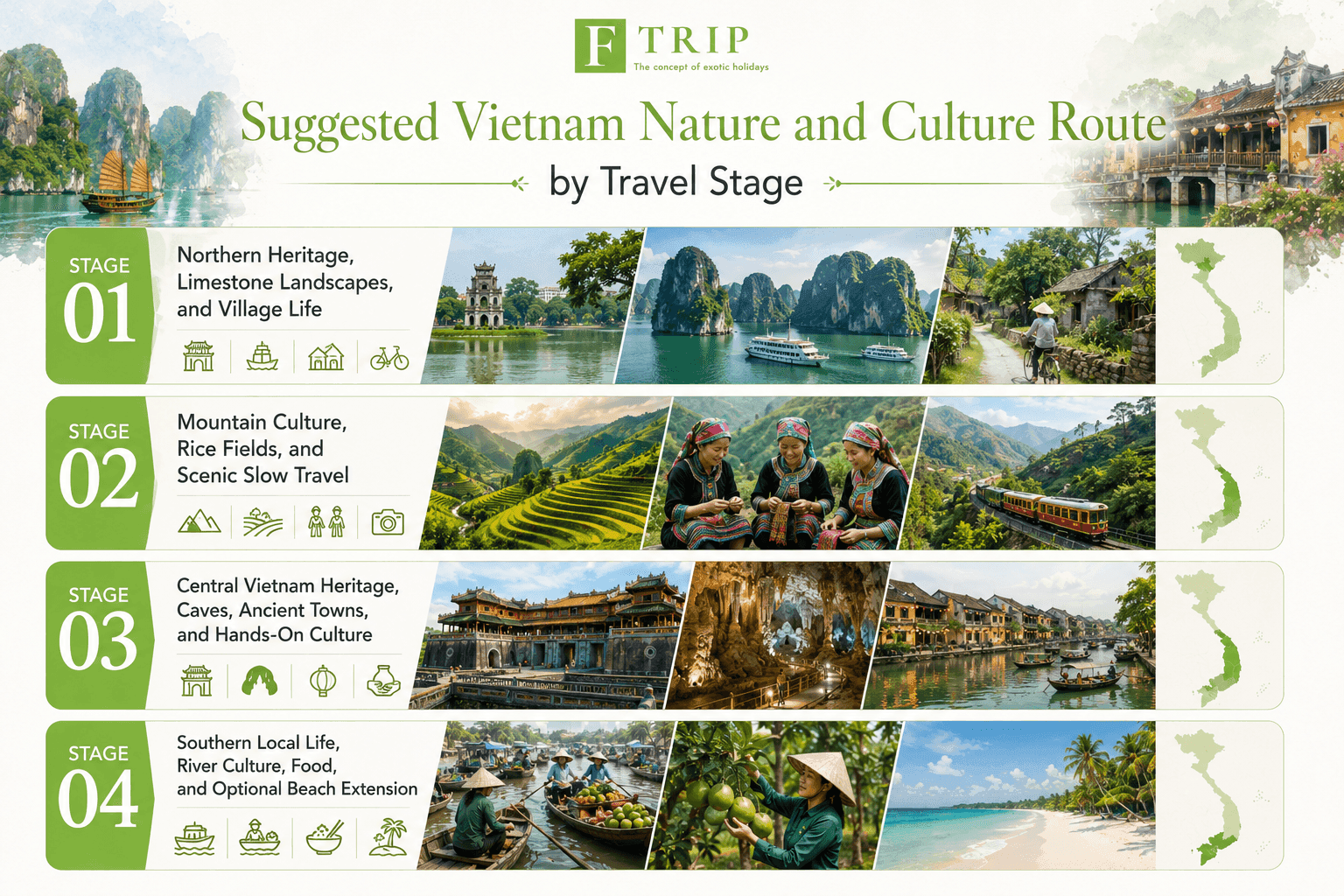
Suggested Vietnam Nature and Culture Route by Travel Stage
Stage 1: Northern Heritage, Limestone Landscapes, and Village Life
A strong Vietnam nature and culture tour can begin in Hanoi with Old Quarter walks, coffee culture, markets, temples, museums, and local food. The arrival day should stay light, especially for long-haul travelers.
From Hanoi, travelers can continue to Ninh Binh for boat rides, limestone scenery, temples, cycling, and countryside meals. Ninh Binh gives travelers a soft introduction to Vietnam’s natural landscapes without difficult logistics.
Travelers who want more village life can add Mai Chau or Pu Luong for rice valleys, stilt houses, village walks, and soft mountain views. Craft villages near Hanoi can also be included for hands-on cultural experiences.
This stage introduces Vietnam through heritage, nature, food, and village life.
Stage 2: Mountain Culture, Rice Fields, and Scenic Slow Travel
The second stage can include Sapa, Ha Giang, Pu Luong, or Mai Chau depending on travel style, comfort level, and available time. This stage focuses on rice fields, local markets, ethnic culture, village paths, textiles, home-style meals, and photography.
Families and seniors may prefer gentle walking in Mai Chau or Pu Luong. Active travelers and photographers may prefer Sapa or Ha Giang for stronger mountain scenery.
Mountain destinations should not be rushed because road time can be long. Local guides are also important for respectful community interaction and deeper cultural understanding.
This stage creates the strongest mountain and cultural immersion in the tour.
Stage 3: Central Vietnam Heritage, Caves, Ancient Towns, and Hands-On Culture
Central Vietnam can include Phong Nha, Hue, Da Nang, and Hoi An depending on trip length. This stage connects natural wonder, historical depth, and local creativity.
Phong Nha adds caves, rivers, forests, and rural calm. Hue adds imperial heritage, royal tombs, garden houses, and regional cuisine. Hoi An adds ancient town walks, cooking classes, lantern making, markets, and countryside cycling.
Da Nang or Hoi An can also add beach or spa time for balance. This is helpful because nature and culture tours should still include rest, not only sightseeing.
This stage works well when travelers want a rich mix of caves, heritage, food, craft, and coastal comfort.
Stage 4: Southern Local Life, River Culture, Food, and Optional Beach Extension
The final stage can continue to Ho Chi Minh City for markets, cafés, museums, street food, and modern city culture. This adds urban contrast after mountains, countryside, and heritage towns.
The Mekong Delta can then add canals, fruit gardens, local workshops, rowing boats, and home-style meals. Travelers can include a street food tour or coffee experience to understand southern daily life.
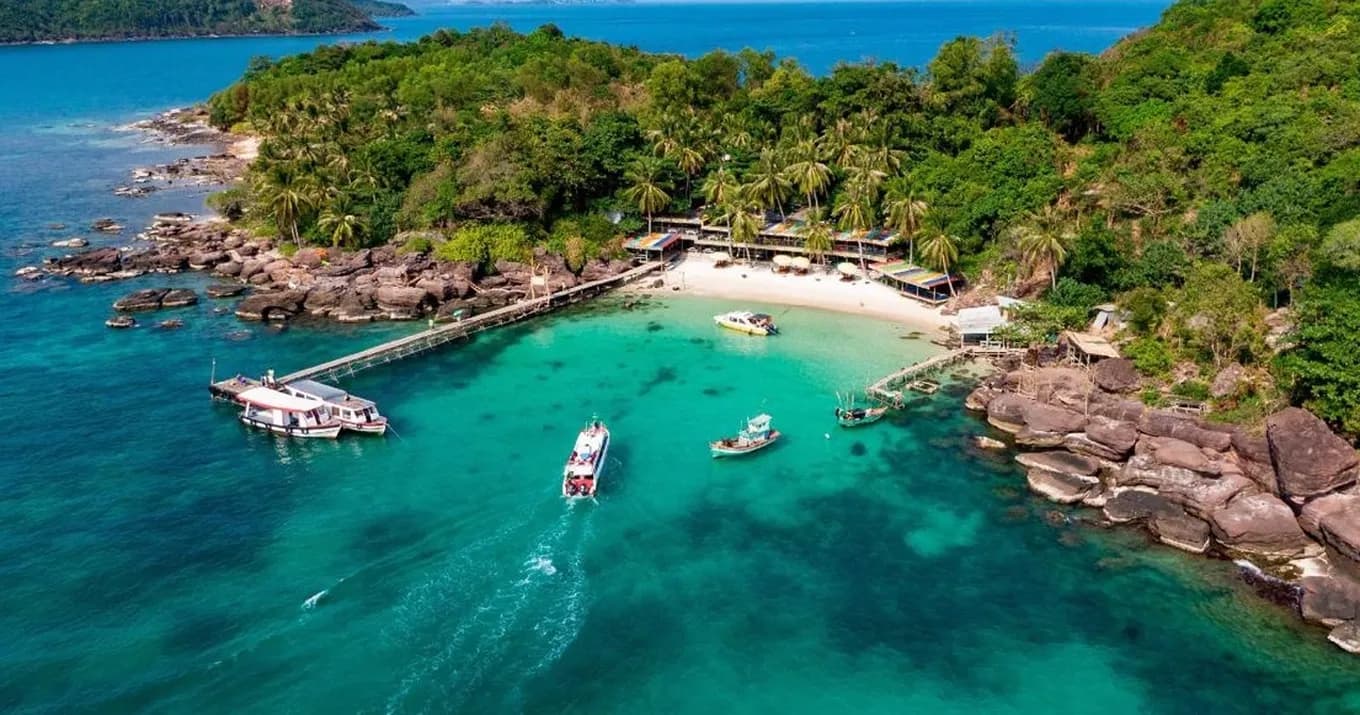
If the trip includes relaxation at the end, travelers can add Phu Quoc, Con Dao, or another beach destination. The final day should stay light with coffee, shopping, spa, or a short walk before departure.
This stage completes the journey with southern culture, river communities, local flavor, and optional rest.
Sample Route Ideas by Trip Length
7-9 Days: Soft Nature and Culture Introduction
A 7-9 day route can include Hanoi, Ninh Binh, Pu Luong or Mai Chau, and Hoi An. This works well for travelers with limited time who want culture, limestone scenery, village life, rice fields, and ancient town charm.
This route should not try to cover the full country. It is better to focus on a few strong destinations and include one cooking class, craft workshop, or guided local experience for deeper connection.
This itinerary works best when travelers want a gentle introduction instead of a rushed national tour.
10-12 Days: Balanced Mountains, Heritage, and Local Life
A 10-12 day route can include Hanoi, Ninh Binh, Pu Luong or Mai Chau, Hue, Hoi An, and Ho Chi Minh City. This is a good choice for first-time visitors who want variety without extreme travel demands.
The route includes northern nature, central heritage, ancient town culture, and southern city life. Travelers can add food tours, market walks, boat rides, local meals, and workshops.
At least one relaxed day should be included so the trip does not feel overloaded.
14 Days: Deeper Nature and Culture Journey
A 14-day route can include Hanoi, Ninh Binh, Pu Luong, Phong Nha, Hue, Hoi An, Ho Chi Minh City, and the Mekong Delta. This route is ideal for travelers who want caves, heritage, countryside, food, and river culture.
Travelers can add photography, cooking classes, local meals, craft villages, gentle walks, and private guiding. This itinerary suits couples, families, seniors, photographers, and slow travelers when customized carefully.
Smart transport planning is important because the route crosses several regions. Without good pacing, the trip can feel tiring.
21 Days: Complete Vietnam Nature and Culture Route
A 21-day route can include Hanoi, Ninh Binh, Sapa or Ha Giang, Pu Luong or Mai Chau, Lan Ha Bay, Phong Nha, Hue, Hoi An, Da Nang, Ho Chi Minh City, the Mekong Delta, and Phu Quoc or Con Dao.
This is best for slow travelers and deeper explorers. It combines mountains, bays, caves, heritage towns, rivers, beaches, villages, food, and local life.
The route works well for photographers, culture travelers, and long-stay visitors. It should be designed as a fully customized private itinerary so the journey feels natural rather than overloaded.
How to Customize the Tour by Travel Style
For First-Time Visitors
First-time visitors should choose a clear and balanced route. Hanoi, Ninh Binh, Hoi An, Hue, Ho Chi Minh City, and the Mekong Delta can create a strong first Vietnam experience.
A soft mountain destination such as Mai Chau or Pu Luong can be added if time allows. Travelers should focus on comfort, guides, food tours, and manageable transfers.
Overly remote routes should be avoided on a short first trip unless travelers are comfortable with long drives and more basic conditions.
For Couples and Honeymooners
Couples and honeymooners can add boutique hotels, scenic landscapes, private guides, slow village walks, Hoi An lantern streets, spa time, and beach extensions.
Strong destination choices include Ninh Binh, Pu Luong, Lan Ha Bay, Hoi An, Phu Quoc, and Con Dao. Photography, romantic dinners, cooking classes, wellness, and private guiding can make the trip feel more personal.
The route should not be overly packed. The best romantic itineraries create space for quiet moments.
For Families
Families should choose interactive nature and culture experiences. Cooking classes, lantern making, boat rides, light cycling, farms, markets, and beach or pool time can work well for children and parents.
The itinerary should avoid long treks and too many hotel changes. Family rooms, private transfers, and child-friendly guides can make the journey smoother.
Parents should share children’s ages, food needs, and activity limits early so the route can be planned realistically.
For Senior Travelers
Senior travelers should focus on gentle nature, private transfers, comfortable hotels, short walks, scenic boat rides, heritage sites, and slower schedules.
Good destinations include Hanoi, Ninh Binh, Mai Chau, Hue, Hoi An, Da Nang, Ho Chi Minh City, and the Mekong Delta. Difficult mountain routes should be avoided unless carefully planned.
Hotel elevators, stairs, walking distances, boat access, and transfer time should be checked before booking.
For Photographers
Photographers may want sunrise in Ninh Binh, rice fields in Pu Luong or Sapa, markets in Hanoi and the Mekong Delta, lanterns in Hoi An, heritage in Hue, and river life in the south.
Private guides and flexible timing are especially useful for photography. Good light, local access, and slower pacing matter more than covering many destinations quickly.
Travelers should ask permission before taking close-up portraits and avoid turning local communities into photo props.
For Food and Culture Lovers
Food and culture lovers can build the route around Hanoi, Hue, Hoi An, Ho Chi Minh City, and the Mekong Delta. Nature stops such as Ninh Binh, Pu Luong, and river villages can add context.
Street food, cooking classes, coffee culture, markets, craft workshops, and home-style meals help connect landscape with daily life.
Food becomes a bridge between nature, heritage, and people. Dietary needs should be shared before booking.
Responsible Travel Tips for Nature and Culture Tours
How Can Travelers Respect Local Communities?
Respectful travel is essential for nature and culture tours. Travelers should ask permission before taking close-up photos, dress appropriately in villages and religious spaces, and avoid entering private homes or fields without guidance.
Supporting local hosts, guides, artisans, and family businesses helps tourism benefit communities more fairly. Travelers should choose experiences that feel respectful and well arranged.
A good local guide can help travelers avoid misunderstandings and behave appropriately in different cultural settings.
How Can Travelers Protect Natural Places?
Travelers should stay on marked paths where required and avoid littering in mountains, caves, rivers, beaches, and villages. Natural places are part of local life, not only tourist attractions.
Using refillable bottles when possible, respecting wildlife, and following local rules in national parks, caves, and protected areas can reduce negative impact.
Responsible travel keeps Vietnam’s natural beauty enjoyable for both local communities and future visitors.
Why Choose Quality Over Quantity?
Fewer destinations can create deeper travel experiences. Slow travel allows more time for local interaction, photography, rest, and understanding.
Rushing through villages or nature sites often reduces both comfort and meaning. Travelers may see more places but remember less.
Choosing meaningful experiences over checklist travel often creates better memories. It can also reduce travel fatigue and unnecessary transport costs.
How Can Travelers Show Cultural Sensitivity?
Travelers should learn basic etiquette before entering temples, homes, and villages. Respect for different customs, languages, beliefs, and lifestyles is important.
Being patient with local rhythms and communication also helps. Not every place works like a hotel or city attraction, especially in rural areas.
Guides can help avoid misunderstandings and explain what is appropriate in each setting. Cultural sensitivity makes the experience more authentic and respectful.
Planning Tips Before Booking This Tour
How Should Travelers Match the Route to the Season?
Mountain weather, rice-field scenery, cave conditions, coastal weather, and river activities vary by month. Travelers should not assume all Vietnam destinations share the same climate.
A local planner can help choose the right region for the travel period. Weather alternatives should also be built into the plan, especially for outdoor activities.
Season-aware planning improves comfort, safety, and photo opportunities.
How Should Travelers Check Activity Level?
Nature and culture tours may include walking, cycling, boats, stairs, markets, caves, and mountain roads. Travelers should choose activity levels honestly.
Families and seniors should ask about walking distance, road conditions, stairs, boat access, and rest stops. Active travelers can add trekking or deeper nature routes.
Private tours can adjust pace, which is one of the main advantages of customized planning.
Why Does Route Flow Matter?
Vietnam is long, so route design matters. Domestic flights, private transfers, train rides, boat trips, and road travel should be arranged logically.
Travelers should avoid unnecessary backtracking and too many one-night stays. A smooth route leaves more energy for experiences.
Good route flow can make the trip feel more comfortable without necessarily increasing the budget.
Why Is Guide Quality Important?
Local guides add meaning to nature, heritage, food, markets, villages, and religious sites. They help turn places into stories.
Travelers should ask where guides are included and whether specialist guides are available for photography, food, history, or family travel.
Guide quality can shape the whole experience. Strong storytelling makes the trip more memorable and helps travelers understand Vietnam beyond the surface.
Travel Requirements US Travelers Should Prepare
What Passport and Vietnam Visa Details Matter?
US travelers need a valid passport and a Vietnam visa or e-visa. The U.S. Department of State notes that passports should have six months’ validity beyond the arrival date and one blank page per stamp. It also states that US travelers need a visa to enter Vietnam.
Vietnam’s official e-visa system lists the e-visa fee as US$25 for single entry and US$50 for multiple entry. Travelers should apply through the official system, check all passport details carefully, and print approved visa documents before departure.
Because entry rules can change, travelers should verify official information close to the travel date.
Why Is Travel Insurance Important for Outdoor Safety?
Travel insurance is strongly recommended for Vietnam nature and culture tours. Coverage should include medical care, cancellation, delays, lost luggage, domestic flights, boats, caves, countryside routes, mountain roads, and planned activities.
Travelers should prepare prescription medication, basic first aid, insect repellent, sun protection, and rain gear. Outdoor activities should match fitness level and comfort.
Families, seniors, and mountain travelers may need extra planning because medical access can be more limited in remote areas.
What Money, Connectivity, and Documents Should Travelers Prepare?
Travelers should bring credit cards and some Vietnamese Dong for small purchases. SIM, eSIM, or roaming access is useful for maps, messaging, translation, and local support.
Hotel addresses, guide contacts, itinerary details, domestic flight information, and emergency numbers should be saved offline. Printed and digital copies of passport, visa, insurance, and flights should be kept in separate places.
Medication and key documents should stay in hand luggage, especially when the itinerary includes domestic flights or remote travel.
Why Plan a Vietnam Nature and Culture Tour with FtripVietnam?
FtripVietnam helps travelers design Vietnam nature and culture tours based on travel dates, destination route, comfort level, hotel style, dietary needs, activity level, and preferred pace.
The team is 100% local, with 7+ years of experience creating Vietnam trips for international travelers. This local knowledge helps travelers choose suitable routes, avoid rushed planning, select trusted guides, and match destinations with season and comfort level.
FtripVietnam can customize nature and culture tours for first-time visitors, couples, families, seniors, small groups, luxury travelers, photographers, food lovers, slow travelers, and adventure travelers.
The team also has experience serving niche markets, including Muslim and Judaism travelers. This makes it easier to arrange suitable meals, cultural sensitivity, private support, and smoother logistics.
Travelers can request experiences that are difficult to find in standard packages, such as mountain photography routes, cooking classes, local workshops, craft villages, private food routes, countryside stays, scenic boat rides, river communities, wellness days, and daily cultural activities.
Many tourists praise FtripVietnam for enthusiastic, knowledgeable, and friendly support. This is especially valuable for travelers who want mountains, heritage, and local life arranged with care, comfort, flexibility, and local insight.
FAQs
What is a Vietnam nature and culture tour?
A Vietnam nature and culture tour combines scenic landscapes, heritage sites, local communities, food experiences, villages, markets, and guided cultural discovery. It may include mountains, rice fields, caves, rivers, ancient towns, temples, craft villages, cooking classes, and local meals. The goal is to help travelers understand Vietnam through both landscapes and people.
Where are the best places for nature and culture in Vietnam?
Strong destinations include Hanoi, Ninh Binh, Pu Luong, Mai Chau, Sapa, Ha Giang, Phong Nha, Hue, Hoi An, Ho Chi Minh City, and the Mekong Delta. Ninh Binh and Pu Luong are good for soft nature and countryside. Hue and Hoi An are strong for heritage and local culture. The Mekong Delta is ideal for river life and southern food.
How many days do you need for a Vietnam nature and culture tour?
Around 7-9 days works for a compact route with northern nature and central heritage. Around 10-12 days works well for first-time visitors who want balanced highlights. Around 14 days allows mountains, caves, heritage towns, local experiences, and southern river life. Around 21 days is ideal for deeper slow travel across Vietnam.
Can a Vietnam nature and culture tour be customized?
Yes, a Vietnam nature and culture tour can be customized by destination, activity level, hotel style, guide type, travel pace, dietary needs, season, and comfort level. Travelers can add trekking, soft walking, cycling, caves, cooking classes, craft workshops, local meals, photography, heritage walks, river tours, and beach extensions. With FtripVietnam, travelers can design a route that matches their interests and preferred travel style.
Conclusion
A Vietnam nature and culture tour is ideal for travelers who want mountains, heritage, local life, food, villages, rivers, caves, and meaningful cultural interaction in one journey. It brings together three important layers: scenic landscapes, cultural heritage, and human connection.
Key destinations may include Hanoi, Ninh Binh, Pu Luong, Mai Chau, Sapa, Ha Giang, Phong Nha, Hue, Hoi An, Ho Chi Minh City, and the Mekong Delta. Each place adds a different perspective, from mountain scenery and rice fields to ancient towns, craft traditions, river communities, and local food.
The right tour should match season, activity level, comfort, trip length, guide quality, dietary needs, and travel style. Slower pacing, local guides, and respectful community interaction make the experience more authentic and memorable.
For travelers who want a customized itinerary where mountains, heritage, and local life come together naturally, FtripVietnam can help design a Vietnam nature and culture tour with trusted guides, private transfers, suitable hotels, special meals, scenic routes, local experiences, and flexible support.
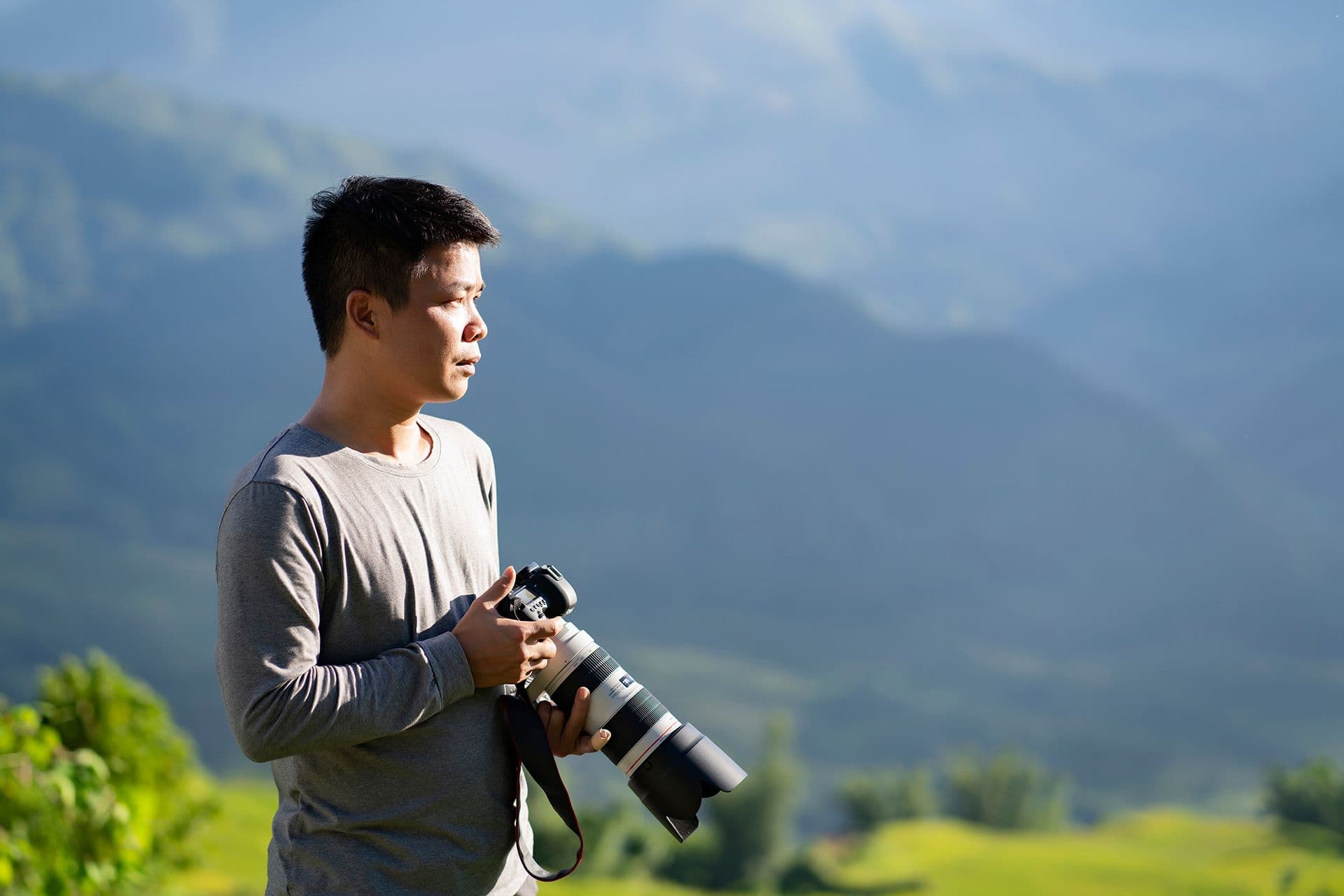
Founder & Photography Guide
Specialties: Culture, landscape, portrait, hiking, active and adventurous tour
Besides my unlimited passion for traveling, a professional tour guide for over a decade, I have been taking photographs since sitting at Hanoi of the University of Culture in the early 2000s. Photography started as a hobby but it was seriously taken due to my work relations and my significant passion for the beauty of our world, especially in Southeast Asian parts such as Vietnam, Laos, Cambodia, and Myanmar.
Within a few years of taking photographs, my works began to be recognized by many reliable international publications such as AFAR Travel, The Times, and The Daily Telegraph newspaper. In addition, I continuously add to my growing profile by winning numerous major awards: 3rd Position of The Independent Photographer 2018, 1st Position of Amateur Photographer of the year 2018, Grand Prize Winner of the AFAR Travel Photography 2019, and a Gold Award of San Francisco Bay International Photography 2020.
I photograph a wide variety of subjects, from travel to landscapes to street scenes. I enjoy documenting the East’s rich cultural heritage and its land soaked in glorious sunrise or sunset light in remote and secluded spots. And, I am very happy to share my knowledge and experience with you. You can visit Luminousvietnamtour to explore tour!