
- Is There a Best Time to Visit Vietnam Overall?
- The short answer
- Why Vietnam is different from many destinations
- Why travelers should choose by region, not just by country
- Understanding Vietnam’s Travel Seasons
- Spring in Vietnam
- Summer in Vietnam
- Autumn in Vietnam
- Winter in Vietnam
- Best Time to Visit Northern Vietnam
- Best months for Hanoi and nearby cultural travel
- Best time for Ha Long Bay
- Best time for Ninh Binh
- Best time for Sapa and mountain destinations
- Best Time to Visit Central Vietnam
- Best time for Hue
- Best time for Hoi An and Da Nang
- What to know about the rainy season in central Vietnam
- Best Time to Visit Southern Vietnam
- Best months for Ho Chi Minh City and the Mekong Delta
- Best time for Phu Quoc
- Reasons to still visit in the wetter months
- Best Time to Visit Vietnam by Travel Style
- Best time for sightseeing and first-time travel
- Best time for beaches and island holidays
- Best time for cultural experiences
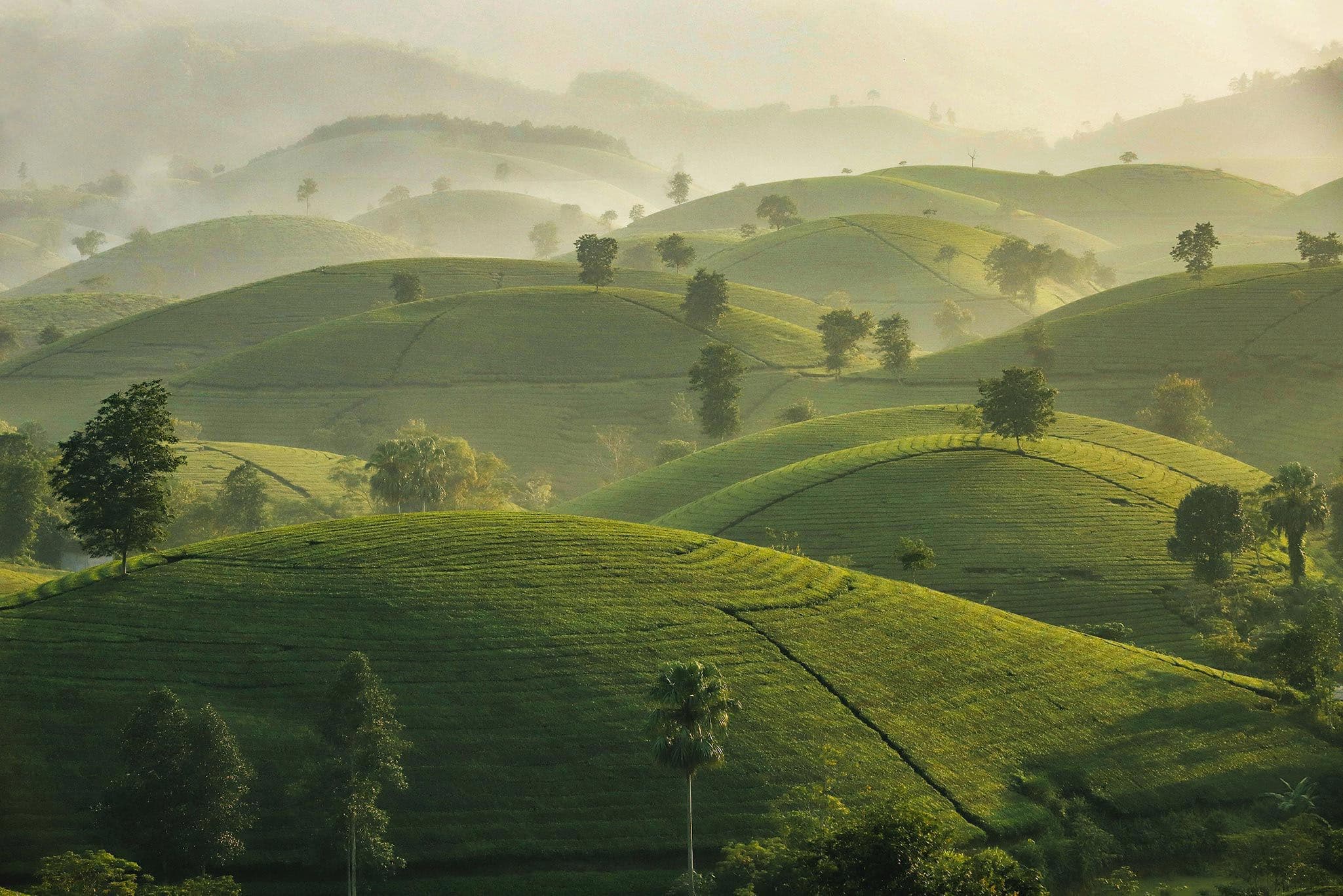
- Best time for scenic landscapes and photography
- Best time for cruises and river journeys
- Vietnam Weather by Month at a Glance
- January to March
- April to June
- July to September
- October to December
- When Not to Visit Vietnam
- How to Choose the Best Time for Your Vietnam Trip
- Decide which regions matter most
- Match the season to your travel priorities
- Consider crowd levels and pricing
- Build an itinerary around weather logic
- Why FtripVietnam Can Help You Plan the Right Vietnam Trip
- Fully customizable itineraries based on your preferred season
- 100% local experts with 7+ years of experience
- Better planning for niche travel needs
- Unique experiences beyond standard packages
- Highly praised service
- Sample Best-Time Recommendations for Different Travelers
- Best time for a first-time Vietnam highlights trip
- Best time for a luxury cultural and scenic journey
- Best time for a Vietnam beach holiday
- Best time for a photography-focused trip
- Best time for a multi-region itinerary from north to south
- Frequently Asked Questions
- What is the best month to visit Vietnam?
- Is Vietnam better in the dry season or rainy season?
- When is the cheapest time to visit Vietnam?
- What is the best time to visit Hanoi, Hoi An, and Ho Chi Minh City?
- Is March or April a good time to visit Vietnam?
- Can I visit Vietnam during the rainy season?
- What is the best time for Ha Long Bay and Phu Quoc?
- Conclusion
The most important truth for travelers planning Vietnam is simple: there is no single one-size-fits-all answer. Vietnam stretches across several climate zones, so the weather can feel very different from north to south at the same time. One region may be sunny and ideal for sightseeing, while another may be humid, rainy, or less suitable for the kind of trip you want.
That is why the best time to visit Vietnam depends on several practical factors: which regions you plan to visit, what type of journey you want, your weather preferences, and your scenery goals, whether that means beaches, mountains, rice fields, city culture, or a cruise.
This guide explains Vietnam’s seasons clearly so travelers can choose the right time with confidence and build a smarter itinerary around weather, comfort, and travel priorities.
Is There a Best Time to Visit Vietnam Overall?
The short answer
If you want the broadest, safest recommendation, March to May is often considered the most favorable overall period for Vietnam. Vietnam’s official tourism guidance notes that this window tends to offer the best weather countrywide, with many destinations enjoying pleasant conditions.
Why Vietnam is different from many destinations
Vietnam is different from smaller countries because its long north-to-south geography creates varied climate patterns. The north, center, and south do not follow exactly the same seasonal rhythm, so good travel conditions in one area do not automatically mean the same elsewhere.
Why travelers should choose by region, not just by country
For that reason, smart trip planning should focus on the right season for the right region, not just “Vietnam” as a whole. This is especially important for first-time travelers building multi-region itineraries that combine places such as Hanoi, Ha Long Bay, Hoi An, and Ho Chi Minh City.
Understanding Vietnam’s Travel Seasons
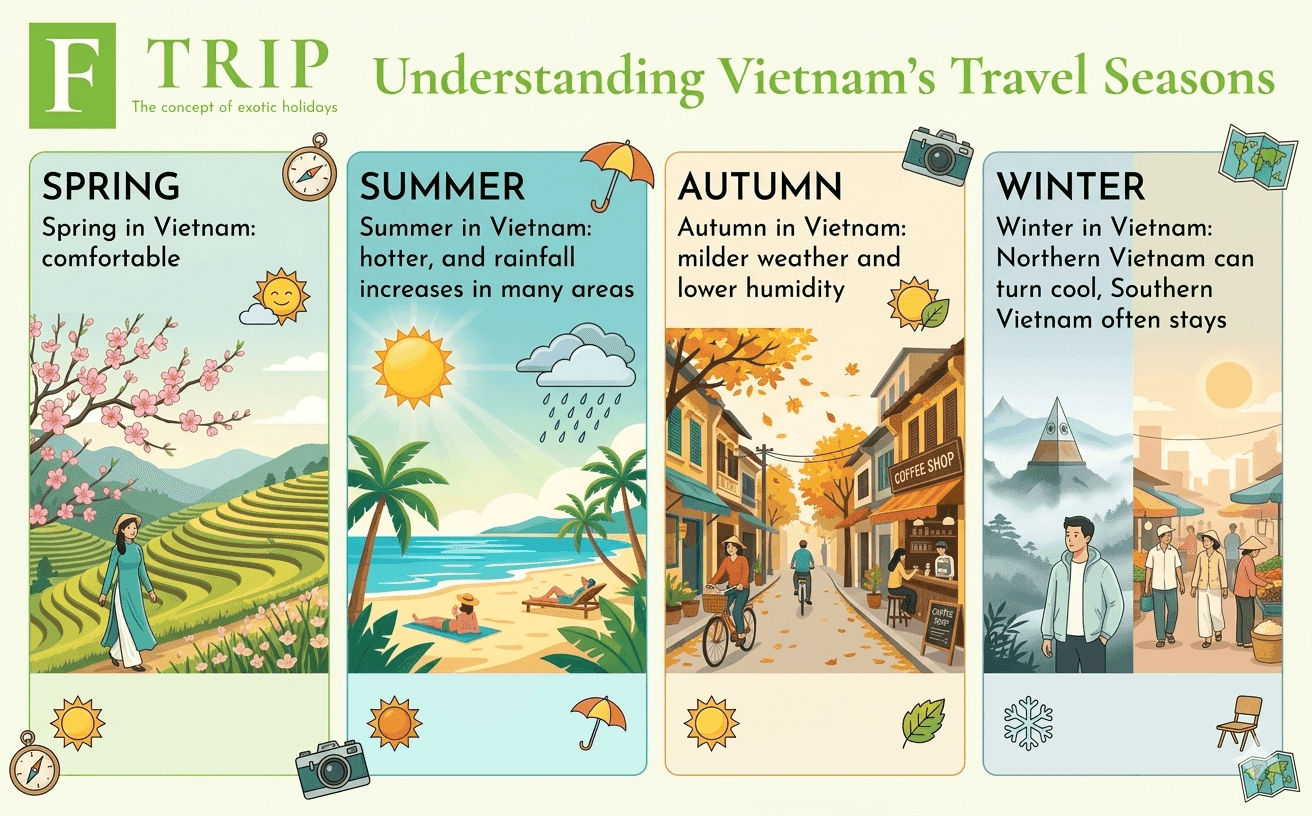
Spring in Vietnam
Spring is one of Vietnam’s most popular travel seasons. Across many parts of the country, especially in the north and in parts of central Vietnam, this period is often comfortable for sightseeing, cultural travel, and general exploration. March to May is also widely cited as the strongest overall weather window nationwide.
Summer in Vietnam
Summer is usually hotter, and rainfall increases in many areas. Even so, it can still work well for certain trips, particularly coastal travel and travelers who enjoy lush, vivid green landscapes. In Da Nang, for example, June to August sees little rain and calm, clear sea conditions, even though other parts of Vietnam may be wetter.
Autumn in Vietnam
Autumn is one of the best times for northern Vietnam. Official tourism guidance highlights September to November as a period with milder weather and lower humidity, which makes city sightseeing and scenic travel more comfortable in many northern destinations.
Winter in Vietnam
Winter varies sharply by region. Northern Vietnam can turn cool, sometimes quite chilly in the mountains, while the south often stays warm and enters one of its more comfortable dry-season periods. This regional contrast is one reason general countrywide advice can be misleading.
Best Time to Visit Northern Vietnam
Best months for Hanoi and nearby cultural travel
For Hanoi and nearby cultural destinations, spring and autumn are usually the most comfortable choices. Official tourism guidance notes that Hanoi is especially inviting from April to June, while September and October are also excellent as temperatures cool and skies clear. That makes these periods ideal for city walks, heritage sites, and day trips.
Best time for Ha Long Bay
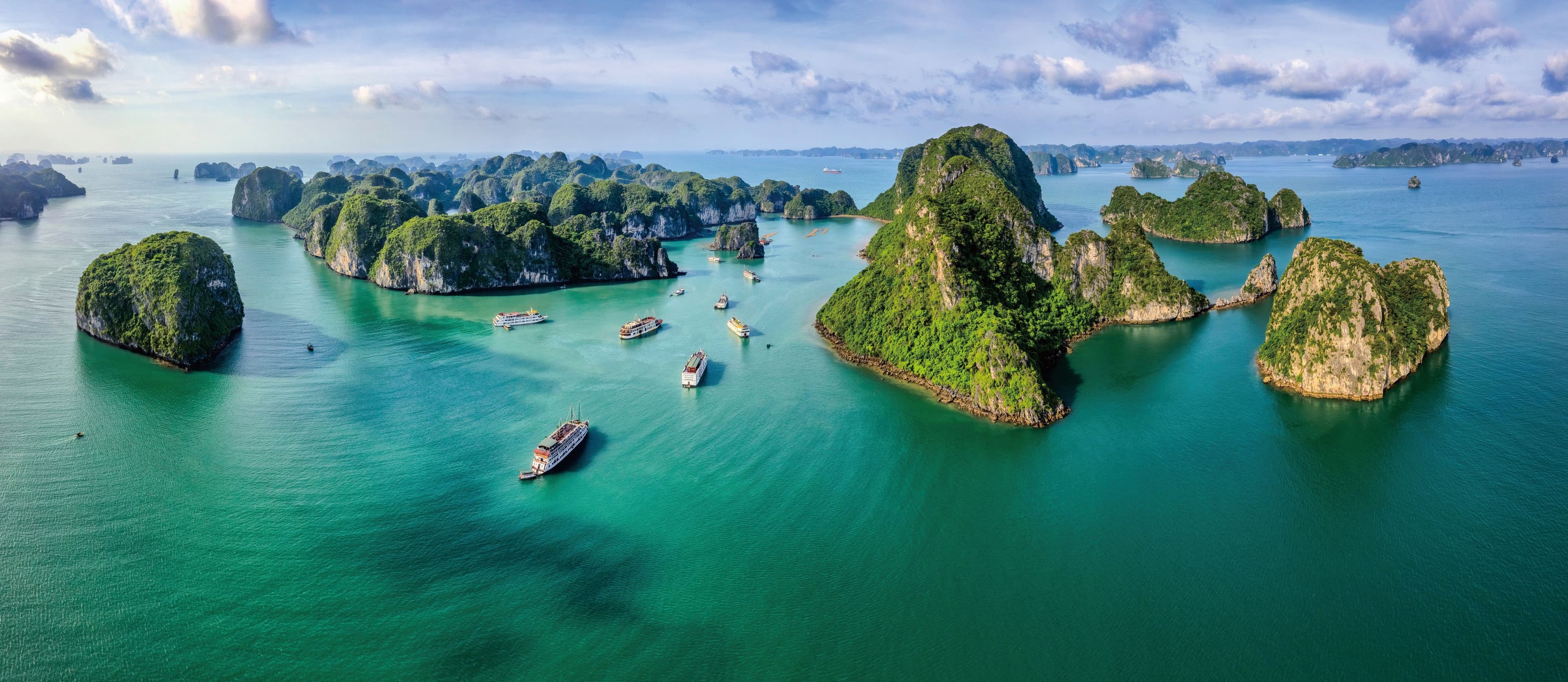
Ha Long Bay works as a year-round destination, but each season offers a different mood. According to Vietnam’s official tourism site, September to November can bring cool weather and clearer skies, December to March often adds misty, atmospheric scenery, and April to May offers sunshine with a refreshing breeze. By contrast, the monsoon period from June to August can make visits less predictable.
Best time for Ninh Binh
Ninh Binh is attractive in several seasons. Official guidance highlights March to May and September to November as ideal in terms of temperature, while harvest season brings especially fine views in autumn. Beyond that, many travelers also target the late-spring to early-summer rice-field period for particularly photogenic scenery in the wider northern countryside.
Best time for Sapa and mountain destinations
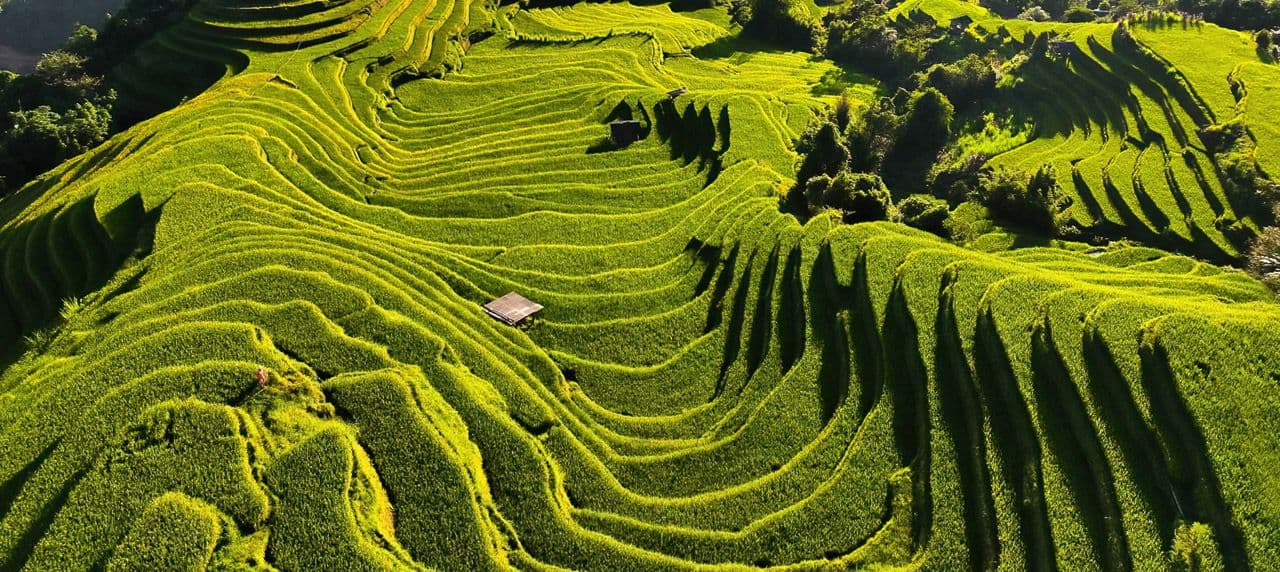
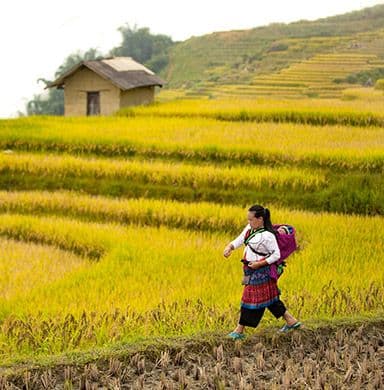
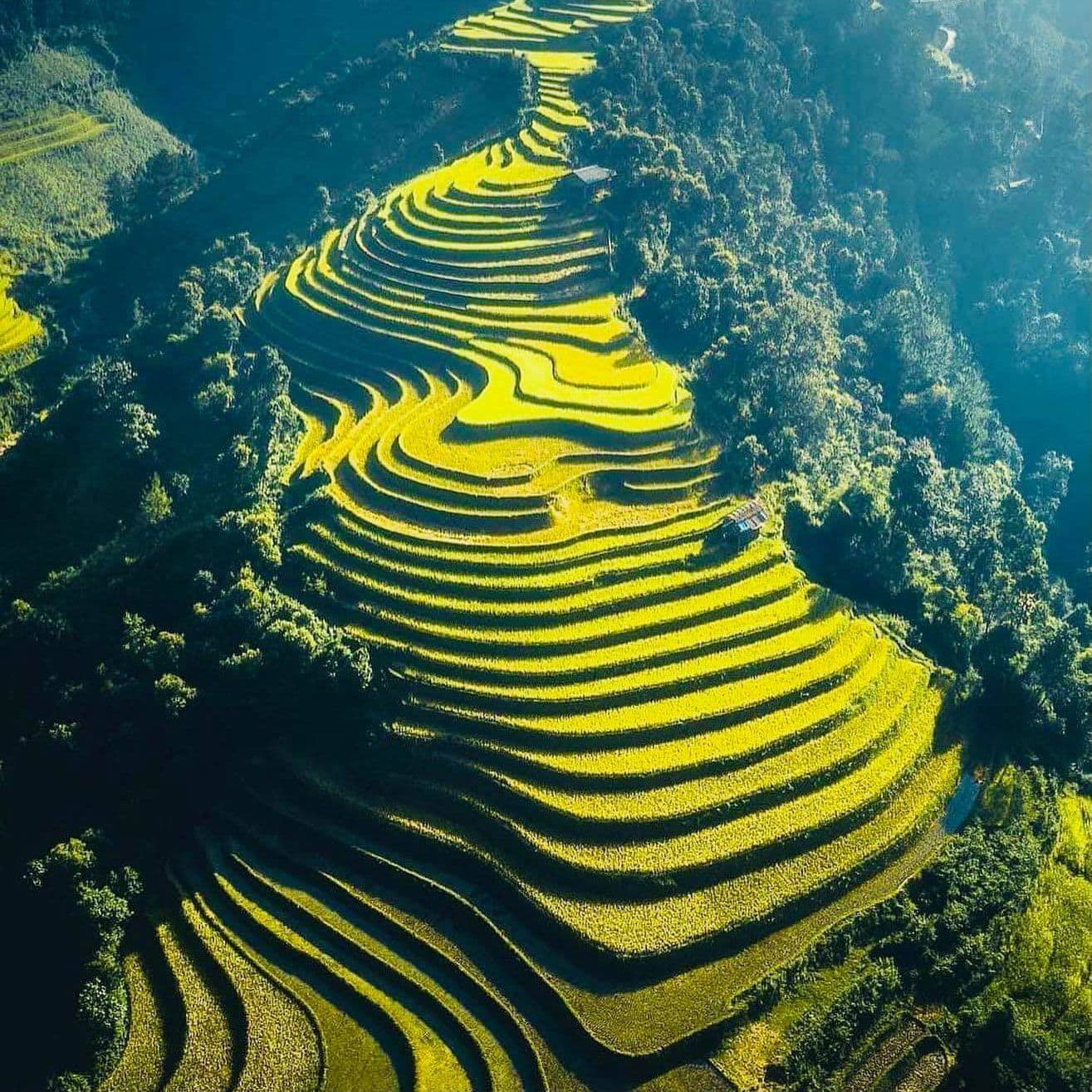
For Sapa and many mountain destinations, April to May and September to October are often the most favored periods. Vietnam’s official tourism site notes that April and May bring ideal weather and clear skies, while September and October are famous for spectacular rice terraces. These months are especially attractive for trekking, photography, and outdoor scenery.
Best Time to Visit Central Vietnam
Best time for Hue
Hue is especially rewarding in favorable dry-weather windows, particularly for travelers focused on history, architecture, and cultural depth. Vietnam’s monthly guide specifically highlights April as an outstanding month for Hue, with clear skies and strong conditions for exploring the former imperial capital.
Best time for Hoi An and Da Nang
For Hoi An and Da Nang, travelers generally prefer sunnier and drier periods for beach time, walking, and photography. Vietnam’s official tourism site says March to May are the best months for Hoi An, while Da Nang is particularly strong from March to May and again in September to October; it also notes that June to August can be good for calm seas and beach conditions.
What to know about the rainy season in central Vietnam
Central Vietnam follows a different weather pattern from the north and south, which often surprises first-time visitors. Official tourism guidance warns of rainy weather and storms in Hoi An from October to January, while Da Nang’s rainy season is described as running from November to February. This matters because travelers focused on beaches and sunshine can choose the wrong months if they assume the whole country behaves the same way.

Best Time to Visit Southern Vietnam
Best months for Ho Chi Minh City and the Mekong Delta
Southern Vietnam is often at its most comfortable during the dry season from about November to April. Vietnam’s official tourism guidance notes that Ho Chi Minh City remains warm year-round, with the rainy season from May to November, while Mekong Delta destinations such as Can Tho also follow a dry season from December to April. This makes the late-year to spring window especially friendly for city exploration and river-based experiences.
Best time for Phu Quoc
For Phu Quoc, the cooler and drier period usually falls from October to March. Official tourism guidance says the island is coolest in the dry season during those months, making this a strong window for island holidays and beach travel.
Reasons to still visit in the wetter months
The wetter months are not automatically a bad time to visit the south. Rain often brings greener scenery, more seasonal river character, and in some places fewer crowds. Official tourism content on southern destinations such as Can Tho and Chau Doc also highlights seasonal river life and flooding periods as part of the regional experience rather than simply a drawback.
Best Time to Visit Vietnam by Travel Style
Best time for sightseeing and first-time travel
For first-time visitors who want broad comfort across several destinations, spring and autumn are usually the safest choices, with March to May standing out as the strongest all-round recommendation. These periods tend to support city walking, cultural sightseeing, and smoother multi-stop itineraries.
Best time for beaches and island holidays
Beach planning in Vietnam should be split by region. For the central coast, drier and sunnier periods such as March to May are often favored, while Da Nang can also work well in June to August thanks to calm seas. For Phu Quoc, the strongest beach window is usually October to March.
Best time for cultural experiences
For heritage routes, city breaks, and walking-focused travel, spring and autumn often work especially well. Hanoi is particularly inviting from April to June and in September to October, while Hue is especially strong in April, and Hoi An is widely favored in March to May.
Best time for scenic landscapes and photography
For scenery and photography, northern autumn is especially attractive. Official tourism guidance highlights September to November as mild and low in humidity in the north, and Sapa’s rice terraces are especially celebrated in September and October. Ninh Binh and surrounding countryside also have strong visual appeal in selected seasonal windows.
Best time for cruises and river journeys
For Ha Long Bay cruises, April to May and September to November are often appealing for weather and visibility, while winter mist offers a different atmosphere. In the Mekong Delta, the drier months from roughly December to April are often more comfortable for river-based exploration, though high-water seasonal periods can also create distinctive local experiences.

Vietnam Weather by Month at a Glance
January to March
These months are strong for many southern destinations, especially during the dry season, and they can also work well for central and northern travel depending on exact location. March, in particular, sits at the start of the widely recommended March-to-May window.
April to June
This is one of the strongest travel windows overall, especially April and May. Hanoi is highly inviting in this period, Hue is notably strong in April, Hoi An favors March to May, and Sapa can have ideal weather and clear skies in April and May.
July to September
Rain increases in many parts of Vietnam during this stretch, but that does not make it useless. Some travelers value greener scenery, lower crowds, or region-specific opportunities. Da Nang can still work well in summer for beach travel, while parts of the north begin improving again toward September.
October to December
This period shows Vietnam’s regional contrast clearly. Parts of the north become very attractive in autumn, while the south moves into one of its best dry-season windows. At the same time, parts of central Vietnam can still be affected by rain and storms in October through early winter.
When Not to Visit Vietnam
There is no need for a blanket “do not visit Vietnam” answer. A better way to think about timing is that some months are less ideal for certain regions or trip styles. For example, central Vietnam may be less suitable for beach-focused travel during its rainy-season window, while the north can feel cold or misty for travelers expecting warm sunshine.
In other words, Vietnam is very much a year-round destination, but better planning leads to much better results. Official tourism guidance explicitly notes that there is no bad time to visit the country because some part of Vietnam almost always has favorable conditions.
How to Choose the Best Time for Your Vietnam Trip
Decide which regions matter most
Start with geography, not just dates. The weather logic for Hanoi, Hue, and Phu Quoc is not the same, so the right timing depends on which stops matter most in your itinerary.
Match the season to your travel priorities
Your best time should reflect your priorities. Beach travelers should plan around coastal dry-season windows. Cultural travelers often do best in spring or autumn. Hiking and photography travelers may prefer northern mountain seasons with clearer skies or seasonal rice-field scenery. Cruise travelers should consider month-by-month conditions in places such as Ha Long Bay.
Consider crowd levels and pricing
The most comfortable weather windows are often the most popular, so they may also bring higher demand. Shoulder-season planning can sometimes offer a better balance between good conditions, lower crowd pressure, and availability. This is an inference based on how peak-friendly weather overlaps with the most recommended travel periods.
Build an itinerary around weather logic
For multi-stop trips across north, central, and south Vietnam, the best results usually come from building the route around regional weather logic. That is especially important for first-time travelers trying to combine culture, beaches, mountains, and city experiences in one journey.

Why FtripVietnam Can Help You Plan the Right Vietnam Trip
Fully customizable itineraries based on your preferred season
A strong Vietnam trip is not just about picking a month. It is about matching the season to the right combination of hotels, destinations, beach time, scenic routes, cultural priorities, and comfort preferences. That is where a customizable itinerary becomes valuable.
100% local experts with 7+ years of experience
Local knowledge matters when choosing the right route for the right season. In a country where the north, center, and south can behave so differently, experienced local planning can reduce weather mismatches and improve the overall flow of the journey.
Better planning for niche travel needs
For travelers with specific cultural or practical requirements, including Muslim-friendly or Jewish-conscious travel preferences, more thoughtful seasonal planning can make the trip smoother and more comfortable.
Unique experiences beyond standard packages
Weather-smart planning becomes even more important for experience-led trips such as photography tours, workshops, cooking classes, and curated daily-life cultural experiences, because timing can directly affect scenery, atmosphere, and comfort.
Highly praised service
Enthusiastic, knowledgeable, and friendly support can make seasonal planning much easier, especially for travelers who want to balance weather, comfort, cultural interests, and scenic priorities across multiple regions.
Sample Best-Time Recommendations for Different Travelers
Best time for a first-time Vietnam highlights trip
For a first-time highlights itinerary covering multiple major destinations, March to May is usually the safest broad recommendation because it tends to offer favorable conditions across many regions.
Best time for a luxury cultural and scenic journey
For travelers focused on comfort, culture, and elegant scenery, spring and parts of autumn are often strongest, especially when combining cities such as Hanoi, Hue, Hoi An, and Ha Long Bay.
Best time for a Vietnam beach holiday
For beach-focused travel, the answer depends on where. Central coast trips often work best in drier sunny windows such as March to May, while Phu Quoc is especially attractive from October to March.
Best time for a photography-focused trip
For photography, September to November in northern Vietnam is especially compelling because of milder weather, lower humidity, and strong seasonal scenery. Sapa is particularly famous in September and October, while spring also works for clear views in some mountain areas.
Best time for a multi-region itinerary from north to south
For a north-to-south itinerary, March to May is usually the easiest broad window to work with. It is not perfect for every single micro-region, but it is often the most practical balance for first-time multi-region planning.
Frequently Asked Questions
What is the best month to visit Vietnam?
There is no single best month for every itinerary, but April is often one of the strongest all-round choices because it sits inside the broadly favorable March-to-May window and also performs well in several major destinations such as Hanoi, Hue, and Hoi An.
Is Vietnam better in the dry season or rainy season?
For many travelers, the dry season is more comfortable, especially for city breaks, beaches, and river travel. That said, the rainy season can still be worthwhile for greener landscapes, seasonal river life, and lower-crowd opportunities in some regions.
When is the cheapest time to visit Vietnam?
Travelers often find better value outside the most widely recommended comfort windows. This is an inference rather than an official pricing rule, but shoulder and wetter periods can sometimes offer a better balance of availability and cost.
What is the best time to visit Hanoi, Hoi An, and Ho Chi Minh City?
For Hanoi, official guidance points to April to June and September to October. For Hoi An, March to May is usually best. For Ho Chi Minh City, the drier and cooler-feeling period from about December to April is often more comfortable.
Is March or April a good time to visit Vietnam?
Yes. Both months are generally strong, and April is especially well regarded because many major destinations perform well during that period.
Can I visit Vietnam during the rainy season?
Yes. Vietnam remains visitable during the rainy season, but travelers should choose destinations carefully. One region may still work well while another is less suitable for the trip style you want.
What is the best time for Ha Long Bay and Phu Quoc?
For Ha Long Bay, April to May and September to November are often strong, with winter mist offering a different atmosphere. For Phu Quoc, the best beach-friendly window is usually October to March.
Conclusion
The best time to visit Vietnam depends less on one universal month and more on where you want to go and what kind of trip you want. Beaches, culture, hiking, photography, cruises, and multi-region journeys all follow slightly different weather logic across the country.
If you want the safest broad recommendation, March to May is often the strongest overall answer. But in practice, travelers get much better results when they plan by region rather than by country alone.
For travelers who want the right itinerary for the right season, working with local experts such as FtripVietnam can be especially valuable. A tailored Vietnam journey built around weather, comfort, culture, and scenic priorities is often the smartest way to make the most of the country.