- Is There a Best Time Overall for Australians to Visit Vietnam?
- Understanding Vietnam’s Seasons for Australian Travelers
- Best Time to Travel to Vietnam from Australia by Region
- Best Time to Visit Vietnam from Australia by Travel Style
- Best Time to Travel to Vietnam from Australia by Month
- Best Time to Travel to Vietnam from Australia During School Holidays
- Best Vietnam Destinations for Australian Travelers Seeking Great Weather
- Common Mistakes Australians Make When Choosing When to Visit Vietnam
- How to Choose the Best Month for Your Vietnam Trip from Australia
- Why FtripVietnam Is a Strong Choice for Australians Planning Vietnam at the Right Time
- Sample Vietnam Trip Recommendations for Australians by Season
- Frequently Asked Questions
- Conclusion
That matters because Australian travelers usually want a practical combination of good weather, easy multi-stop itineraries, a balance of beach time and culture, school-holiday compatibility, and overall comfort for a smooth trip. In Vietnam, those goals are achievable, but only when the route matches the season. Hanoi, Hoi An, and Ho Chi Minh City can have very different conditions at the same time.
This guide breaks down the best time to travel to Vietnam from Australia by season, month, region, and travel style, so Australians can plan with weather in mind instead of relying on one broad national rule.
Is There a Best Time Overall for Australians to Visit Vietnam?
The short answer
For Australians wanting the safest broad recommendation, March to May is usually the strongest overall window. Vietnam’s official tourism guidance says this period often offers the best weather countrywide, and it is especially useful for travelers hoping to combine more than one region in a single trip.
Why Vietnam is not a one-season destination
Vietnam is not a one-season destination because it stretches across several climate zones. At the same time of year, northern Vietnam may be cool or misty, the central coast may be sunny or storm-prone, and the south may be warm and dry. That is why the weather in Hanoi, Da Nang, Hoi An, and Ho Chi Minh City can differ so much at once.
Why this matter especially for Australian travelers
This matters even more for Australians because many want one trip that combines culture, scenery, and beach time. A classic “all-in-one” Vietnam holiday only works well when the season matches the route. The smartest planning approach is to choose the timing based on the specific itinerary, not Vietnam as one weather pattern.
Understanding Vietnam’s Seasons for Australian Travelers
Spring in Vietnam from an Australian perspective
For Australians, Vietnam’s spring is an excellent escape during Australia’s autumn. It is one of the strongest periods for mixed-region itineraries, cultural sightseeing, and first-time travel because conditions are often broadly pleasant across many destinations.
Summer in Vietnam from an Australian perspective
Summer in Vietnam is generally hotter and wetter in many areas. Even so, it is not automatically a bad time. Some coastal destinations can still work well, and travelers focused on flexibility or value can still enjoy Vietnam if they choose destinations carefully rather than assuming the whole country is unsuitable. Da Nang, for example, can still have clear seas and relatively good beach conditions in summer.
Autumn in Vietnam from an Australian perspective
Autumn is one of the best periods for northern Vietnam. Official tourism guidance highlights September to November as a strong time for milder weather and lower humidity in the north, making it especially attractive for scenic, cultural, and photography-led travel.
Winter in Vietnam from an Australian perspective
Winter works well for Australians escaping the Australian summer peak and looking for dry weather in the south. Southern Vietnam stays warm and is often in its dry-season comfort window, but northern Vietnam can be much cooler than first-time visitors expect.
Best Time to Travel to Vietnam from Australia by Region
Northern Vietnam
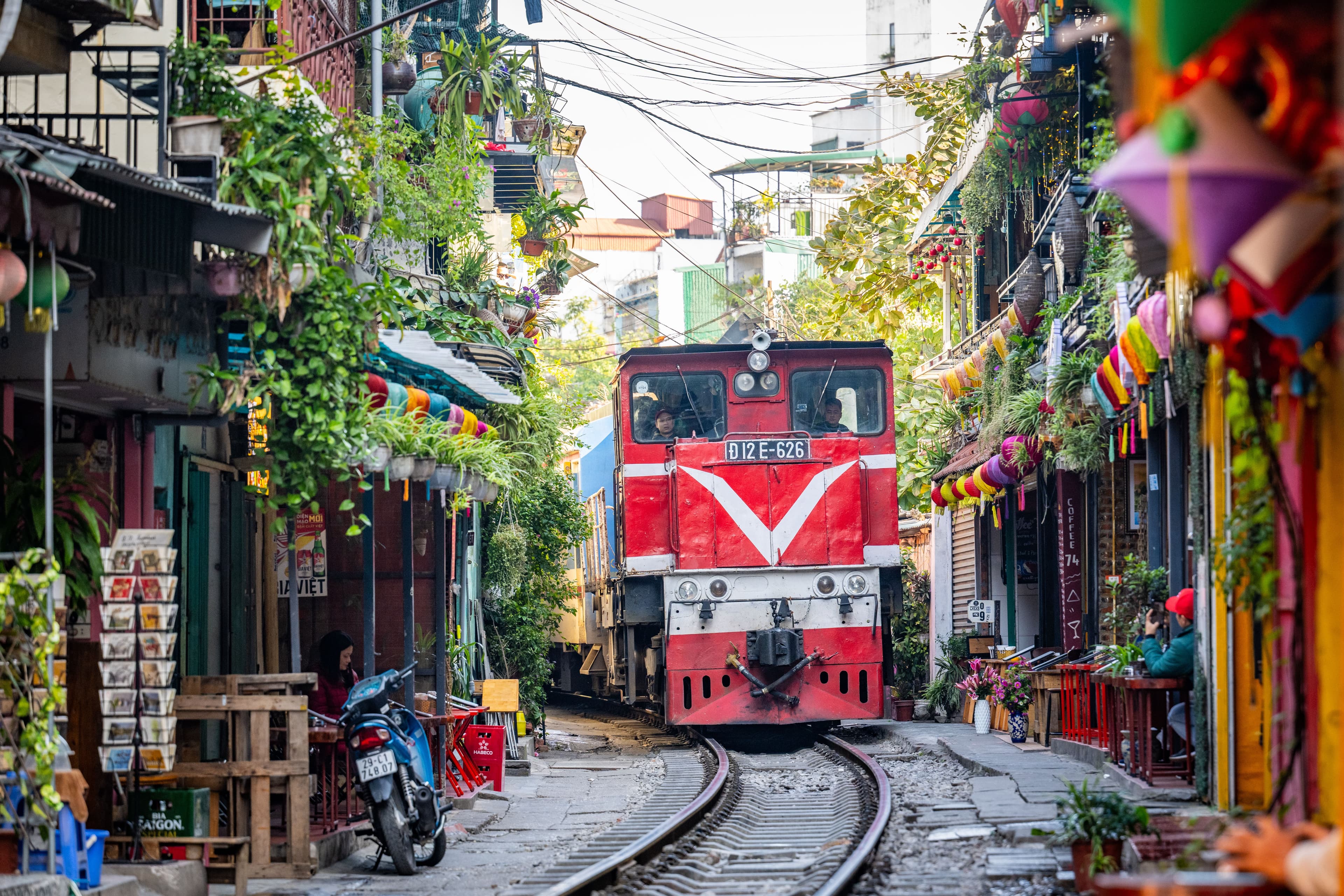
For northern Vietnam, the best windows are often March to April and September to November. These periods work especially well for Hanoi, Ninh Binh, Ha Long Bay, Sapa, and scenic northern journeys. Hanoi is especially inviting from April to June and again in September and October, while Sapa is strongest in April to May and September to October. Ha Long Bay also tends to shine in April to May and September to October.
Central Vietnam
For central Vietnam, February to May is often one of the best periods for beach-and-heritage travel. Hoi An is officially strongest from March to May, while Da Nang is best from March to May and also good in September to October, with June to August still workable for calm seas. This makes the region a strong choice for Australians wanting Hoi An, Da Nang, Hue, and nearby coastal routes.
Southern Vietnam
Southern Vietnam is usually best from November to April for dry-season comfort. This window works well for Ho Chi Minh City, the Mekong Delta, and easy warm-weather travel. Can Tho’s dry season runs from December to April, and Chau Doc is sunny and dry from November to April. Phu Quoc is also especially appealing from November to March.
Why regional planning matters more than the departure country
For Australians, the departure season does not automatically tell you the best weather in Vietnam. A July departure from Australia does not mean Vietnam will be ideal everywhere, and a December holiday does not mean the whole country is equally good. Route-first planning consistently produces better results than countrywide assumptions.
Best Time to Visit Vietnam from Australia by Travel Style
Best time for first-time Vietnam highlights trips
For first-time highlights trips covering north, central, and south Vietnam, March to May is the broadest and safest recommendation. It is the easiest period to build a comfortable multi-region route with fewer weather conflicts.
Best time for beaches and island holidays
For beaches, timing depends heavily on the region. The central coast usually performs best in its drier windows, especially around March to May, while southern beach destinations such as Phu Quoc are strongest from about November to March. Australians planning beach holidays should separate the central and southern beach timings rather than treating them as one pattern.
Best time for cultural travel
Spring and autumn are especially attractive for cultural travel. They support walking-heavy itineraries, heritage cities, museums, temples, old towns, and food-focused city breaks more comfortably than hotter, wetter periods.
Best time for photography trips
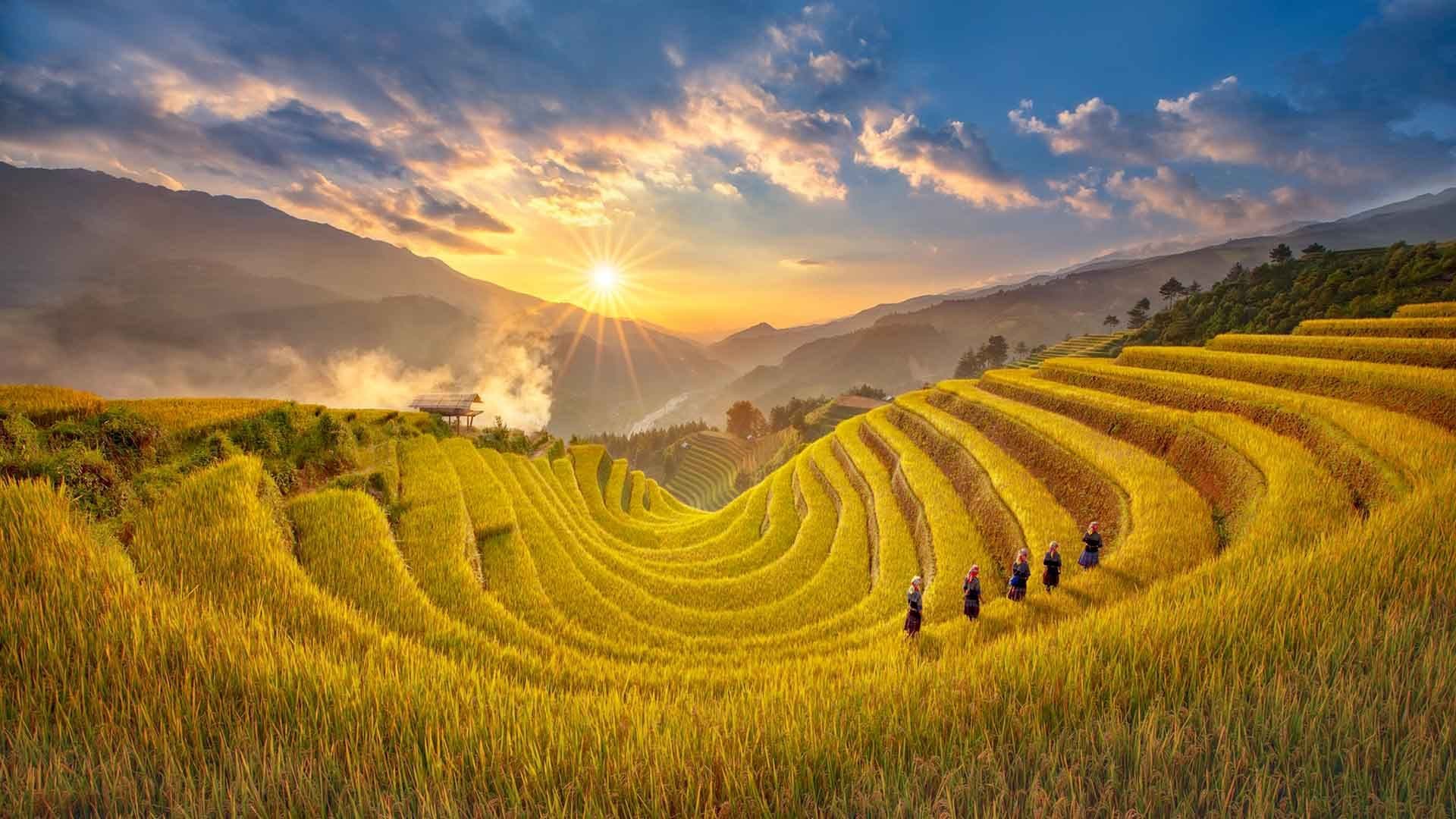
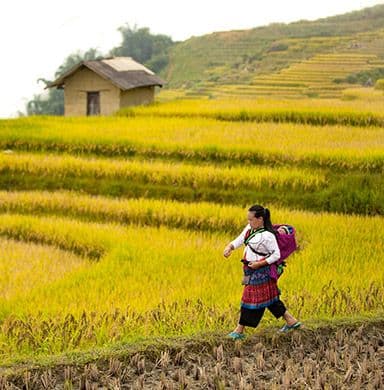
Northern autumn stands out for photography, particularly in Hanoi and the mountain regions. Sapa, Ha Giang, and other northern routes are especially strong in their scenic windows, and September to October are widely valued for rice terraces and atmospheric light.
Best time for luxury travel
For luxury travel, the most comfortable periods are usually the shoulder or broadly favorable weather windows, especially when they allow smoother transfers, better visibility, and more enjoyable pacing. This is an inference based on official seasonal guidance plus the way premium travel usually prioritizes comfort, flexibility, and experience quality.
Best Time to Travel to Vietnam from Australia by Month
January to March
This period is good for southern Vietnam and workable for many multi-stop trips. Southern destinations are warm and dry, while northern Vietnam is cooler and can feel quite seasonal. March is particularly useful because it begins the strongest overall countrywide weather window.
April to May
This is one of the strongest overall windows and the easiest top recommendation for many Australians. Hanoi is highly inviting, Ha Long Bay tends to have sunshine and refreshing breezes, and Hoi An performs very well in this period.
June to August
These months are hotter and wetter in many parts of Vietnam, but they can still work for specific priorities. Da Nang can remain attractive because the sea is clear and calm, and some travelers may still enjoy greener scenery or more flexible travel conditions in other regions.
September to November
This is excellent for northern Vietnam, especially for scenic and cultural travel. Hanoi’s autumn is widely praised, Ha Long Bay often has cooler temperatures and clear skies, and northern landscapes are especially rewarding in this season.
December
December is strong for warm-weather southern escapes and can work well for Australians traveling during school holidays or the festive season. Southern Vietnam is entering or already in its dry, sunny period, while central and northern regions may require more selective planning.
Best Time to Travel to Vietnam from Australia During School Holidays
Easter holiday travel
For Australians traveling around Easter, March or April is often one of the easiest windows for broad weather comfort. This is one reason Vietnam works well as a family-friendly school-holiday destination during that period.
Mid-year school holidays
Mid-year travel usually requires more careful destination selection because heat and rain increase in several parts of the country. Australians traveling then often benefit most from more selective route design, especially if beaches, walking comfort, or cruising matter.
September or spring-break style travel
September is excellent for northern Vietnam, with cooler conditions and scenic experiences. For Australians wanting cultural atmosphere, photography, and more scenic northern travel, this can be one of the smartest windows.
December holiday travel
December is useful for Australians seeking southern warmth, beach time, and family-friendly travel over the festive break. It can also support selective multi-region itineraries, but broad countrywide comfort is not as consistent as in March to May.
Best Vietnam Destinations for Australian Travelers Seeking Great Weather
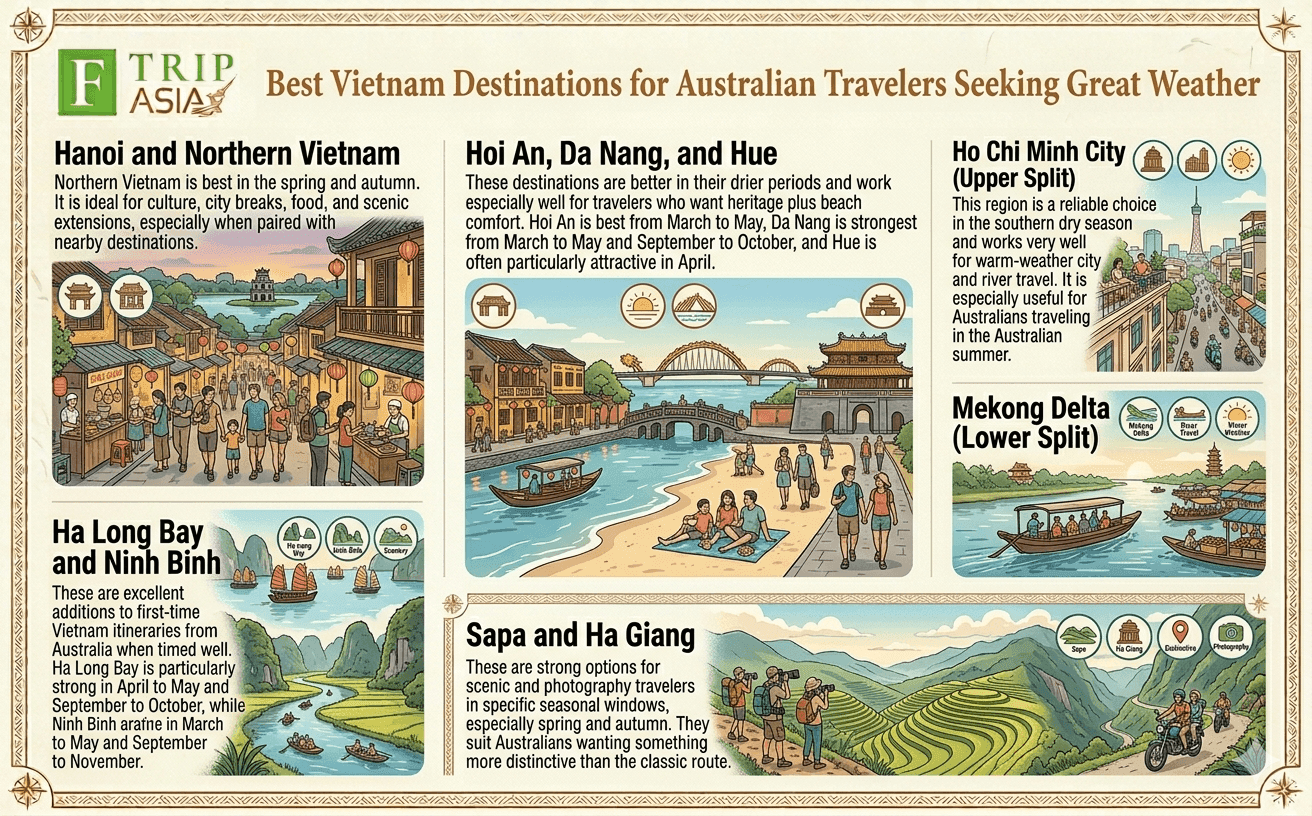
Hanoi and Northern Vietnam
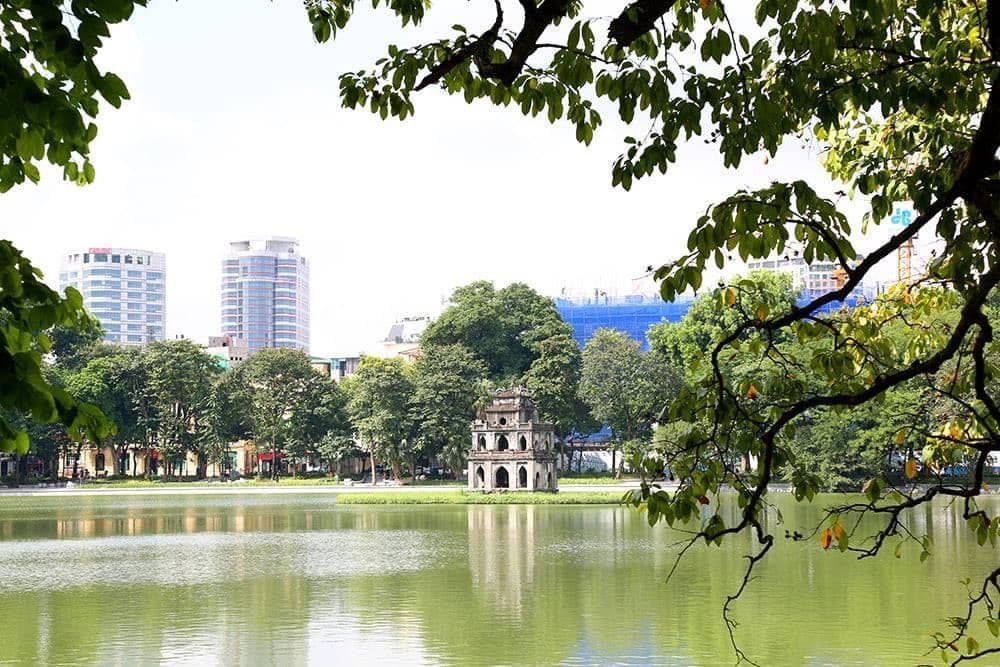
Northern Vietnam is best in the spring and autumn. It is ideal for culture, city breaks, food, and scenic extensions, especially when paired with nearby destinations.
Ha Long Bay and Ninh Binh
These are excellent additions to first-time Vietnam itineraries from Australia when timed well. Ha Long Bay is particularly strong in April to May and September to October, while Ninh Binh is also attractive in March to May and September to November.
Hoi An, Da Nang, and Hue
These destinations are better in their drier periods and work especially well for travelers who want heritage plus beach comfort. Hoi An is best from March to May, Da Nang is strongest from March to May and September to October, and Hue is often particularly attractive in April.
Ho Chi Minh City and the Mekong Delta
This region is a reliable choice in the southern dry season and works very well for warm-weather city and river travel. It is especially useful for Australians traveling in the Australian summer.
Sapa and Ha Giang
These are strong options for scenic and photography travelers in specific seasonal windows, especially spring and autumn. They suit Australians wanting something more distinctive than the classic route.
Common Mistakes Australians Make When Choosing When to Visit Vietnam
Assuming the whole country has the same weather
This is the biggest mistake. Vietnam is not a single-climate destination, so a “good month for Vietnam” can still be the wrong month for your exact route.
Choosing dates based only on Australian holidays
Australian holiday timing matters, but route planning matters more for weather quality. A fixed holiday window still needs destination logic inside Vietnam.
Booking a north-to-south itinerary without checking seasonal fit
Some north-central-south routes work much better in certain months than others. Multi-stop convenience does not always equal good seasonal alignment.
Ignoring comfort factors beyond temperature
Humidity, rain, and visibility can affect cruising, sightseeing, and photography just as much as heat alone. This is especially relevant for Ha Long Bay, northern mountain views, and walking-heavy cultural itineraries.
How to Choose the Best Month for Your Vietnam Trip from Australia
Start with your ideal experience.
Begin with the kind of trip you actually want: beaches, culture, scenery, food, family travel, or luxury. That should guide everything else.
Then match your route to the weather.
Once you know the experience, match the route to the regional weather. Vietnam rewards route logic much more than fixed-date planning.
Build the itinerary around comfort, not just price
Shoulder periods can often offer a better balance of conditions and overall experience. That is an inference based on official climate guidance rather than a direct published pricing rule, but it reflects how many travelers balance comfort and flexibility.
Use expert planning for multi-region trips.
This is especially useful for Australians trying to fit more into one holiday window. Good planning can make a major difference when combining north, central, and south Vietnam in one trip.
Why FtripVietnam Is a Strong Choice for Australians Planning Vietnam at the Right Time
Completely customizable based on each client’s requests
FtripVietnam can shape the trip around hotel style, destinations, luxury preferences, beach priorities, cultural focus, pace, and seasonal goals, which is exactly what Australians need when their travel window is fixed but the weather varies by region.
100% local people with 7+ years of experience
Local expertise is especially valuable in Vietnam because the right route depends on matching weather patterns to the traveler’s goals, not just picking popular destinations.
Experience with niche markets like Muslims and Judaism
This is helpful for travelers with specific cultural, dining, and comfort requirements who want a smoother itinerary.
Unique tours that clients cannot find elsewhere.
Photography tours, less conventional routes, and carefully designed seasonal experiences can make the trip more distinctive and better timed.
Strong partnerships with workshops and daily experiences
Cooking classes, artisan visits, and daily-life cultural encounters help turn the trip into more than standard sightseeing, and they work well across different seasons when planned properly.
High praise from tourists for enthusiastic, knowledgeable, and friendly service
That kind of service is especially important when travelers want help timing a Vietnam trip well and making the most of a limited holiday window.
Sample Vietnam Trip Recommendations for Australians by Season
Best spring itinerary from Australia
A strong spring route is a north-and-central highlights journey, such as Hanoi, Ninh Binh, Ha Long Bay, Hue, Hoi An, and Da Nang, because these destinations align especially well in March to May.
Best autumn itinerary from Australia
For autumn, a northern-focused trip works best: Hanoi, Ha Giang, Sapa, Ninh Binh, and Ha Long Bay. This season is especially rewarding for scenic, cultural, and photography-led travel.
Best dry-season southern itinerary from Australia
A strong southern dry-season route includes Ho Chi Minh City, the Mekong Delta, and a warm-weather escape such as Phu Quoc. This works especially well from November to April.
Best first-time Vietnam route with great weather
For a first-time Australia-to-Vietnam trip with strong weather, a balanced north-central-south itinerary timed for April or early May is usually the safest answer. It gives the broadest chance of good conditions across several classic stops.
Frequently Asked Questions
What is the best month to visit Vietnam from Australia?
For many Australians, April is one of the best single months because it sits inside the March-to-May window, which is widely considered the strongest countrywide period.
Is April a good time to travel to Vietnam from Australia?
Yes. April is one of the best times for a broad Vietnam itinerary, especially for travelers combining more than one region.
When should Australians avoid traveling to Vietnam?
There is no blanket “avoid Vietnam” period. A better rule is to avoid the wrong region for the wrong trip style. Vietnam is a year-round destination, but destination choice matters.
Is Vietnam better in March or September?
For broad first-time travel, March is usually easier because it works better across multiple regions. September is stronger for northern Vietnam, specifically.
What part of Vietnam has the best weather in July?
In July, some central coastal destinations such as Da Nang can still work relatively well because the sea is clear and calm, even though many other areas are hotter and wetter.
What is the best time for Australians to visit Hanoi, Hoi An, and Ho Chi Minh City?
For Hanoi, the strongest periods are spring and autumn, especially September to October and April to June. For Hoi An, March to May is best. For Ho Chi Minh City, the dry season from around November to April is generally the most comfortable.
Can Vietnam be visited year-round from Australia?
Yes. Vietnam can absolutely be visited year-round from Australia, but the best results come from matching the season to the route rather than assuming the whole country behaves the same way.
Conclusion
For Australians seeking great weather, March to May is usually the best broad answer. But Vietnam’s regional differences matter much more than any single national rule. The best trip comes from matching the season to the route, especially if you want to combine culture, scenery, and beach time in one holiday.
Australian travelers who want the right Vietnam itinerary for the right season can benefit from working with local experts such as FtripVietnam. A well-planned trip built around weather, comfort, hotel style, cultural interests, and unique experiences is usually the smartest way to get the most from Vietnam.


Founder & Photography Guide
Specialties: Culture, landscape, portrait, hiking, active and adventurous tour
Besides my unlimited passion for traveling, a professional tour guide for over a decade, I have been taking photographs since sitting at Hanoi of the University of Culture in the early 2000s. Photography started as a hobby but it was seriously taken due to my work relations and my significant passion for the beauty of our world, especially in Southeast Asian parts such as Vietnam, Laos, Cambodia, and Myanmar.
Within a few years of taking photographs, my works began to be recognized by many reliable international publications such as AFAR Travel, The Times, and The Daily Telegraph newspaper. In addition, I continuously add to my growing profile by winning numerous major awards: 3rd Position of The Independent Photographer 2018, 1st Position of Amateur Photographer of the year 2018, Grand Prize Winner of the AFAR Travel Photography 2019, and a Gold Award of San Francisco Bay International Photography 2020.
I photograph a wide variety of subjects, from travel to landscapes to street scenes. I enjoy documenting the East’s rich cultural heritage and its land soaked in glorious sunrise or sunset light in remote and secluded spots. And, I am very happy to share my knowledge and experience with you. You can visit Luminousvietnamtour to explore tour!