- Quick Checklist: Vietnam Travel Requirements for US Citizens
- What Documents Should US Citizens Prepare Before Departure?
- What Should US Citizens Check Before Flying?
- Passport Requirements for US Citizens Visiting Vietnam
- How Long Should a US Passport Be Valid for Vietnam?
- How Many Blank Passport Pages Are Needed?
- Why Does Passport Name Consistency Matter?
- Vietnam Visa Requirements for US Citizens
- Do US Citizens Need a Visa for Vietnam?
- What Should US Citizens Know About the Vietnam E-Visa?
- What Details Should Travelers Check on a Vietnam E-Visa?
- When Should US Citizens Apply for a Vietnam Visa?
- Flight and Arrival Requirements
- Do US Citizens Need a Return or Onward Ticket?
- Which Arrival Airport or Entry Point Should Travelers Use?
- What Transit Rules Should US Travelers Check Before Reaching Vietnam?
- Health Requirements and Travel Medical Preparation
- What Vaccines Should US Travelers Consider for Vietnam?
- How Should Travelers Pack Medication and Prescriptions?
- Is Travel Insurance Required for Vietnam?
- How Should Travelers Prepare for Food, Water, and Mosquito Safety?
- Money, Payment, and Currency Preparation
- What Should US Travelers Know About Vietnamese Dong and Cash?
- Can US Travelers Use Credit Cards and ATMs in Vietnam?
- How Should US Citizens Plan Their Vietnam Budget Before Departure?
- Documents US Citizens Should Bring to Vietnam
- What Printed Documents Should Travelers Bring?
- What Digital Backups Should Travelers Save?
- What Emergency Information Should Travelers Keep?
- Packing Requirements and Practical Essentials
- What Clothing and Weather Items Should Travelers Pack?
- What Electronics and Connectivity Items Are Useful?
- What Should Families and Senior Travelers Pack?
- Special Requirements for Different Traveler Types
- What Should First-Time US Visitors to Vietnam Prepare?
- What Should Families Prepare?
- What Should Senior Travelers Prepare?
- What Should Muslim and Judaism Travelers Prepare?
- What Should US Citizens Know About Arrival in Vietnam?
- What Happens During the Immigration Process?
- What Should Travelers Know About Baggage and Customs?
- How Should Travelers Plan Airport Transfer After Arrival?
- Common Mistakes US Travelers Should Avoid
- Final Pre-Departure Checklist for US Citizens
- Why Prepare Your Vietnam Trip with FtripVietnam?
- FAQs
- Do US citizens need a visa to visit Vietnam?
- How long should my US passport be valid for Vietnam?
- What documents should US citizens bring to Vietnam?
- Do US travelers need vaccines for Vietnam?
- Conclusion
Planning a Vietnam trip from the United States is easier when travelers prepare the right documents before departure. For US citizens, Vietnam travel requirements can include passport validity, visa or e-visa approval, health preparation, travel insurance, flight documents, money planning, packing essentials, and arrival logistics.
The most important items are a valid US passport, the correct Vietnam visa or e-visa, accurate personal information on travel documents, and printed or digital copies of key confirmations. Travelers should also prepare for health, payment, airport arrival, and local transport before flying.
Vietnam is a manageable destination for American travelers when preparation is done carefully. Major tourist cities such as Hanoi, Ho Chi Minh City, Da Nang, Hoi An, Hue, Ninh Binh, and Phu Quoc are familiar to international visitors, but entry rules and travel procedures still need attention.
Requirements can change, so US citizens should always verify official information before departure. The U.S. Department of State notes that US travelers need a visa for Vietnam and that passports must have six months’ validity remaining.
For travelers who want a smoother pre-departure process, FtripVietnam can help design a personalized Vietnam trip with suitable routes, hotel planning, airport transfers, local support, and special arrangements for families, seniors, honeymooners, Muslim travelers, Judaism travelers, and other niche travel needs.
Quick Checklist: Vietnam Travel Requirements for US Citizens
What Documents Should US Citizens Prepare Before Departure?
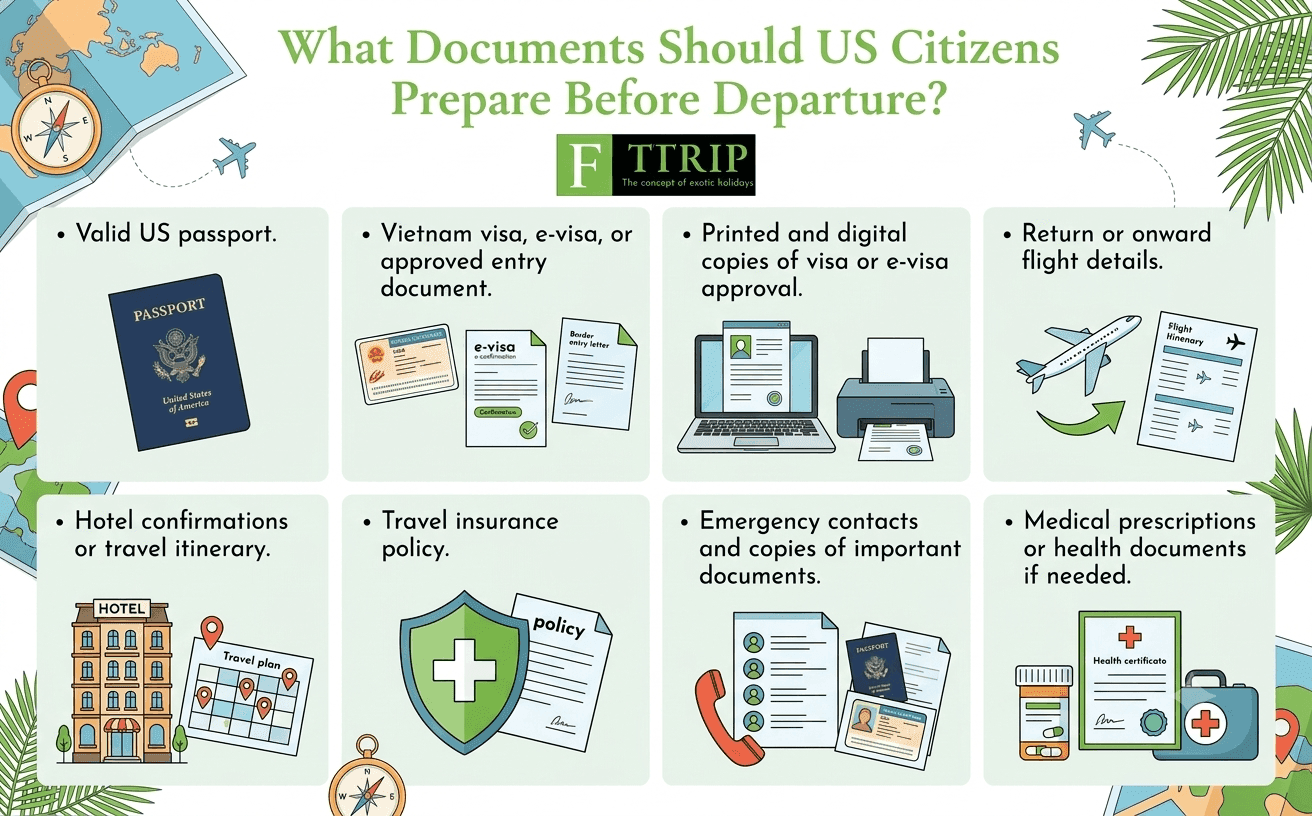
US citizens should prepare all essential documents before leaving for Vietnam. Some documents may be checked by airlines, immigration officers, hotels, or travel service providers.
Important documents include:
• Valid US passport. • Vietnam visa, e-visa, or approved entry document. • Printed and digital copies of visa or e-visa approval. • Return or onward flight details. • Hotel confirmations or travel itinerary. • Travel insurance policy. • Emergency contacts and copies of important documents. • Medical prescriptions or health documents if needed.
Travelers should not rely only on phone access. A printed visa, passport copy, and hotel address can be helpful if the phone battery dies, internet connection fails, or airport staff request physical documents.
Keeping copies in separate places also reduces stress if something is lost during the trip.
What Should US Citizens Check Before Flying?
Before departure, travelers should carefully review all details on their documents. Small errors can cause problems at airline check-in or immigration.
Key things to check include:
• Passport validity and blank visa pages. • Visa dates, entry type, passport number, and personal details. • Arrival airport or land border listed on the visa if applicable. • Airline baggage rules and transit requirements. • Travel insurance coverage. • Health preparation based on route, season, and activities. • Local currency, card access, SIM or eSIM, and airport transfer plan.
Travelers should also check whether they are using one ticket or separate tickets for connecting flights. Separate tickets can create extra risk because baggage transfer, transit rules, and missed connections may be handled differently.
Passport Requirements for US Citizens Visiting Vietnam
How Long Should a US Passport Be Valid for Vietnam?
US citizens should make sure their passport is valid for at least six months beyond the planned stay in Vietnam. This is especially important because airlines may deny boarding if the passport does not meet destination rules. The U.S. Department of State lists Vietnam’s passport validity requirement as six months.
Travelers with passports close to expiration should renew early before booking final travel arrangements. Passport renewal can take time, and waiting too long may create avoidable stress.
Families should check children’s passports early. Child passports expire sooner than adult passports, and parents may not notice the expiration date until close to departure.
Passport validity should be reviewed before applying for a Vietnam e-visa, booking international flights, or confirming non-refundable travel services.
How Many Blank Passport Pages Are Needed?
Travelers should have at least one blank visa page available for Vietnam entry and exit processing. The endorsement page should not be counted as a visa page.
If a passport is almost full, travelers should renew it before departure. Immigration stamps, visa labels, or other entry-related marks may require blank space.
This is especially important for travelers combining Vietnam with other countries in Southeast Asia. Each border crossing may require additional passport space.
Why Does Passport Name Consistency Matter?
The passport name should match the visa application, airline ticket, hotel booking, and travel insurance documents. Even small spelling differences, incorrect middle names, wrong date of birth, or a mistyped passport number can create problems.
Travelers should double-check all details before submitting a visa application. After approval, they should compare the visa with the passport immediately.
Important details to verify include:
• Full name exactly as shown on passport. • Passport number. • Date of birth. • Nationality. • Gender if listed. • Visa validity dates. • Entry type and entry point if applicable.
Travelers should keep digital and printed passport copies in a separate place from the original passport. This can help if the passport is lost or if hotel or tour providers need identification details.
Vietnam Visa Requirements for US Citizens
Do US Citizens Need a Visa for Vietnam?
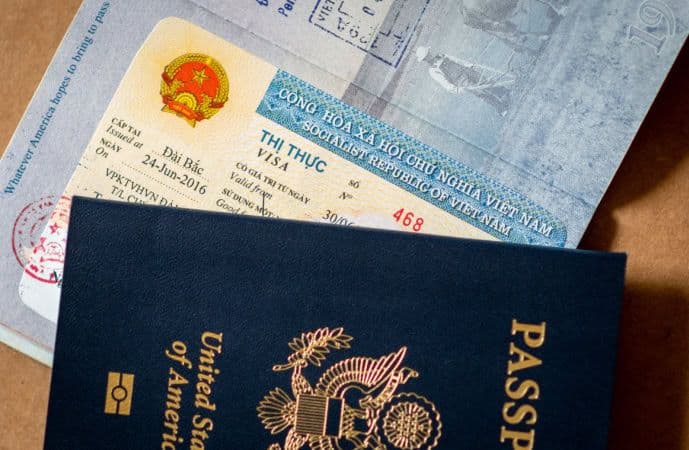
Yes, US citizens need a visa, e-visa, or approved entry document to enter Vietnam for tourism. Travelers should not assume they can enter Vietnam visa-free.
The correct visa type depends on trip length, travel purpose, entry points, number of entries, and itinerary design. For most short-term tourism trips, travelers commonly use Vietnam’s e-visa system.
Visa rules can change, so travelers should verify official requirements before booking flights and again before departure. The U.S. Embassy in Vietnam states that travelers should be prepared to present a passport and proof of legal residence such as a visa or residence card.
What Should US Citizens Know About the Vietnam E-Visa?
Vietnam’s official e-visa system allows eligible foreign travelers to apply online. The official Vietnam e-visa site explains the process as filling out the application form, completing payment, and receiving the e-visa result online.
Vietnam e-visas can be issued for single or multiple entries, with validity up to 90 days. The official e-visa FAQ notes that the visa validity period cannot exceed 90 days.
Travelers should apply through the official Vietnam e-visa system and avoid unofficial websites that may charge unnecessary extra fees or create confusion. After approval, the e-visa should be downloaded, printed, and saved digitally before departure.
The U.S. Department of State also notes that travelers must print the e-visa and bring it with a valid passport when entering Vietnam. It also notes that e-visa applications are usually processed within 3 to 5 working days after the Vietnam Immigration Department receives the completed application and payment, though timing can change depending on application volume or holidays.
What Details Should Travelers Check on a Vietnam E-Visa?
After receiving the e-visa, travelers should review every detail carefully. Errors should be fixed before flying.
Important details to check include:
• Full name exactly as shown on passport. • Passport number. • Date of birth. • Nationality. • Visa validity dates. • Single-entry or multiple-entry status. • Approved entry and exit points if applicable. • Travel dates within the visa validity period.
Travelers should not assume immigration or airline staff will overlook small mistakes. A wrong passport number, incorrect birth date, or mismatched name can cause boarding or entry problems.
When Should US Citizens Apply for a Vietnam Visa?
US citizens should apply early enough to allow for processing time, corrections, or travel-date changes. Waiting until the last few days before departure is risky.
Travelers visiting during holidays or peak seasons should allow more time because processing delays can happen. If any visa detail is wrong, travelers may need to apply for a correction or a new visa before flying.
A safe approach is to finalize the Vietnam route, confirm entry and exit dates, check passport validity, then apply for the visa with accurate information.
Flight and Arrival Requirements
Do US Citizens Need a Return or Onward Ticket?
Airlines or immigration officers may ask for proof of return or onward travel. Travelers should keep flight confirmations easy to access, both digitally and offline.
Open-jaw itineraries are acceptable when planned correctly. For example, travelers may arrive in Hanoi and depart from Ho Chi Minh City, or arrive in Da Nang and leave through another city. The key is making sure visa dates cover the full stay.
Return or onward proof is especially important for travelers with flexible travel plans, one-way tickets, or multi-country trips.
Which Arrival Airport or Entry Point Should Travelers Use?
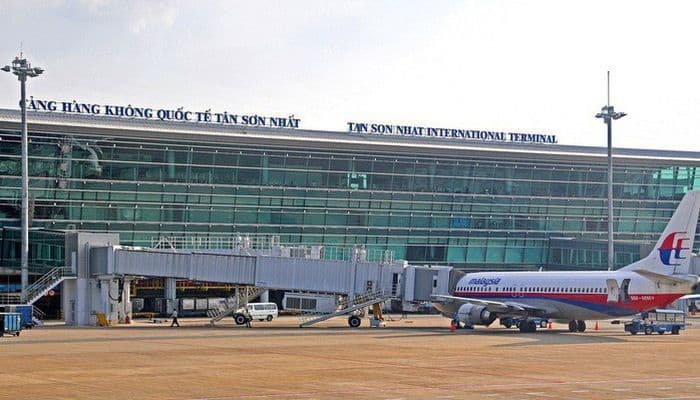
Common international arrival cities include Hanoi, Ho Chi Minh City, and Da Nang. Some travelers may enter Vietnam through land borders or other airports depending on their route.
If the visa document specifies an entry point, travelers should make sure their arrival plan matches it. This is especially important for travelers entering by land or using less common airports.
Before departure, travelers should review arrival instructions, airport transfer details, hotel address, and first-night plans. This reduces confusion after a long international flight.
What Transit Rules Should US Travelers Check Before Reaching Vietnam?
US travelers often transit through countries in Asia, the Middle East, or other major hubs before reaching Vietnam. Transit rules may depend on airline, layover length, passport, airport, ticket type, and whether checked luggage is transferred automatically.
Travelers should check whether transit visas, health forms, security procedures, or baggage re-checks are required for connecting countries. This is especially important when using separate tickets.
Separate tickets can create extra risk. If the first flight is delayed, the second airline may not be responsible for missed connections. Travelers should allow enough connection time and understand baggage rules before departure.
Health Requirements and Travel Medical Preparation
What Vaccines Should US Travelers Consider for Vietnam?
US travelers should be up to date on routine vaccines before international travel. CDC guidance for Vietnam recommends routine vaccines and travel-related protection such as hepatitis A and typhoid for many travelers. CDC also notes that hepatitis B vaccination is advised, especially for long-term travelers and expatriates.
Depending on trip length, rural travel, outdoor activities, medical history, and travel style, travelers may also need to discuss Japanese encephalitis, rabies, malaria prevention, or other health precautions with a doctor or travel clinic.
Families, senior travelers, pregnant travelers, children, and people with medical conditions should consult a healthcare professional before departure. Health advice should be personalized to the traveler and itinerary.
How Should Travelers Pack Medication and Prescriptions?
Travelers should bring prescription medication in original packaging. They should carry enough medicine for the full trip plus extra days in case of delays, flight changes, or lost luggage.
Medication should be kept in carry-on luggage, not checked baggage. This is important because checked bags can be delayed or lost.
Useful medication preparation includes:
• Bring prescription medication in original packaging. • Carry enough medicine for the full trip plus extra days. • Bring a copy of the prescription or doctor’s letter when needed. • Check whether any medication is restricted before traveling. • Keep essential medicine in carry-on luggage.
Travelers with medical conditions should also keep insurance details and emergency contacts easily accessible.
Is Travel Insurance Required for Vietnam?
Travel insurance is strongly recommended, even if it is not always checked at entry. A good policy can help with medical care, emergency evacuation, trip cancellation, travel delays, lost luggage, and planned activities.
Families, senior travelers, adventure travelers, honeymooners, and luxury travelers may need more comprehensive coverage. Travelers joining trekking, motorbike routes, snorkeling, kayaking, cave visits, or remote activities should check whether those activities are covered.
Insurance details should be saved both online and offline. Travelers should keep the emergency assistance phone number easy to access.
How Should Travelers Prepare for Food, Water, and Mosquito Safety?
Food, water, and mosquito preparation can make a Vietnam trip much smoother. Travelers should drink bottled, filtered, or properly treated water and avoid drinking tap water.
Street food can be enjoyable, but travelers should choose freshly cooked food and busy stalls with high turnover. People with sensitive stomachs should be cautious with raw foods, poorly stored ingredients, and unfamiliar sauces.
Basic preparation should include:
• Drink bottled, filtered, or properly treated water. • Choose freshly cooked food and busy food stalls. • Bring insect repellent for rural areas, tropical regions, and rainy seasons. • Pack sunscreen, basic medicine, hand sanitizer, and stomach-care items. • Prepare translated food notes for allergies or special diets.
Travelers with Muslim, Judaism, vegetarian, or allergy-related needs should prepare meal requirements early, especially if visiting rural areas or islands.
Money, Payment, and Currency Preparation
What Should US Travelers Know About Vietnamese Dong and Cash?
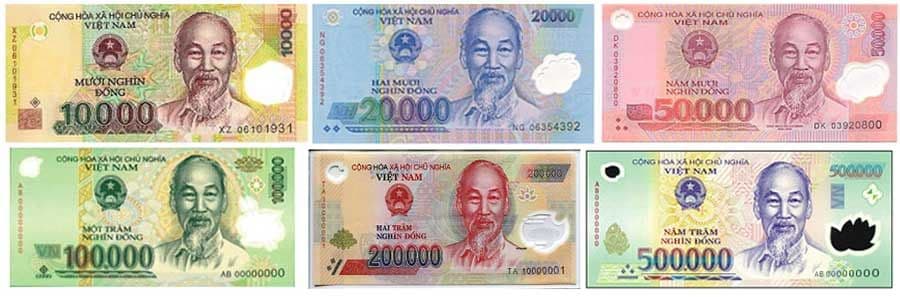
Vietnam uses Vietnamese Dong. Cash is still useful for markets, street food, local restaurants, taxis, tips, small shops, and rural areas.
Travelers should avoid carrying too much cash at once. It is better to keep small bills for daily purchases and store backup cash separately.
Vietnamese Dong denominations can feel confusing at first because the numbers are large. Travelers should take time to understand the notes and count change carefully.
A practical cash plan helps travelers avoid stress in places where card payment is not common.
Can US Travelers Use Credit Cards and ATMs in Vietnam?
Credit cards are accepted in many hotels, higher-end restaurants, larger stores, and travel services. However, cash is still needed for smaller vendors, local restaurants, markets, and some transport.
Travelers should use ATMs in safer places such as banks, malls, or hotel areas. They should also check foreign transaction fees and ATM withdrawal fees before departure.
Useful payment preparation includes:
• Inform the bank about international travel if needed. • Bring more than one card when possible. • Keep backup cards separate from the main wallet. • Use ATMs in banks, malls, or safer public places. • Keep cash for small purchases and rural areas.
A mix of cards and cash is usually the most convenient approach.
How Should US Citizens Plan Their Vietnam Budget Before Departure?
Travelers should estimate expected costs before departure. A realistic budget should include hotels, meals, domestic flights, transfers, tours, entrance fees, SIM or eSIM, tips, and personal spending.
International flight costs should be separated from in-country Vietnam expenses. This gives travelers a clearer view of how much they will spend once they arrive.
A small emergency fund is also useful for delays, medical needs, flight changes, weather disruptions, or last-minute route adjustments.
A customized itinerary can help travelers understand expected spending before departure. FtripVietnam can help travelers plan routes, hotels, transfers, and experiences with clearer cost expectations.
Documents US Citizens Should Bring to Vietnam
What Printed Documents Should Travelers Bring?
Printed documents are helpful because phones can run out of battery, the internet may not work, or airport staff may request paper copies. The U.S. Department of State specifically notes that travelers must print their e-visa and bring it with a valid passport when entering Vietnam.
Printed documents should include:
• Passport copy. • Vietnam visa or e-visa approval. • Flight confirmation. • Hotel confirmations. • Travel insurance policy. • Tour itinerary. • Emergency contact list. • Prescription documents if needed.
Travelers should keep printed copies separate from original documents. This makes it easier to respond if something is lost or misplaced.
What Digital Backups Should Travelers Save?
Digital backups are just as important as printed copies. Travelers should save documents in email, cloud storage, and phone files.
Useful digital backups include:
• Visa or e-visa approval. • Passport photo page. • Hotel address and booking confirmation. • Travel insurance policy and emergency number. • Airport transfer details. • Tour itinerary and local contacts. • Prescription notes if needed.
Travelers should also keep screenshots of important documents in case internet access is not available. Sharing copies with a trusted family member or travel companion can add another layer of security.
What Emergency Information Should Travelers Keep?
Emergency information should be easy to access both online and offline.
Important emergency information includes:
• US Embassy or Consulate contact details. • Local emergency contacts. • Hotel phone number and address. • Travel insurance emergency hotline. • Guide or tour operator contact. • Family contact in the United States.
Travelers should store this information in their phone and also keep a printed copy. This is especially useful for families, senior travelers, solo travelers, and visitors with medical conditions.
Packing Requirements and Practical Essentials
What Clothing and Weather Items Should Travelers Pack?
Vietnam has different weather by region and season. Travelers should pack for heat, humidity, rain, cultural visits, and comfortable walking.
Useful clothing and weather items include:
• Lightweight and breathable clothes for hot and humid weather. • Modest clothing for temples, pagodas, and religious sites. • A light jacket for northern Vietnam, mountain areas, or cooler months. • Rain protection during wet seasons. • Comfortable walking shoes for cities, markets, heritage towns, and countryside areas.
Travelers visiting both northern and southern Vietnam should remember that weather can differ by region. A 2-week itinerary covering Hanoi, Hoi An, Ho Chi Minh City, and Phu Quoc may require more flexible packing than a single-city stay.
What Electronics and Connectivity Items Are Useful?
Connectivity is important for maps, translation, transport apps, hotel communication, and emergency support.
Useful electronics and connectivity items include:
• Phone charger. • Power bank. • Travel adapter or universal adapter. • SIM or eSIM plan. • Offline maps. • Screenshots of hotel addresses and transfer details. • Backup charging cable.
Vietnam commonly uses multiple plug types, so a universal adapter is useful. Travelers should also consider buying a SIM or eSIM for easier navigation and communication.
Downloading offline maps and important addresses before arrival helps reduce stress at the airport or during the first travel day.
What Should Families and Senior Travelers Pack?
Families and senior travelers may need extra preparation because comfort and health are more important during long travel days.
Families should bring snacks, basic medicine, child-friendly sunscreen, comfort items, and flexible entertainment for flights and transfers. Senior travelers should bring medication, medical summaries, mobility aids if needed, and comfortable footwear.
Important items should stay in carry-on bags, not checked luggage. This includes medicine, documents, valuables, glasses, chargers, and first-day essentials.
Luggage should also be easy to manage during domestic flights, private transfers, hotel changes, and boat trips.
Special Requirements for Different Traveler Types
What Should First-Time US Visitors to Vietnam Prepare?
First-time US visitors should prepare documents early and use official sources for visa information. They should start with well-connected destinations such as Hanoi, Ho Chi Minh City, Da Nang, Hoi An, Ninh Binh, or Phu Quoc.
Airport transfers should be planned before arrival, especially after a long-haul flight. The first day should be light to allow time for jet lag recovery, hotel check-in, and basic orientation.
A first-time Vietnam itinerary should avoid too many destinations at the beginning. Travelers usually feel more comfortable after adjusting to traffic, food, weather, and local routines.
What Should Families Prepare?
Families should check children’s passports and visa details carefully. Every traveler needs accurate documents, including children.
Families should also bring snacks, medicine, comfort items, and flexible activity plans. Hotels with family rooms, pools, breakfast, and convenient locations can make the trip easier.
Private transfers can reduce stress with luggage and children. They also help families avoid confusing transport arrangements after long flights or during busy travel days.
What Should Senior Travelers Prepare?
Senior travelers should confirm medical insurance, medication supply, hotel accessibility, and private transport before departure. They should avoid overly rushed itineraries and plan rest days between major travel stages.
Destinations with reliable medical access may be more suitable if travelers have health concerns. Comfortable hotels, elevators, easy transfers, and guided tours can make the trip safer and more enjoyable.
Senior travelers should keep medication, insurance documents, and emergency contacts easy to access at all times.
What Should Muslim and Judaism Travelers Prepare?
Muslim and Judaism travelers should plan food, hotel location, guides, and daily schedules carefully. Suitable meals may be easier to arrange in major cities than in rural areas or islands.
Translated dietary notes can help, especially when ingredients are not obvious in sauces, broths, marinades, or cooking oils.
Travelers should confirm meal arrangements before visiting rural areas, remote routes, or beach islands. FtripVietnam can help arrange suitable meals, cultural sensitivity, and smoother logistics for niche travel needs.
What Should US Citizens Know About Arrival in Vietnam?
What Happens During the Immigration Process?
Upon arrival, travelers should prepare their passport, visa or e-visa, and flight details before reaching the immigration counter. Printed visa approval should be available in case phone battery or internet access fails.
Travelers should make sure the visa validity matches the arrival date. They should also follow airport signs and use official immigration counters.
A calm arrival process begins before departure. When documents are correct and easy to access, immigration is usually more straightforward.
What Should Travelers Know About Baggage and Customs?
Travelers should keep medication, valuables, and documents in carry-on luggage. Checked luggage may be delayed, so essential items should stay with the traveler.
Travelers should also check airline and customs rules for restricted items. Items should be declared when required.
A simple but important rule is to avoid carrying goods for other people. Travelers should know what is in their luggage and keep important belongings secure.
How Should Travelers Plan Airport Transfer After Arrival?
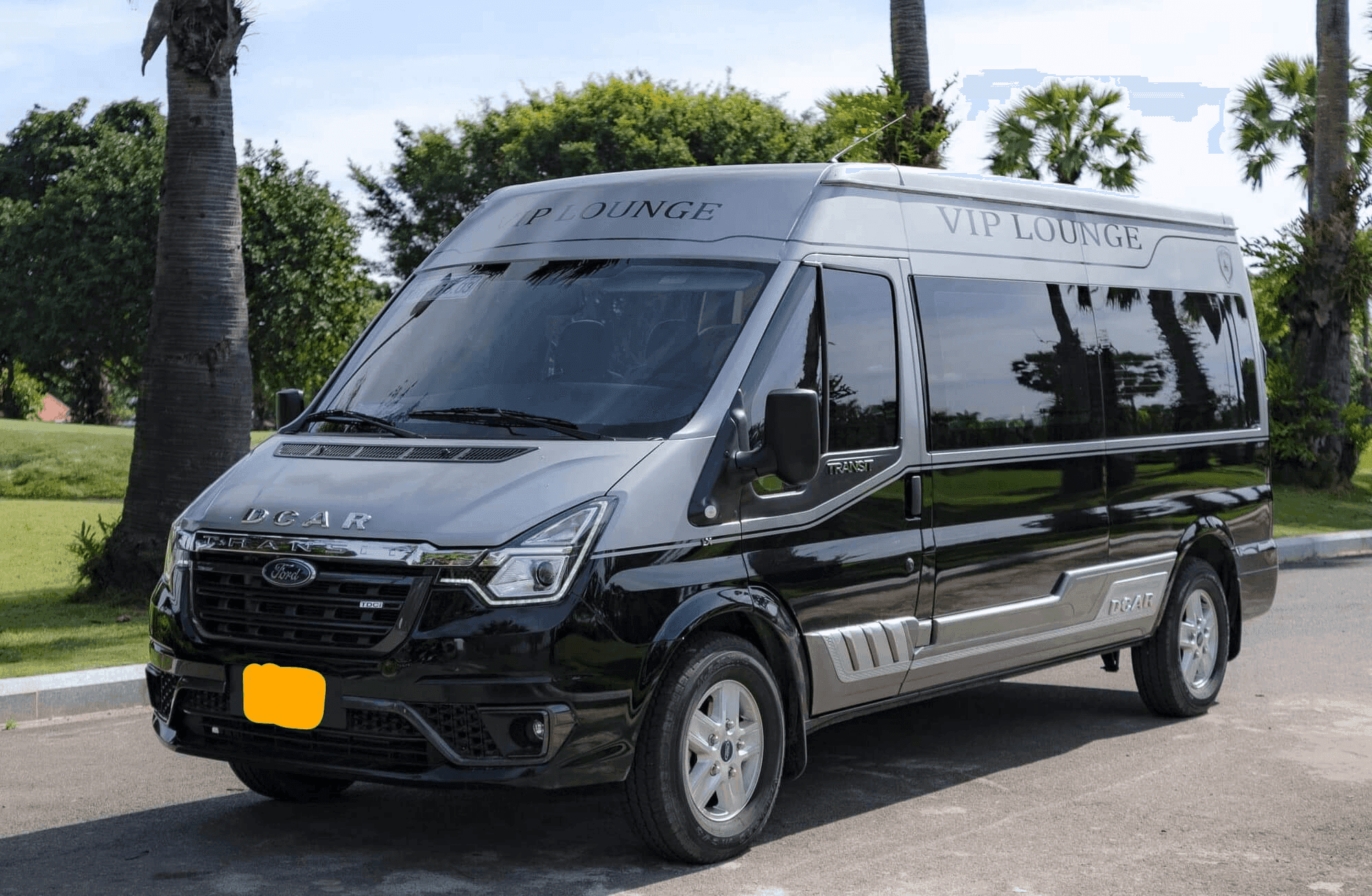
A reliable airport pickup is helpful, especially for late arrivals, first-time visitors, families, seniors, and travelers arriving after long flights.
Travelers should keep the hotel name and address written clearly. They should avoid unclear transport offers after exiting the airport.
Private transfers can reduce stress and make the first day easier. A pre-arranged pickup means travelers do not need to negotiate prices, find transport while tired, or worry about going to the wrong hotel.
Common Mistakes US Travelers Should Avoid
US citizens can avoid most pre-departure problems by checking documents early and planning carefully.
Common mistakes include:
• Waiting too long to apply for a visa. • Entering the wrong passport number or name on the visa application. • Forgetting to check passport validity. • Assuming Vietnam is visa-free for US citizens. • Booking flights before checking visa timing. • Not checking transit requirements for connecting countries. • Packing prescription medicine without documentation. • Forgetting travel insurance. • Not keeping printed copies of visa and hotel information. • Overpacking the itinerary immediately after a long-haul flight.
These mistakes can cause avoidable stress. A simple checklist and early preparation can make the journey much smoother.
Final Pre-Departure Checklist for US Citizens
Before flying to Vietnam, US citizens should review the final checklist carefully.
Final checklist:
• Passport valid for at least six months beyond the planned stay. • At least one blank visa page. • Vietnam visa or e-visa approved and printed. • Flight tickets and onward or return travel proof. • Hotel confirmations and itinerary. • Travel insurance purchased and saved. • Health preparation completed. • Prescription medication packed. • SIM/eSIM or connectivity plan prepared. • Cash and cards ready. • Airport transfer arranged. • Emergency contacts saved. • Digital and printed document backups prepared.
Travelers should complete this checklist several days before departure, not the night before the flight. This gives enough time to correct mistakes or prepare missing items.
Why Prepare Your Vietnam Trip with FtripVietnam?
FtripVietnam helps US citizens design a completely customizable Vietnam trip based on travel dates, destinations, hotel style, comfort level, travel pace, dietary needs, and special requests.
The team is 100% local, with 7+ years of experience creating Vietnam itineraries for international travelers. This local knowledge is useful for route planning, hotel selection, airport transfers, transport timing, and local experiences.
FtripVietnam also has experience serving niche markets, including Muslim and Judaism travelers. This makes it easier to arrange suitable meals, cultural sensitivity, private support, and smoother travel logistics.
Travelers can request unique experiences that are difficult to find in standard packages, such as photography tours, cooking classes, local workshops, craft villages, private food tours, family-friendly routes, and daily cultural activities.
Many tourists praise FtripVietnam for enthusiastic, knowledgeable, and friendly support. This is especially helpful for US citizens preparing documents, routes, transfers, hotels, and special travel needs before departure.
With FtripVietnam, travelers can prepare a Vietnam trip that feels smooth, well-organized, and matched to their travel style.
FAQs
Do US citizens need a visa to visit Vietnam?
Yes, US citizens need a visa, e-visa, or approved entry document to enter Vietnam. Travelers should check the visa validity, entry type, passport number, and arrival date before departure. It is safer to apply early and use official visa sources.
How long should my US passport be valid for Vietnam?
Your passport should be valid for at least six months beyond your planned stay in Vietnam. Travelers should also have at least one blank visa page available for entry and exit processing. Renew your passport early if it is close to expiration or nearly full.
What documents should US citizens bring to Vietnam?
US citizens should bring their passport, approved visa or e-visa, flight confirmation, hotel details, travel insurance, itinerary, and emergency contacts. Both printed and digital copies are recommended. Travelers with medication should also bring prescriptions or doctor’s notes when needed.
Do US travelers need vaccines for Vietnam?
Travelers should be up to date on routine vaccines before visiting Vietnam. CDC guidance for Vietnam includes routine vaccines and travel-related recommendations such as hepatitis A and typhoid for many travelers. Depending on itinerary and health profile, travelers may also need to discuss hepatitis B, Japanese encephalitis, rabies, or malaria prevention with a healthcare provider.
Conclusion
US citizens should prepare passport validity, visa approval, health planning, insurance, travel documents, money, and arrival logistics before traveling to Vietnam. The most important requirements are a valid passport, correct Vietnam visa or e-visa, printed documents, and updated health preparation.
Travelers should check official sources before departure because entry rules, visa procedures, processing times, and health guidance can change. Early preparation helps reduce airport stress, immigration issues, health risks, and arrival confusion.
A smooth Vietnam trip begins before the flight. Passport details, visa dates, hotel confirmations, insurance documents, medication, airport transfers, and emergency contacts should all be prepared in advance.
For US citizens who want reliable local support, FtripVietnam can help design a customized Vietnam itinerary with suitable hotels, airport transfers, special meals, private experiences, and meaningful local activities.
Travelers can request a tailored Vietnam plan that feels smooth, well-prepared, and matched to their travel style.


Founder & Photography Guide
Specialties: Culture, landscape, portrait, hiking, active and adventurous tour
Besides my unlimited passion for traveling, a professional tour guide for over a decade, I have been taking photographs since sitting at Hanoi of the University of Culture in the early 2000s. Photography started as a hobby but it was seriously taken due to my work relations and my significant passion for the beauty of our world, especially in Southeast Asian parts such as Vietnam, Laos, Cambodia, and Myanmar.
Within a few years of taking photographs, my works began to be recognized by many reliable international publications such as AFAR Travel, The Times, and The Daily Telegraph newspaper. In addition, I continuously add to my growing profile by winning numerous major awards: 3rd Position of The Independent Photographer 2018, 1st Position of Amateur Photographer of the year 2018, Grand Prize Winner of the AFAR Travel Photography 2019, and a Gold Award of San Francisco Bay International Photography 2020.
I photograph a wide variety of subjects, from travel to landscapes to street scenes. I enjoy documenting the East’s rich cultural heritage and its land soaked in glorious sunrise or sunset light in remote and secluded spots. And, I am very happy to share my knowledge and experience with you. You can visit Luminousvietnamtour to explore tour!