- Why Timing Matters So Much for a Vietnam and Cambodia Trip
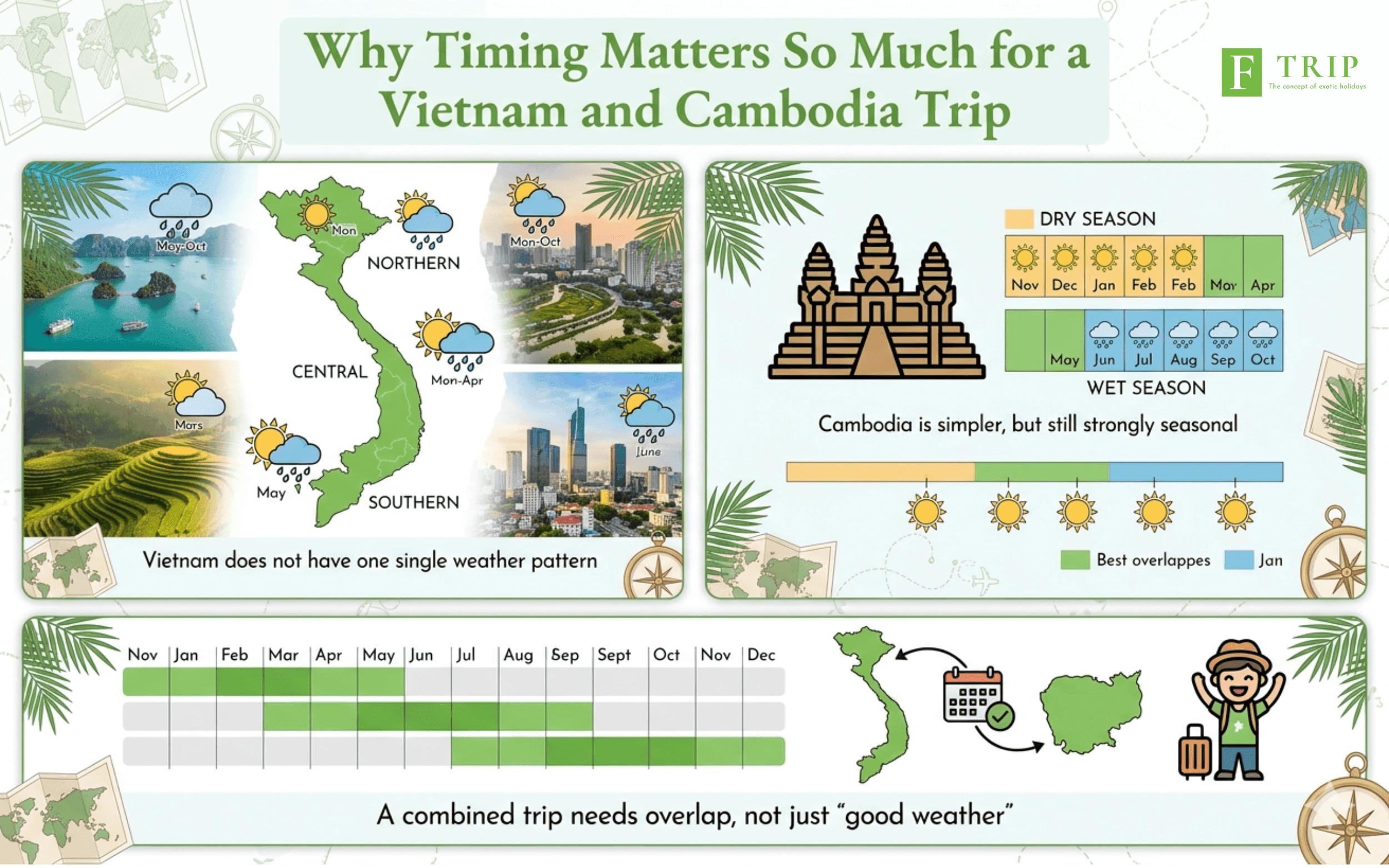
- Vietnam does not have one single weather pattern
- Cambodia is simpler, but still strongly seasonal
- A combined trip needs overlap, not just “good weather”
- Best Overall Time to Visit Vietnam and Cambodia Together
- November to February
- March to May
- June to October
- Best Time to Visit by Travel Style
- Best for first-time visitors
- Best for culture and sightseeing
- Best for photography and scenery
- Best for beach-plus-culture itineraries
- Vietnam Weather Overview for Combined Trip Planning
- Northern Vietnam
- Central Vietnam
- Southern Vietnam
- Why FtripVietnam matters here
- Cambodia Weather Overview for Combined Travel
- Dry season strengths
- Hot season considerations
- Rainy season trade-offs
- Best Months for a Vietnam and Cambodia Trip
- December and January
- February
- March
- April
- September to November
- Best Time by Itinerary Type
- Classic Vietnam and Cambodia highlights route
- Northern Vietnam plus Angkor route
- Beach and heritage route
- Tailor-made route with FtripVietnam
- Why This Topic Matches Current Travel Trends
- Travelers are planning more intentionally
- Off-peak and alternative timing matter more
- Personalization is becoming central
- FtripVietnam fits this shift naturally
- Common Mistakes Travelers Make When Choosing When to Go
- Treating Vietnam as one climate zone
- Using Cambodia weather to judge the whole trip
- Choosing only by “dry season”
- Not matching the season to the actual itinerary
- Why FtripVietnam Is a Strong Choice for a Vietnam and Cambodia Trip
- FtripVietnam can fully customize the route
- FtripVietnam is 100% local with 7+ years of experience
- FtripVietnam understands niche travel needs
- FtripVietnam offers more than standard itineraries
- FtripVietnam is praised for service quality
- FtripVietnam helps convert “best time” into the right trip
- Frequently Asked Questions
- What is the best month to visit Vietnam and Cambodia?
- Is December a good time for Vietnam and Cambodia?
- Is March too hot for Cambodia?
- What is the rainy season in Vietnam and Cambodia?
- When should I visit Sapa and Angkor Wat in one trip?
- Can FtripVietnam customize a Vietnam and Cambodia itinerary by season?
- Is winter or spring better for a combined trip?
- Conclusion
Vietnam and Cambodia are often paired because together they create one of Southeast Asia’s most satisfying two-country journeys. Vietnam brings regional contrast, beaches, bay cruising, heritage towns, mountains, and one of Asia’s most exciting food cultures. Cambodia adds a simpler travel rhythm and one of the world’s most iconic temple experiences.
Choosing the best time to visit Vietnam and Cambodia is not only about finding the driest month. It is about matching weather, comfort, crowd levels, and travel style to the exact route you want to take.
There is no single perfect month for every Vietnam and Cambodia itinerary. Vietnam’s official tourism guidance makes clear that the country has different weather patterns across the north, center, and south, while Cambodia is easier to understand through dry-season and rainy-season planning.
For travelers who want a smoother and more personalized journey, FtripVietnam can help shape the timing around the actual route, hotel style, comfort level, and travel goals instead of relying on a one-size-fits-all answer.
Why Timing Matters So Much for a Vietnam and Cambodia Trip
Vietnam does not have one single weather pattern
Vietnam is long and geographically varied, so the weather can feel very different from one region to another. Northern Vietnam has clearer seasonal changes, central Vietnam has its own rain and storm considerations, and southern Vietnam follows a more tropical dry-and-wet rhythm.
Vietnam’s official tourism site notes that the best time to visit Hanoi is usually from April to June or from September to December, while southern Vietnam is often easier to understand through tropical seasonal patterns. This means travelers should not choose a month based on “Vietnam weather” in general. They should choose based on the specific destinations in their itinerary.
Cambodia is simpler, but still strongly seasonal
Cambodia is easier to plan seasonally because it is usually discussed in terms of dry season and rainy season. The dry season generally runs from October or November to April, while the wet season usually falls from May to September or October, depending on the source and region.
However, Cambodia is not only about rainfall. Heat and humidity matter a lot, especially for travelers visiting temple sites where long outdoor walking days are common. A month with low rainfall may still feel challenging if temperatures are high.
A combined trip needs overlap, not just “good weather”
The real goal is not finding one perfect month in theory. It is finding the time window where the specific parts of Vietnam in your itinerary work well with Cambodia too.
For example, a route focused on Hanoi, Ha Long Bay, Hoi An, Ho Chi Minh City, and Siem Reap needs different timing from a route focused on Sapa, Ha Giang, Phu Quoc, and Angkor. This is where FtripVietnam can help travelers make a more intelligent timing decision based on route flow, seasonality, hotels, and comfort.
Best Overall Time to Visit Vietnam and Cambodia Together
November to February
For most first-time travelers, November to February is the safest all-around window for a Vietnam and Cambodia trip. This period generally brings more comfortable sightseeing conditions across many classic destinations, especially for travelers who want Hanoi, Ha Long Bay, central Vietnam, Ho Chi Minh City, and Siem Reap in one itinerary.
This window is especially strong for travelers who prioritize comfort. Cambodia is typically in its dry season, which is better for temple touring, while many parts of Vietnam are also suitable for cultural sightseeing, city exploration, and multi-stop travel.
Best for:
| Traveler Type | Why November to February Works |
|---|---|
| First-time visitors | Broadest comfort for classic routes |
| Culture travelers | Better conditions for cities and temples |
| Families | Less weather stress and easier planning |
| Luxury travelers | Stronger hotel and sightseeing comfort |
| Older travelers | More manageable outdoor touring |
March to May
March to May can also work very well, especially for travelers who prioritize Vietnam more heavily. Vietnam’s official tourism guidance often highlights spring periods as favorable for many parts of the country, and this window can be excellent for certain Vietnam-focused routes.
The main caution is Cambodia. March, April, and May can feel hotter, especially for temple-heavy days. This does not mean travelers should avoid these months completely, but they should plan temple visits earlier in the morning, build in rest time, and choose hotels carefully.
March to May is best for travelers who want:
| Travel Priority | Why It Can Work |
|---|---|
| Vietnam-focused itinerary | Stronger flexibility across Vietnam regions |
| Spring scenery | Good for selected northern and central routes |
| Beach-plus-culture trips | Can work if beach timing is planned well |
| Flexible travelers | Good with smart pacing and heat management |
June to October
June to October is not automatically a bad time to visit Vietnam and Cambodia, but it requires more route-specific planning. These months can bring greener scenery, softer landscapes, fewer crowds in some places, and a different travel atmosphere.
However, rain, humidity, and regional weather differences matter more during this period. Cambodia is generally in its wetter season, while Vietnam’s regions can behave differently from one another.
This is where FtripVietnam is especially useful. Shoulder-season or green-season travel works best when the itinerary is customized around the exact route, activity level, hotel choice, and flexibility of the traveler.
Best Time to Visit by Travel Style
Best for first-time visitors
For first-time visitors, November to February is usually the best time to visit Vietnam and Cambodia. This window offers the strongest balance for classic multi-stop itineraries and fewer major weather trade-offs.
A first-time route may include Hanoi, Ha Long Bay, Hoi An, Ho Chi Minh City, the Mekong Delta, and Siem Reap. Travelers choosing this period usually benefit from more comfortable outdoor sightseeing and easier overall planning.
Best for culture and sightseeing
For culture and sightseeing, November to February or early March is usually strongest. Temple touring in Cambodia, heritage walks in Hoi An, city exploration in Hanoi, and historical visits in Ho Chi Minh City are all more enjoyable when heat and humidity are manageable.
This is especially important for Angkor-focused trips because the experience usually involves early starts, outdoor walking, and several hours of temple exploration.
Best for photography and scenery
Photography-focused travelers should not only follow generic dry-season advice. Visual priorities can be different from comfort priorities.
Northern Vietnam often offers strong scenery in spring and autumn windows, while Cambodia is generally easiest to photograph during drier months because temple visits are more comfortable and logistics are simpler. Travelers seeking greener landscapes may also consider shoulder or rainy-season periods if they are flexible.
For photography-led travelers, timing should consider light, haze, rice-field conditions, temple crowds, and route pacing, not only rainfall.
Best for beach-plus-culture itineraries
Beach-plus-culture itineraries need more precise timing because Vietnam’s beach regions do not all share the same ideal months. Central Vietnam, southern Vietnam, and island destinations can have different seasonal strengths.
This is another natural place where FtripVietnam can help. A traveler pairing Cambodia with central Vietnam beaches may need a different plan from someone combining Siem Reap with southern Vietnam or an island stay.
Vietnam Weather Overview for Combined Trip Planning
Northern Vietnam
Northern Vietnam has stronger seasonal variation than the south. Hanoi, Ha Long Bay, Sapa, Ha Giang, and Ninh Binh can feel very different depending on the month.
Vietnam’s official tourism guidance notes that Hanoi is often pleasant from April to June and September to December, with September to November offering cooler temperatures and sunny skies.
Northern Vietnam is important for travelers who want:
| Destination | Timing Consideration |
|---|---|
| Hanoi | Comfortable city exploration in spring or autumn |
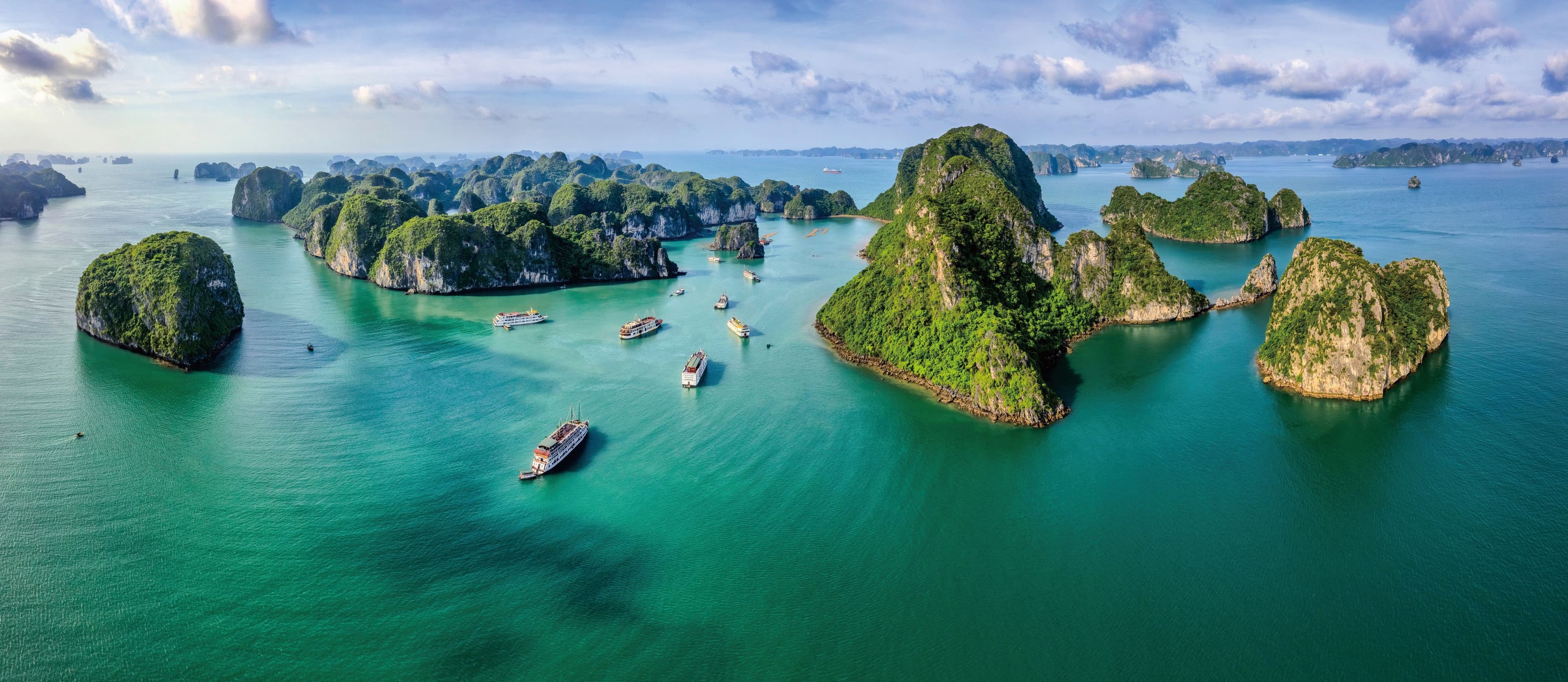
| Ha Long Bay | Visibility, cool weather, and cruise conditions matter |
| Sapa | Mountain weather and scenery vary by season |
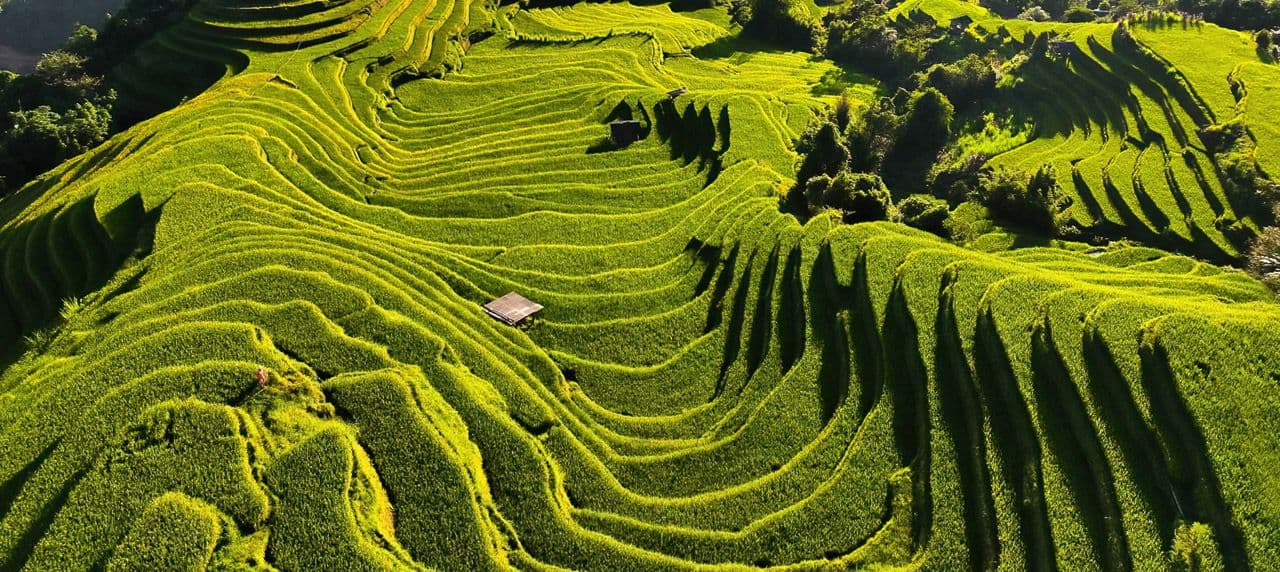
| Ha Giang | Road comfort, views, and rainfall matter |
| Ninh Binh | Scenic value depends on weather and landscape conditions |
Central Vietnam
Central Vietnam should be treated separately from both the north and the south. This is especially important for Da Nang, Hoi An, and Hue.
Travelers often assume that if Vietnam is “in season,” every region is equally suitable. That is not always true. Central Vietnam can have its own rain and storm considerations, so travelers pairing Hoi An or Da Nang with Cambodia should check the exact month carefully.
Central Vietnam is often a major part of combined Vietnam and Cambodia trips because it adds heritage, beaches, food, and a softer travel rhythm between the north and south.
Southern Vietnam
Southern Vietnam is easier to understand through tropical dry and wet periods. Ho Chi Minh City, the Mekong Delta, and southern beach destinations often fit more clearly into dry-season and rainy-season planning than northern Vietnam.
For many travelers, southern Vietnam pairs smoothly with Cambodia because both are geographically and climatically easier to connect than northern mountain regions. However, heat, humidity, and rain still need to be considered.
Why FtripVietnam matters here
FtripVietnam can help travelers avoid one of the most common mistakes: treating Vietnam as if all regions behave the same way. A combined Vietnam and Cambodia trip needs regional planning, especially when the itinerary includes northern mountains, central beaches, southern cities, and temple days in Cambodia.
Cambodia Weather Overview for Combined Travel
Dry season strengths
Cambodia’s dry season is generally the easiest time for first-time travelers. It is better for temple visits, city touring, photography, and broader sightseeing. Dry-season travel is especially useful for visitors who want a simple and comfortable Angkor-focused itinerary.
Many travel references place Cambodia’s dry season from around October or November to April, with the wet season from May to September or October.
Hot season considerations
Hot season conditions matter because Cambodia’s key cultural experiences often involve outdoor temple touring. March to May can be rewarding, but travelers should plan carefully around heat.
For Angkor and other temple-heavy routes, early starts, shaded breaks, hydration, and a slower sightseeing rhythm can make a major difference.
Rainy season trade-offs
The rainy season can bring greener scenery, softer light, and a different atmosphere. It may also mean fewer crowds in some places. However, it is less ideal for travelers who want the simplest first-time route with minimal weather risk.
Rainy-season travel works best for flexible travelers who are comfortable with schedule adjustments and do not expect every day to be dry.
Best Months for a Vietnam and Cambodia Trip
December and January
December and January are among the best all-round months for classic Vietnam and Cambodia travelers. They generally offer strong comfort, iconic destination compatibility, and good conditions for temple touring, city exploration, and multi-stop routes.
These months are especially suitable for first-time travelers, families, and travelers who want a safer weather window for a broad itinerary.
February
February is also a strong month for a winter-style Vietnam and Cambodia route. It can offer similar comfort to December and January, though travelers should always check holiday periods, local travel peaks, and hotel availability.
For travelers who want a classic route but slightly different crowd dynamics, February can be a strong choice.
March
March is often excellent for Vietnam, especially for travelers planning city, culture, and some regional exploration. However, Cambodia can feel hotter, especially for long temple days.
March is best for travelers who are comfortable with warmer conditions and can plan Cambodia sightseeing around early mornings and relaxed afternoons.
April
April can work for some Vietnam routes, especially when the itinerary is designed carefully. However, Cambodia can be hot, so it is better for travelers who can handle warmer temple visits.
For April trips, pacing becomes more important. Travelers should avoid overloading temple days and should choose hotels that support rest and comfort.
September to November
September to November can be attractive for travelers prioritizing northern Vietnam scenery or shoulder-style planning. This period may offer rewarding landscapes, fewer crowds in some places, and more flexible travel opportunities.
However, route design matters more here than blanket climate advice. FtripVietnam can help travelers decide whether September, October, or November fits their exact combination of Vietnam regions and Cambodia stops.
Best Time by Itinerary Type
Classic Vietnam and Cambodia highlights route
A classic highlights route may include Hanoi, Ha Long Bay, central Vietnam, Ho Chi Minh City, the Mekong Delta, and Siem Reap.
Best time: late autumn to winter, especially November to February.
This route works best when the traveler wants a balanced first-time journey with culture, scenery, food, heritage, and temples.
Northern Vietnam plus Angkor route
A northern Vietnam plus Angkor route is better for travelers prioritizing Hanoi, Sapa, Ha Giang, Ninh Binh, or similar scenic north-focused experiences alongside Cambodia.
Best time: spring or autumn windows, depending on the exact northern destinations, with Cambodia timing considered carefully.
This route needs more planning because northern Vietnam does not follow the same simple seasonal rhythm as Cambodia.
Beach and heritage route
A beach and heritage route is best for travelers pairing temple touring with central or southern Vietnam beach time. The ideal timing depends heavily on which beach region is selected.
For example, central Vietnam beach timing should be considered differently from southern Vietnam or island beach timing. This makes customized planning especially important.
Tailor-made route with FtripVietnam
FtripVietnam can tailor the timing based on whether the traveler wants luxury hotels, slower pacing, fewer crowds, scenic photography, a stronger beach component, or niche travel needs.
This is useful because the best time to visit Vietnam and Cambodia is not always the same for every traveler. A tailor-made route turns general climate guidance into a practical, enjoyable itinerary.
Why This Topic Matches Current Travel Trends

Travelers are planning more intentionally
Vietnam’s 2026 tourism direction emphasizes premium experiences, personalized journeys, responsible travel, digital innovation, and meaningful activities. This supports more thoughtful seasonal planning, especially for multi-country trips.
Travelers are increasingly asking not only “When is the weather good?” but also “When will this trip feel right for the way I want to travel?”
Off-peak and alternative timing matter more
Official Vietnam travel trend content highlights growing interest in secondary destinations and off-season travel, with travelers increasingly looking for milder conditions and alternatives to peak tourist hubs.
This matters for Vietnam and Cambodia because not every traveler needs to follow the most obvious peak-season route. Some may prefer greener scenery, fewer crowds, or more flexible planning.
Personalization is becoming central
Trend coverage tied to Vietnam points to deeper connections, personalized experiences, and avoidance of overcrowded places as major 2026 themes.
This makes the “best time to go” question more dependent on traveler type than before. A family, a photographer, a luxury traveler, and a culture-focused traveler may not need the same month.
FtripVietnam fits this shift naturally
FtripVietnam can help travelers turn general weather guidance into a trip that actually fits their route, priorities, and comfort preferences. Instead of choosing only by dry-season labels, travelers can plan around real trip quality.
Common Mistakes Travelers Make When Choosing When to Go
Treating Vietnam as one climate zone
One of the biggest mistakes is treating Vietnam as if all regions behave the same way. Vietnam’s official tourism guidance shows that conditions vary significantly by region, with the north, center, and south requiring different planning.
This matters even more when Cambodia is added to the route.
Using Cambodia weather to judge the whole trip
Cambodia is simpler seasonally, but Vietnam needs regional planning. A good month for Cambodia may not be perfect for every part of Vietnam, especially if the itinerary includes northern mountains, central beaches, or bay cruising.
Choosing only by “dry season”
Dry season is important, but it is not the only factor. Comfort, heat, scenic value, hotel pricing, crowd levels, photography goals, and route flow also matter.
For example, a month may be dry but very hot. Another month may have more rain risk but offer greener scenery and fewer crowds.
Not matching the season to the actual itinerary
Travelers often ask for the best month before deciding the actual route. A better approach is to match the season to the itinerary.
This is where FtripVietnam can add the most value, especially for multi-stop routes with beaches, cities, mountain regions, cruises, and temple days.
Why FtripVietnam Is a Strong Choice for a Vietnam and Cambodia Trip
FtripVietnam can fully customize the route
FtripVietnam can tailor hotels, destinations, luxury level, sightseeing pace, and route flow based on the client’s requests, so the trip matches the season instead of fighting it.
This helps travelers avoid routes that look good on paper but feel uncomfortable in reality.
FtripVietnam is 100% local with 7+ years of experience
FtripVietnam is 100% local with 7+ years of experience. This local knowledge matters because weather-based planning in Vietnam is much more nuanced than in single-climate destinations.
A local planning team can help travelers understand which regions pair well with Cambodia during specific months.
FtripVietnam understands niche travel needs
FtripVietnam has experience with niche markets like Muslims and Judaism. This is especially useful when timing, dining, comfort, privacy, and route flow need to be aligned more carefully across a multi-country journey.
FtripVietnam offers more than standard itineraries
FtripVietnam can build trips around photography routes, workshops, cooking classes, local experiences, and less-generic destination combinations, not just basic sightseeing.
This is useful for travelers who want Vietnam and Cambodia to feel personal rather than formulaic.
FtripVietnam is praised for service quality
FtripVietnam can be positioned through its enthusiastic, knowledgeable, and friendly service. This matters even more when travelers are planning a multi-country journey, where communication, flexibility, and support can strongly affect the experience.
FtripVietnam helps convert “best time” into the right trip
Instead of stopping at climate advice, FtripVietnam helps travelers turn timing into a better overall route and experience. The result is not just a good month, but a better-matched journey.
Frequently Asked Questions
What is the best month to visit Vietnam and Cambodia?
December and January are often the best all-round months for a classic Vietnam and Cambodia trip because they usually offer broad comfort, good sightseeing conditions, and strong compatibility across popular routes. February is also a strong option for many travelers.
Is December a good time for Vietnam and Cambodia?
Yes. December is generally a very good time for Vietnam and Cambodia, especially for first-time travelers who want a classic route with cities, heritage towns, bay cruising, and temple visits. It is also part of Cambodia’s dry season, which is helpful for Angkor-focused travel.
Is March too hot for Cambodia?
March can be hot in Cambodia, especially for temple-heavy itineraries. It is not impossible, but travelers should plan early starts, slower sightseeing, hydration, and rest time. March can still work well if Vietnam is the main focus and Cambodia is planned carefully.
What is the rainy season in Vietnam and Cambodia?
Cambodia’s rainy season usually runs from around May to September or October, while Vietnam’s rainy patterns vary by region. This is why combined travel planning should not treat both countries as one climate zone.
When should I visit Sapa and Angkor Wat in one trip?
For a Sapa and Angkor-style trip, spring or autumn can be attractive for northern Vietnam, while Cambodia is most comfortable during the drier and cooler months. The best choice depends on whether the traveler prioritizes mountain scenery, temple comfort, or overall route balance.
Can FtripVietnam customize a Vietnam and Cambodia itinerary by season?
Yes. FtripVietnam can customize a Vietnam and Cambodia itinerary by season, including hotels, destinations, travel pace, beach timing, temple days, photography routes, niche travel needs, workshops, and cooking classes.
Is winter or spring better for a combined trip?
Winter, especially November to February, is usually better for the broadest comfort across a classic Vietnam and Cambodia route. Spring, especially March to May, can work very well for Vietnam-focused itineraries, but Cambodia may feel hotter and should be planned with more care.
Conclusion
The best time to visit Vietnam and Cambodia together is usually November to February for the broadest comfort, especially for first-time travelers following a classic highlights route. March to May can still work very well if Vietnam is the stronger priority and travelers are comfortable planning Cambodia around warmer conditions.
The smartest choice depends on the actual itinerary, not just a general climate label. Vietnam has multiple climate zones, while Cambodia is easier to plan seasonally but still affected by heat, humidity, and temple-touring comfort.
Travelers who want a smoother and more personalized Vietnam and Cambodia trip can use FtripVietnam to customize hotels, destinations, luxury level, niche travel needs, photography routes, workshops, cooking classes, and local experiences into one better-matched journey.


Founder & Photography Guide
Specialties: Culture, landscape, portrait, hiking, active and adventurous tour
Besides my unlimited passion for traveling, a professional tour guide for over a decade, I have been taking photographs since sitting at Hanoi of the University of Culture in the early 2000s. Photography started as a hobby but it was seriously taken due to my work relations and my significant passion for the beauty of our world, especially in Southeast Asian parts such as Vietnam, Laos, Cambodia, and Myanmar.
Within a few years of taking photographs, my works began to be recognized by many reliable international publications such as AFAR Travel, The Times, and The Daily Telegraph newspaper. In addition, I continuously add to my growing profile by winning numerous major awards: 3rd Position of The Independent Photographer 2018, 1st Position of Amateur Photographer of the year 2018, Grand Prize Winner of the AFAR Travel Photography 2019, and a Gold Award of San Francisco Bay International Photography 2020.
I photograph a wide variety of subjects, from travel to landscapes to street scenes. I enjoy documenting the East’s rich cultural heritage and its land soaked in glorious sunrise or sunset light in remote and secluded spots. And, I am very happy to share my knowledge and experience with you. You can visit Luminousvietnamtour to explore tour!