- Understanding the Rice Cycle: So You Know When to Actually Go
- The Best Views of Rice Terraces in Vietnam
- Mù Cang Chải: The Iconic Mountain Terraces
- Hoàng Su Phì, Ha Giang: Terraces Away from the Crowds
- Sapa: Rice Terraces with Easier Access to Mountain Life
- Pù Luông & Mai Châu: Softer Landscapes, Slower Travel
- The Genuine Layer: Experiences That Exist With or Without Tourism
- Join a Family for a Stage of Fieldwork
- Learn a Local Craft Connected to Rural Life
- Visit a Market When Local Families Actually Go
- Eat What the Season Provides
- The Premium Layer: How Ftrip Vietnam Removes Friction Without Removing Authenticity
- Private Transport for Mountain Roads
- Carefully Selected Homestays and Boutique Lodges
- Arriving When Something Real Is Happening
- Flexibility When the Mountains Change Their Plans
- Why Travel for the Green Season?
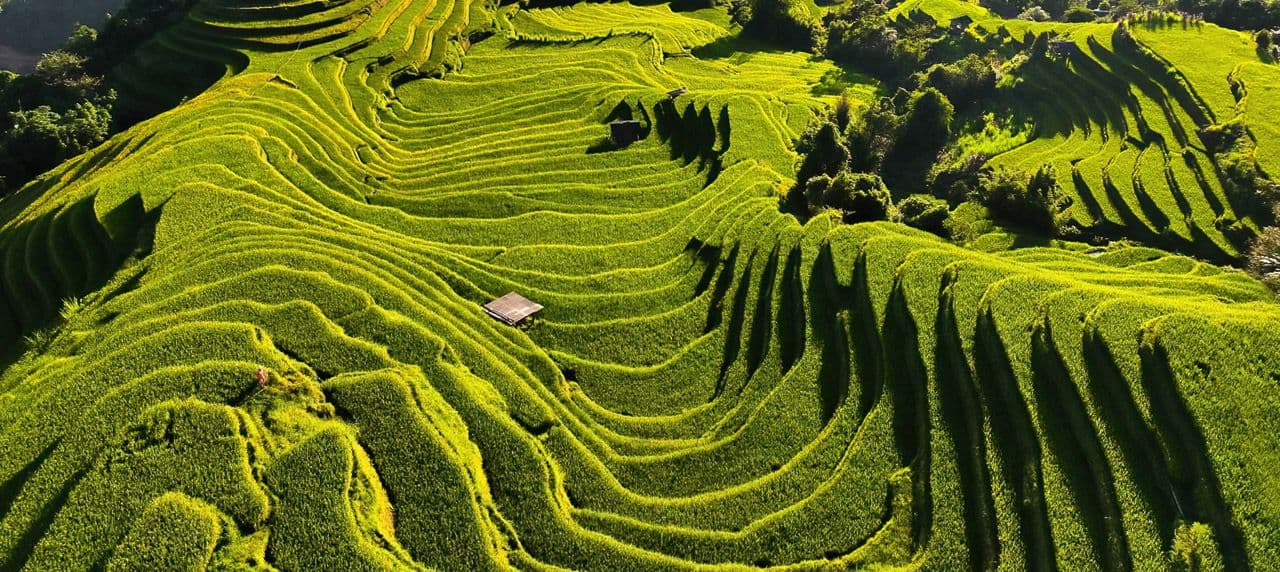
Vietnam’s rice terraces are often associated with one iconic image: mountains covered in golden rice fields at harvest time. During the growing season, the terraces change almost every week. Freshly planted fields create layers of bright green across the mountains. Rain fills the terraces with water, turning them into natural mirrors. Farmers return to the fields to weed, manage water, and care for the crop. Villages become closely connected to the rhythm of the agricultural season.
This is what makes the green season in Vietnam worth travelling for. You are not simply looking at a beautiful landscape. You are seeing a living agricultural system and the communities that have shaped it over generations.
And unlike the short golden harvest window, the green season offers a longer period in which to explore Northern Vietnam’s mountains, villages and rural life.
Understanding the Rice Cycle: So You Know When to Actually Go
If rice terraces are the reason for your trip, the first thing to understand is that they are not a static landscape. Their appearance depends entirely on where farmers are in the rice-growing cycle.
The year usually begins with the fields being prepared for a new crop. Depending on the region and local farming calendar, mountain terraces may first appear flooded with water. Rainwater and irrigation fill the stepped fields, creating reflective surfaces that mirror the sky and surrounding mountains.
This is the water-pouring season, one of the most distinctive stages of the rice cycle. In Mù Cang Chải, for example, the planting period traditionally falls around late spring, with water filling the terraces before farmers begin planting. Hoàng Su Phì’s water season generally runs from March to May, although timing varies between villages.
Once the rice is planted, the landscape gradually turns green.
Young rice shoots first appear as small patches of colour before spreading across the terraces. Through the growing season, the plants become taller and the fields develop increasingly rich shades of green. This is when activities such as weeding, water management and tending the crop become part of everyday village life.
The exact timing is not identical everywhere. Mù Cang Chải and many high-altitude areas of Northern Vietnam generally follow a single main rice crop, while lower valleys such as Pù Luông can have different agricultural rhythms. Pù Luông’s terraces, for example, are known for their vibrant green landscapes and can also have more than one rice-growing period.
Then comes the transformation everyone recognises.
As the rice matures, green gradually gives way to yellow. In Mù Cang Chải, the main harvest period is generally September to October, while Sapa is particularly scenic from around mid-August to early September, just before harvest. Hoàng Su Phì is commonly associated with late September and early October for ripe rice, although different villages can follow slightly different schedules.
So when should you go?
For flooded terraces: travel around the local water-pouring and planting period.
For vivid green terraces: travel during the growing season, when young rice covers the hillsides.
For golden terraces: plan around the local harvest window.
The important point is that there is no single “rice terrace season” in Vietnam. There is a rice cycle, and each stage offers a different landscape and a different way to experience rural life.
The Best Views of Rice Terraces in Vietnam
Vietnam’s northern mountains offer several very different interpretations of the rice terrace landscape. Some are dramatic and steep, some are softer and greener, and others combine terraces with forests, valleys, and ethnic villages.
Mù Cang Chải: The Iconic Mountain Terraces
If you picture Vietnam’s most dramatic rice terraces, there is a good chance you are imagining Mù Cang Chải.
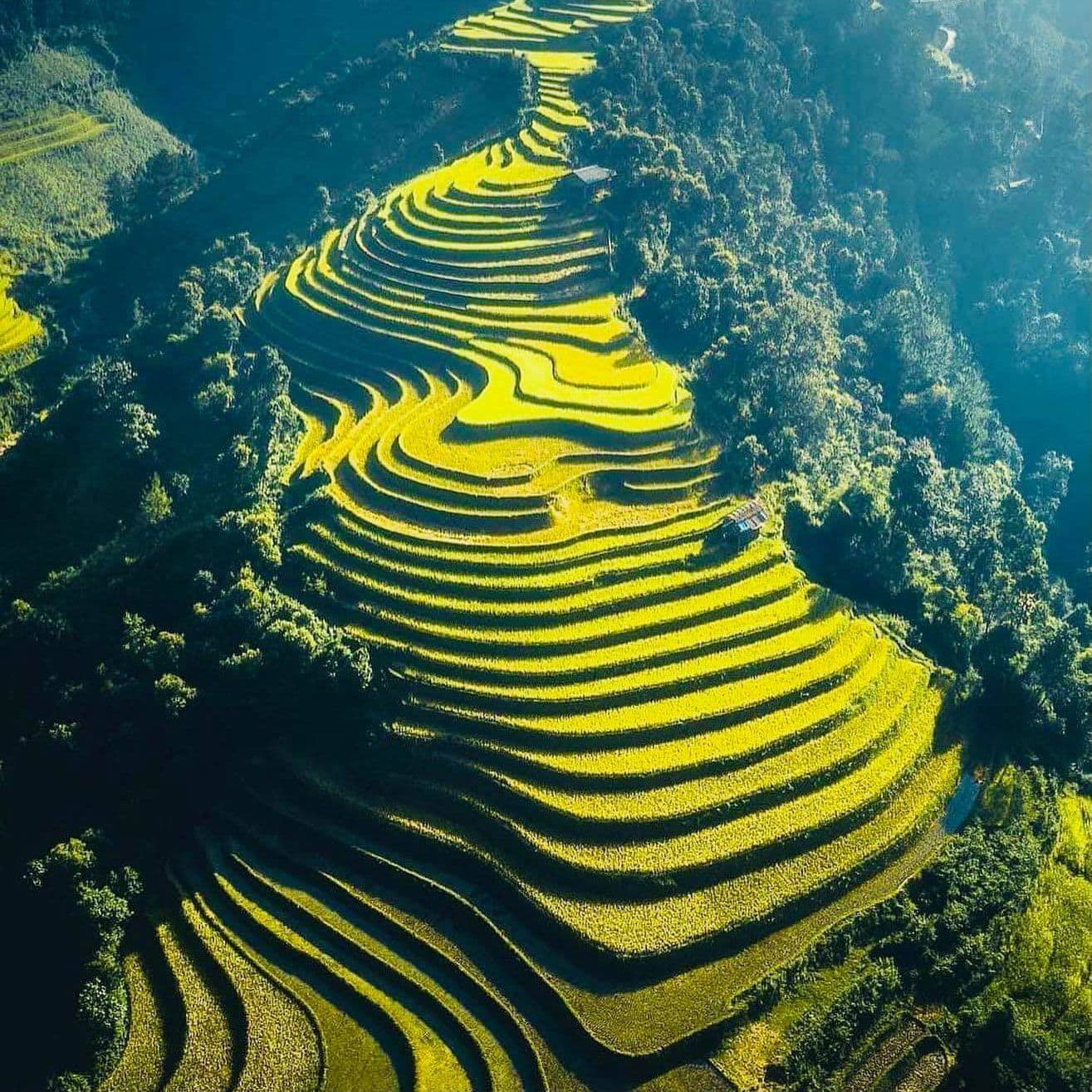
Located in the mountains of northern Vietnam, Mù Cang Chải is known for vast terraced fields shaped into the steep hillsides by generations of H’Mông farmers. The terraces cover thousands of hectares and have become one of the defining landscapes of the Northwest.
During the growing season, the hills are covered in layers of green rice. Earlier in the cycle, water-filled terraces create reflections of the sky and mountains. By September and October, the same landscape turns golden as the rice ripens.
The famous terraces around La Pán Tẩn, Chế Cu Nha and Dế Xu Phình are particularly well known, but the journey itself is part of the experience. Mountain passes, small villages and changing views make the drive through the region as memorable as the final viewpoints.
For travellers interested in photography, Mù Cang Chải offers something at almost every stage of the rice cycle: reflections during the water season, fresh green fields during growth and golden landscapes around harvest.
Hoàng Su Phì, Ha Giang: Terraces Away from the Crowds
For travellers looking beyond the most familiar Northern Vietnam routes, Hoàng Su Phì offers a more remote perspective.
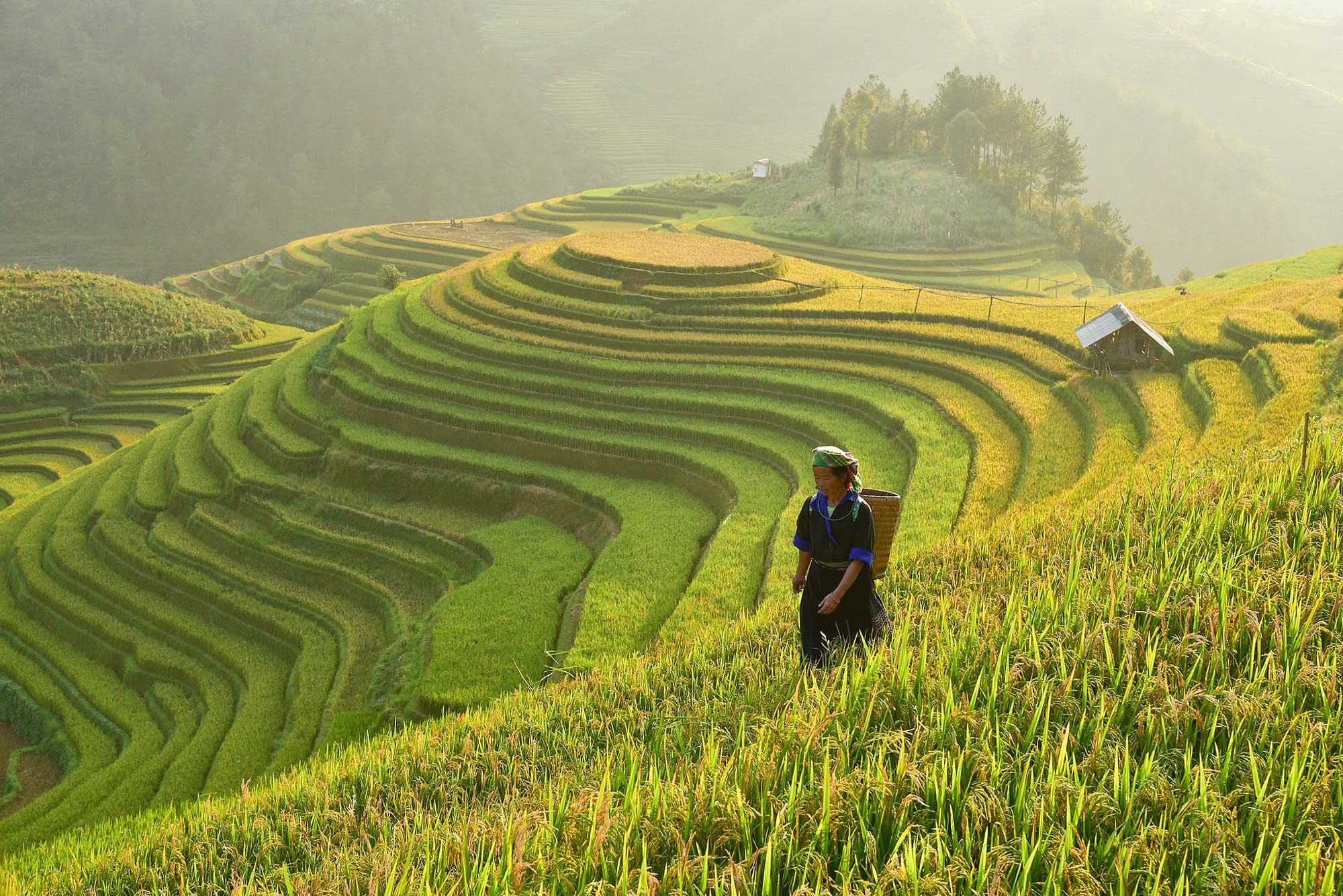
The terraces here are particularly dramatic because they follow steep mountain slopes and narrow valleys beneath the Tây Côn Lĩnh range. Unlike a single large viewing area, the landscape changes from village to village. Vietnam Tourism notes that different ethnic villages can follow different planting and harvesting schedules, meaning that rice can be found at different stages at the same time.
This makes Hoàng Su Phì particularly interesting during the green season.
Instead of simply arriving at a viewpoint to photograph a uniform landscape, travellers can explore villages where farming remains part of everyday life. The area is also home to communities including the Dao, H’Mông, Tày, Nùng and La Chí, with traditional weaving and textile practices still present in several communities.
The result is a destination where the terraces are not separate from local culture. They are part of it.
Sapa: Rice Terraces with Easier Access to Mountain Life
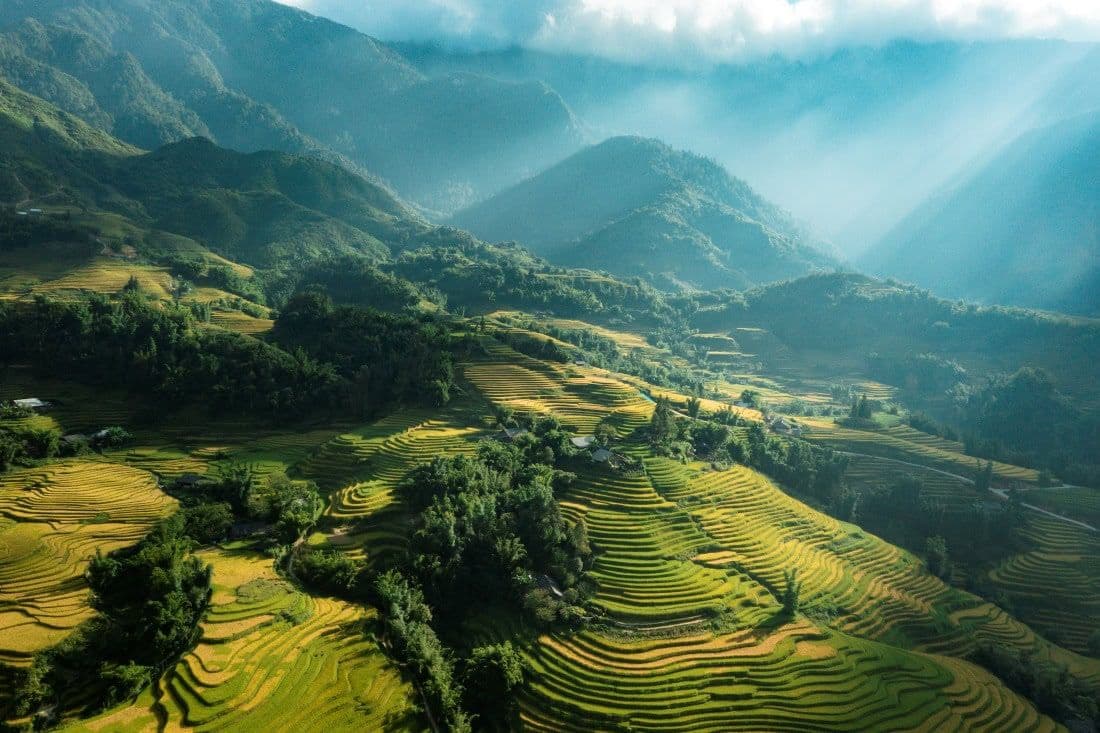
Sapa is one of the most accessible places to experience Northern Vietnam’s rice terraces.
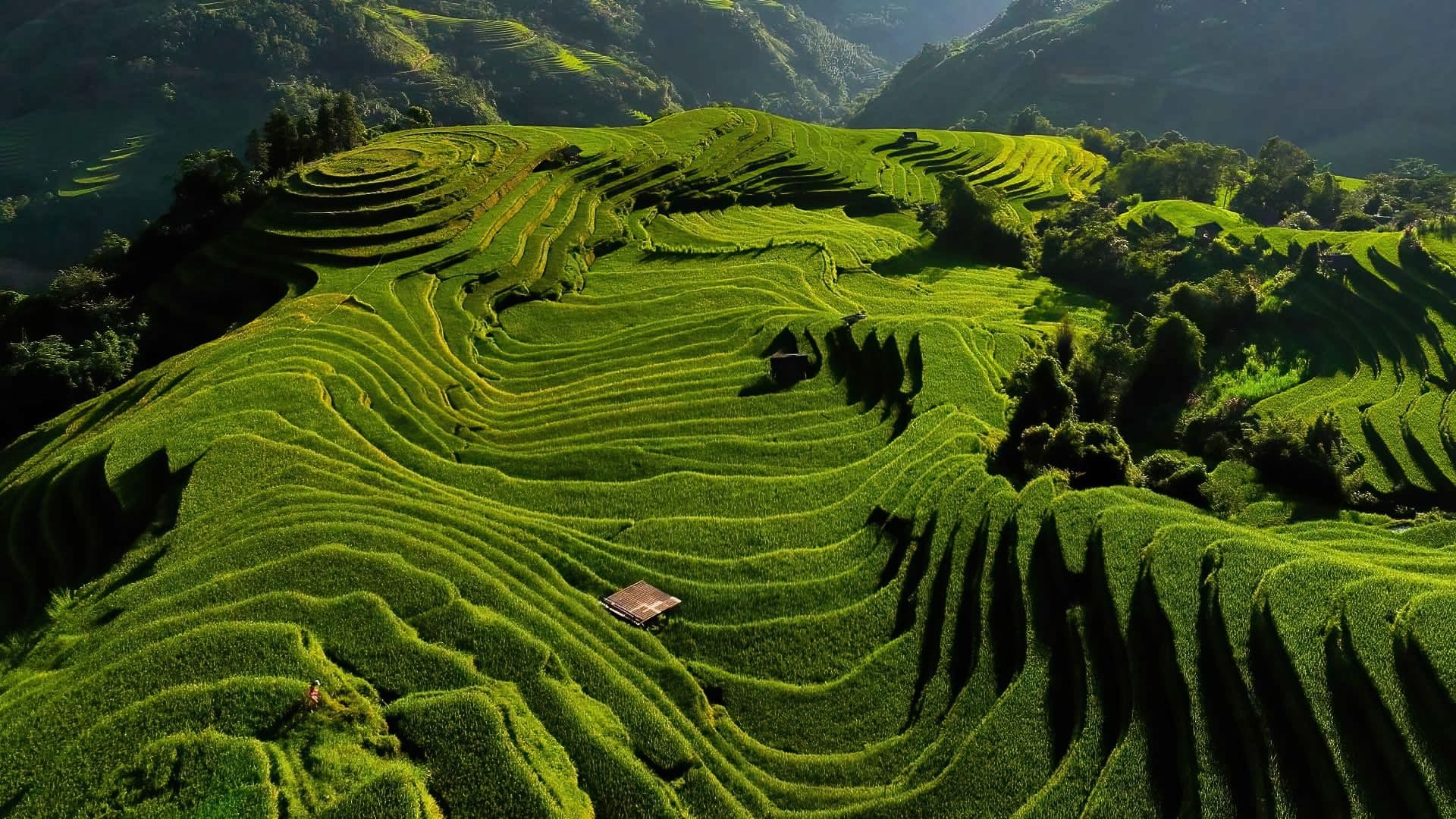
Its surrounding valleys combine terraced fields with ethnic villages, mountain trails and dramatic peaks. This makes Sapa particularly suitable for travellers who want to combine scenery with walking and cultural experiences.
The best-known visual window is generally mid-August to early September, just before the rice reaches harvest. During this period, the terraces can take on intense shades of green and yellow depending on the altitude and stage of cultivation.
Sapa also works well as part of a broader Northern Vietnam itinerary. Travellers can spend time hiking through villages and rice fields rather than treating the terraces as a single sightseeing stop.
For clients looking for a balance between mountain scenery, cultural encounters and comfortable accommodation, Sapa can also be easier to integrate into a premium itinerary than some of the more remote terrace destinations.
Pù Luông & Mai Châu: Softer Landscapes, Slower Travel
For a gentler introduction to Vietnam’s rice-growing countryside, look further south to Pù Luông and Mai Châu.
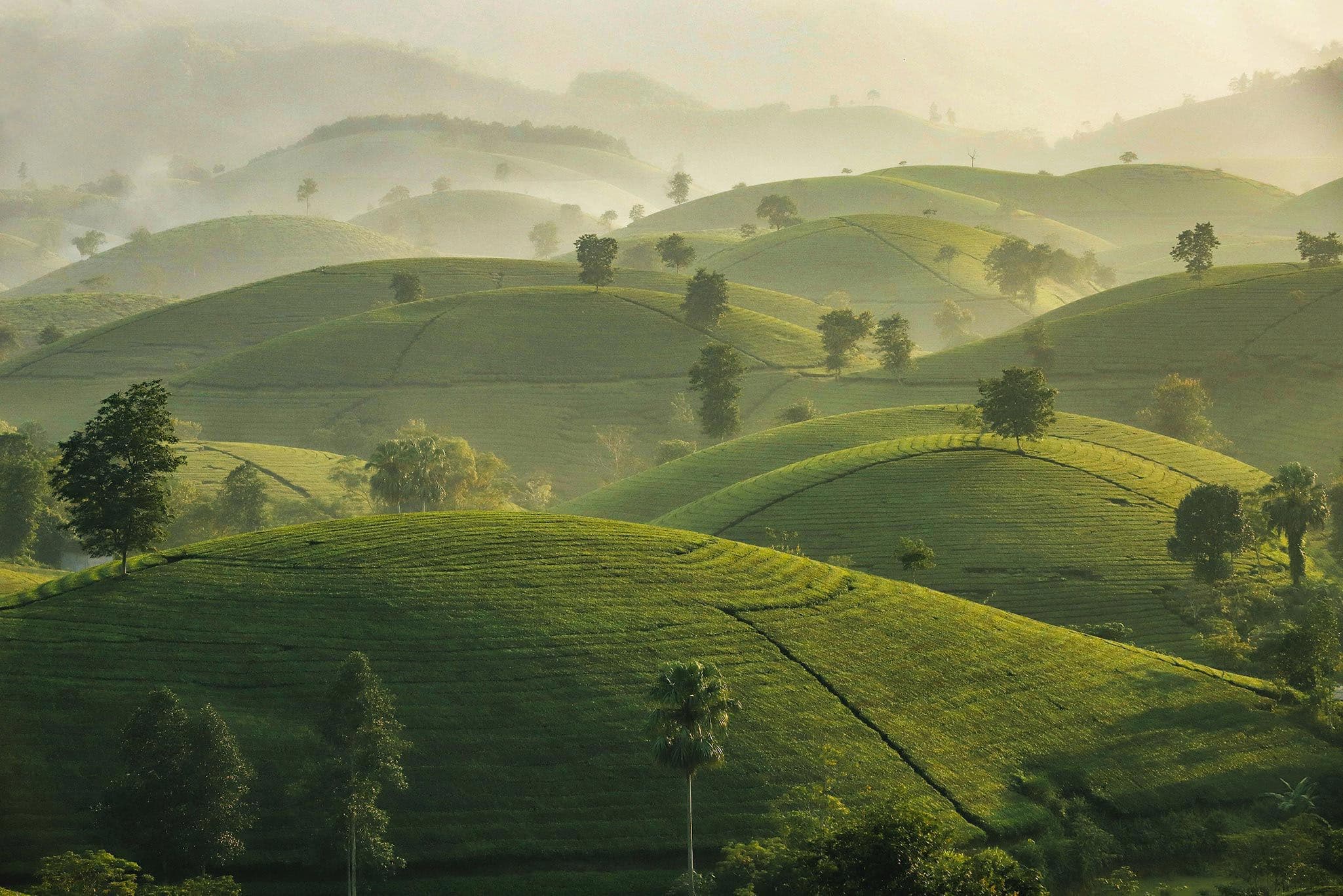
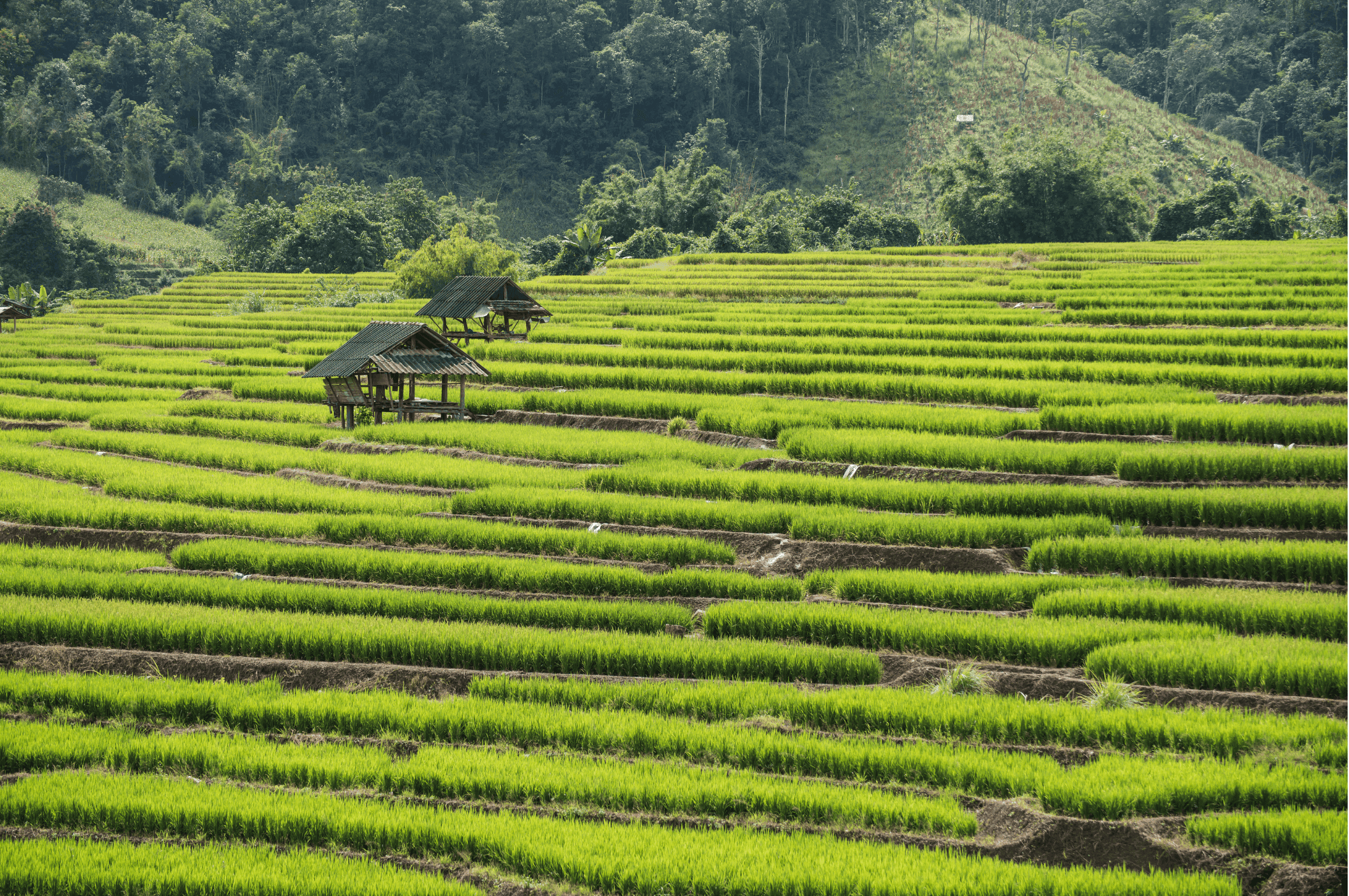
Pù Luông’s landscape is different from the dramatic high-altitude terraces of Mù Cang Chải or Hoàng Su Phì. Rice fields spread through green valleys surrounded by forest, with traditional villages and waterwheels adding to the scenery.
The terraces turn vibrant green during the growing season and become golden around harvest. Vietnam Tourism highlights the period from August to late October for green and harvest landscapes, while late May and early June can also offer lush young rice.
The advantage here is the pace.
Instead of spending most of the journey on mountain roads, travellers can combine easy hikes, village walks, homestays, cycling and local meals with time among the rice fields.
For travellers who want the rice terrace experience without committing to a demanding mountain journey, Pù Luông and Mai Châu offer a more relaxed alternative.
What to Do Aside From Viewing the Rice Terraces?
The most memorable rice terrace journey should not stop at a viewpoint.
A photograph shows what the landscape looks like. An experience explains why it looks that way.
The key is to connect the journey to the agricultural and cultural calendar rather than adding generic “village activities” simply because visitors are there.
The Genuine Layer: Experiences That Exist With or Without Tourism
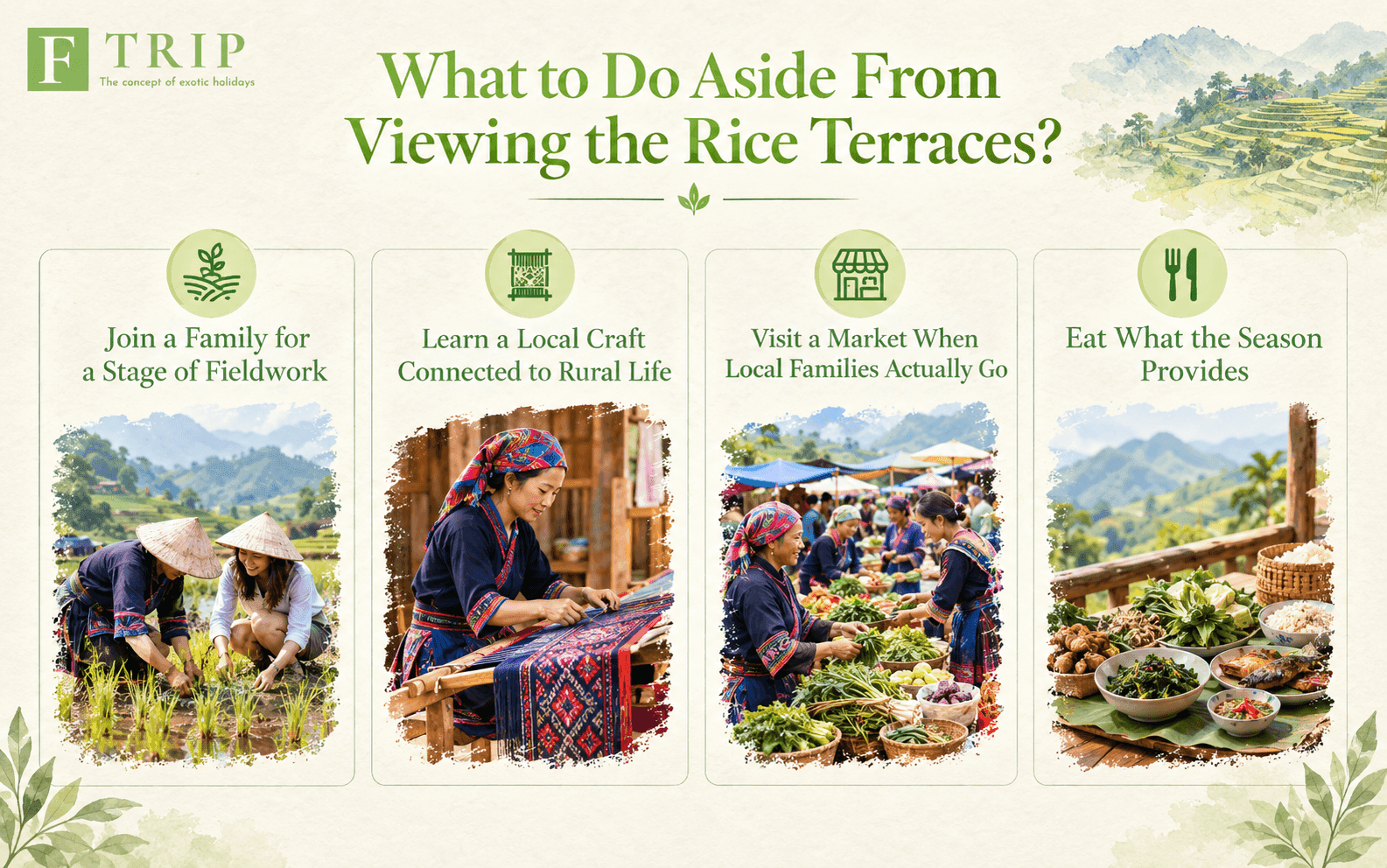
Join a Family for a Stage of Fieldwork
Rice farming is seasonal, so the most meaningful activity depends on when you arrive.
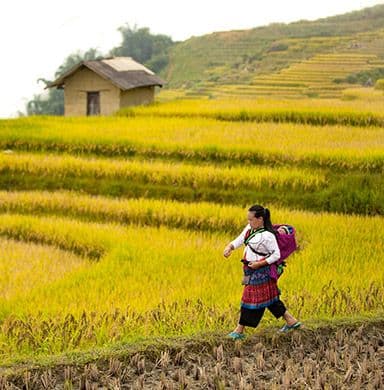
During the growing season, this might mean helping with simple tasks such as weeding or understanding how farmers manage water across the terraces. During planting periods, travellers may be able to observe or participate in transplanting. During harvest, the focus naturally shifts towards cutting and gathering mature rice.
The important distinction is that the activity should follow the real agricultural calendar, rather than creating a farming demonstration for visitors.
A short time working alongside a family can also change the way travellers see the landscape. What initially looks like an enormous green pattern on a mountainside becomes a series of carefully managed fields, each requiring daily work.
Learn a Local Craft Connected to Rural Life
The connection between agriculture and local culture extends beyond the rice field.
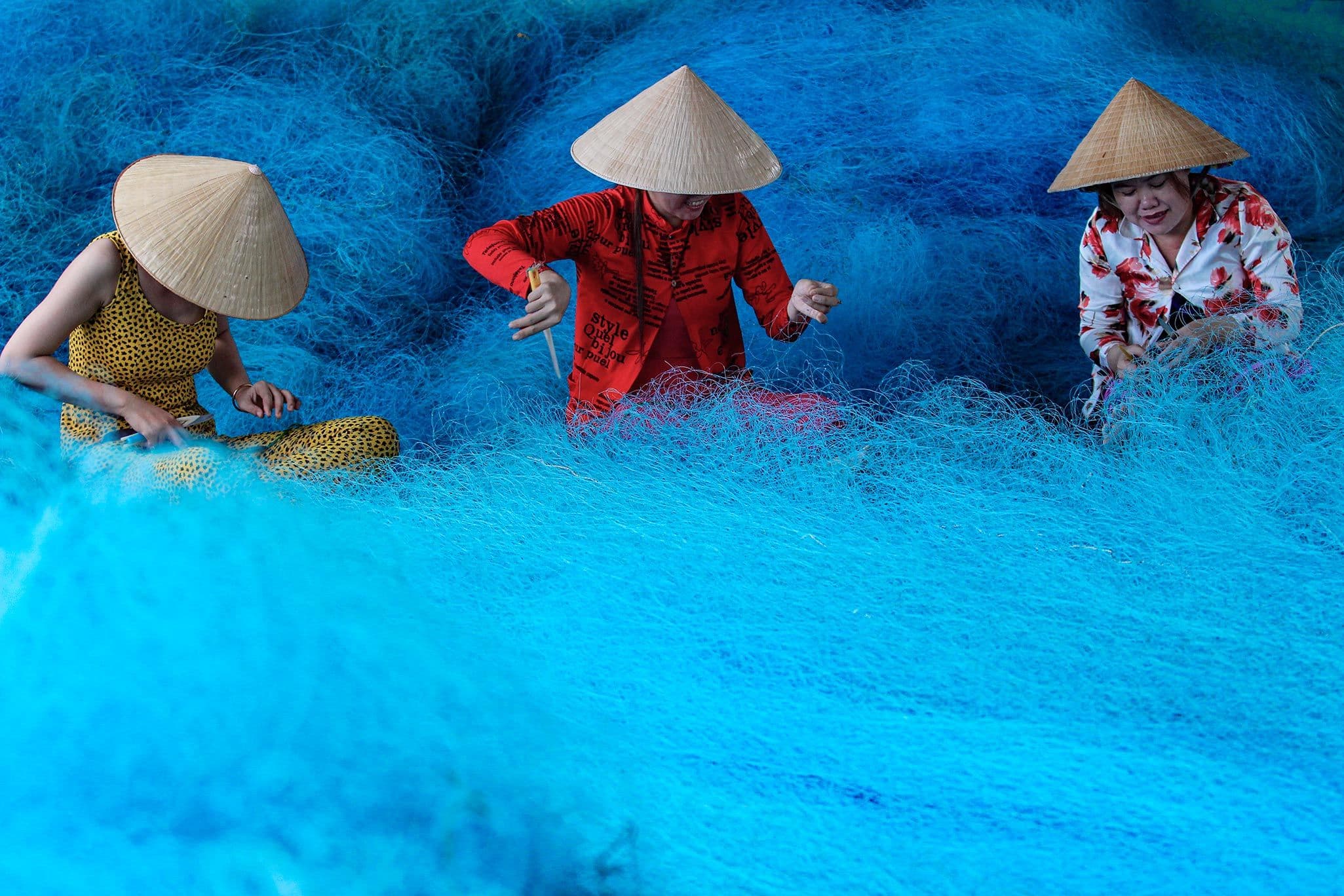
In Northern Vietnam, different ethnic communities maintain their own textile, weaving, embroidery, and dyeing traditions. Hoàng Su Phì, for example, is home to traditional weaving practices among several ethnic groups, while La Chí communities have maintained cotton-growing, weaving, and indigo-dyeing traditions.
Food can also follow the agricultural calendar.
In Hanoi, for example, cốm, or young green rice, is a seasonal specialty traditionally associated with the autumn harvest period. The process begins with young sticky rice harvested at a particular stage of maturity and then carefully processed into the delicate green rice flakes associated with Hanoi.
The broader idea is simple: look for crafts and food traditions that naturally belong to the season you are travelling in.
Visit a Market When Local Families Actually Go
A local market can reveal more about rural life than a staged cultural performance.
Hoàng Su Phì’s Sunday market, for example, has traditionally brought together H’Mông, Dao, Tày, Nùng and La Chí communities. Local families come to exchange agricultural products, food and everyday goods, as well as to meet one another.
Timing matters.
Rather than treating a market as another attraction to tick off, an itinerary can be built around the actual market day and the rhythm of the surrounding villages.
That means arriving early, observing what people are buying and selling, and allowing enough time for the market to be experienced as part of local life rather than as a performance for visitors.
Eat What the Season Provides
Food is another way to understand the rice cycle.
A good homestay meal should not feel like a fixed “local menu” prepared identically for every guest. Instead, it can reflect what the household or village is harvesting, growing, preserving, or storing at that time.
Fresh vegetables, herbs, bamboo shoots, rice, local poultry and seasonal produce can all become part of the meal depending on the destination and season.
For travellers, this creates a much more personal connection with the landscape. The rice fields outside the house are no longer simply something to photograph. They become part of the food on the table.
The Premium Layer: How Ftrip Vietnam Removes Friction Without Removing Authenticity
Authentic travel does not have to mean uncomfortable travel.
For a premium traveller, the value of a local experience often depends on everything that happens around it: how they reach the village, who arranges the visit, where they stay, and what happens if the weather changes.
This is where a local destination management company such as Ftrip Vietnam can make a difference.
Private Transport for Mountain Roads
Reaching the most impressive terraces can require long journeys on winding mountain roads.
This is particularly relevant for destinations such as Hoàng Su Phì and Mù Cang Chải, where travelling between villages and viewpoints can involve substantial driving.
Private, vetted transport allows travellers to focus on the landscape rather than the logistics, while providing greater flexibility when road conditions or weather affect the journey.
Carefully Selected Homestays and Boutique Lodges
A homestay does not have to mean sacrificing comfort.
The right property can offer a genuine connection with the local community while still meeting the standards expected by international travellers.
Rather than selecting accommodation simply because it is available online, Ftrip Vietnam can work with curated homestay and boutique-lodge partners that combine a sense of place with appropriate comfort, cleanliness and service standards.
The result is a stay that feels local without becoming unnecessarily difficult.
Arriving When Something Real Is Happening
Timing is perhaps the most important part.
A village visit on an ordinary day can be completely different from arriving when a family is planting rice, preparing a seasonal food, working on a textile, or heading to the weekly market.
This is where trip design becomes more important than simply choosing destinations.
Instead of building an itinerary around “visit village → take photos → leave”, Ftrip Vietnam can coordinate the timing around what is actually happening on the ground.
That might mean visiting a specific village during a particular stage of fieldwork, arranging a craft experience when artisans are working, or scheduling a market visit around the local market day.
The goal is not to manufacture authenticity.
It is to create enough flexibility for travellers to encounter it.
Flexibility When the Mountains Change Their Plans
The green season is beautiful precisely because it is part of the rainy agricultural cycle. But rain can also affect mountain roads, hiking conditions and visibility.
A rigid itinerary can become a problem when conditions change.
With local coordination, plans can be adjusted based on weather, road conditions and what is realistically possible on the day. A trek can be shortened. A viewpoint can be replaced. A village experience can be moved. More time can be spent at the homestay or around the valley if heavy rain makes driving or hiking impractical.
This flexibility is particularly valuable in remote mountain destinations, where local knowledge can matter more than a fixed schedule prepared months in advance.
Why Travel for the Green Season?
The golden rice terraces may be the image that first attracts travellers to Northern Vietnam.
But the green season tells a bigger story.
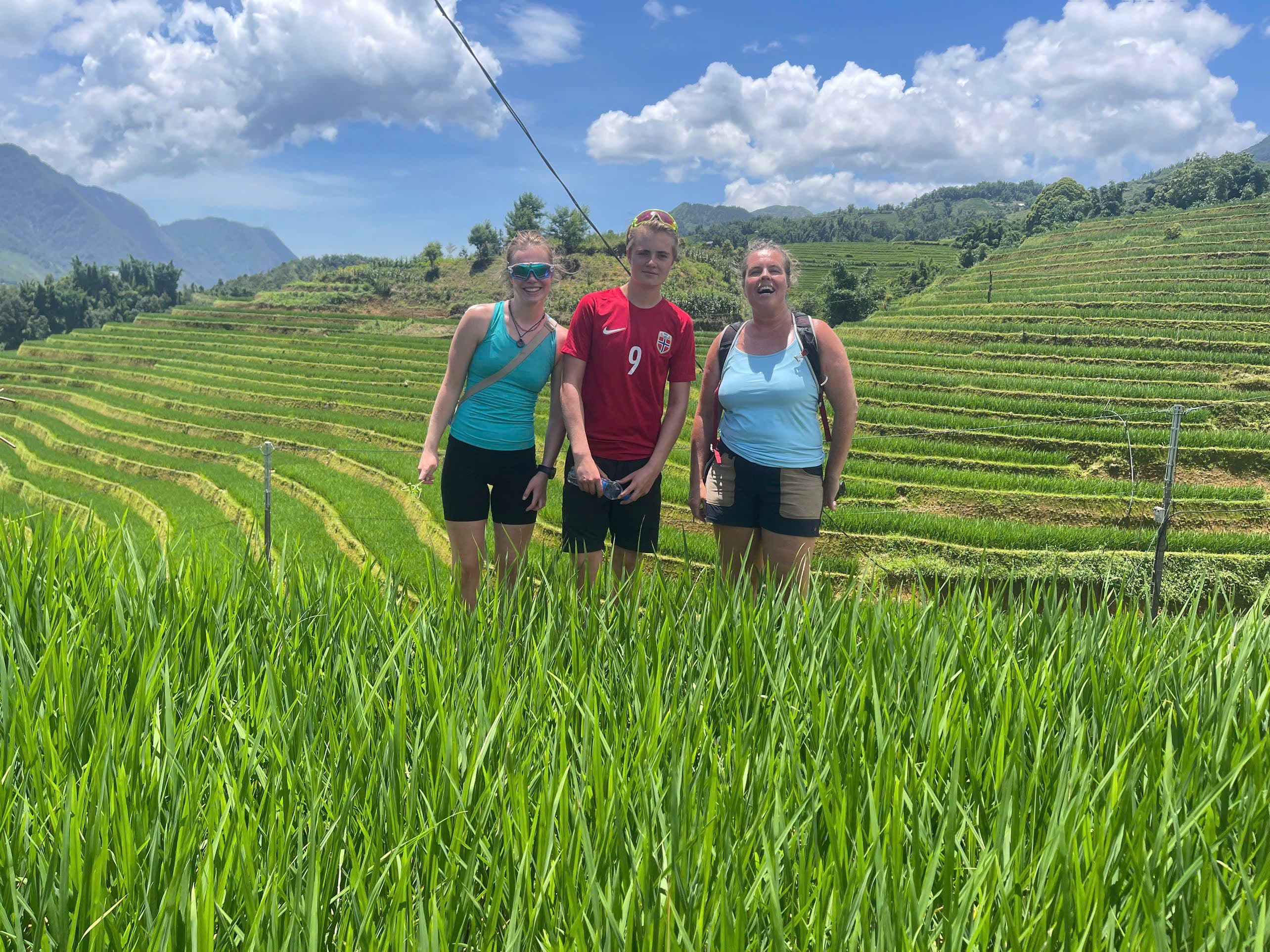
It shows the terraces while they are still part of an active agricultural landscape: water being directed through fields, young rice growing across the mountains, farmers tending their crops, markets filling with seasonal produce and families preparing meals from what their land provides.
For travellers who want more than a photograph, this is where the experience becomes richer.
And for a premium journey, authenticity does not need to mean giving up comfort. With the right local planning, travellers can reach remote landscapes with private transport, stay in carefully selected properties and meet local communities at moments that genuinely belong to their daily lives.
The rice terraces are not simply a destination. They are a landscape with a calendar. Travel at the right moment, and you do not just see Vietnam’s green season. You experience the life that creates it.
Ready to experience Vietnam beyond the usual highlights? Explore Ftrip Vietnam’s Northern Vietnam journeys and let our local team design the timing, routes, and experiences around the season you want to see.
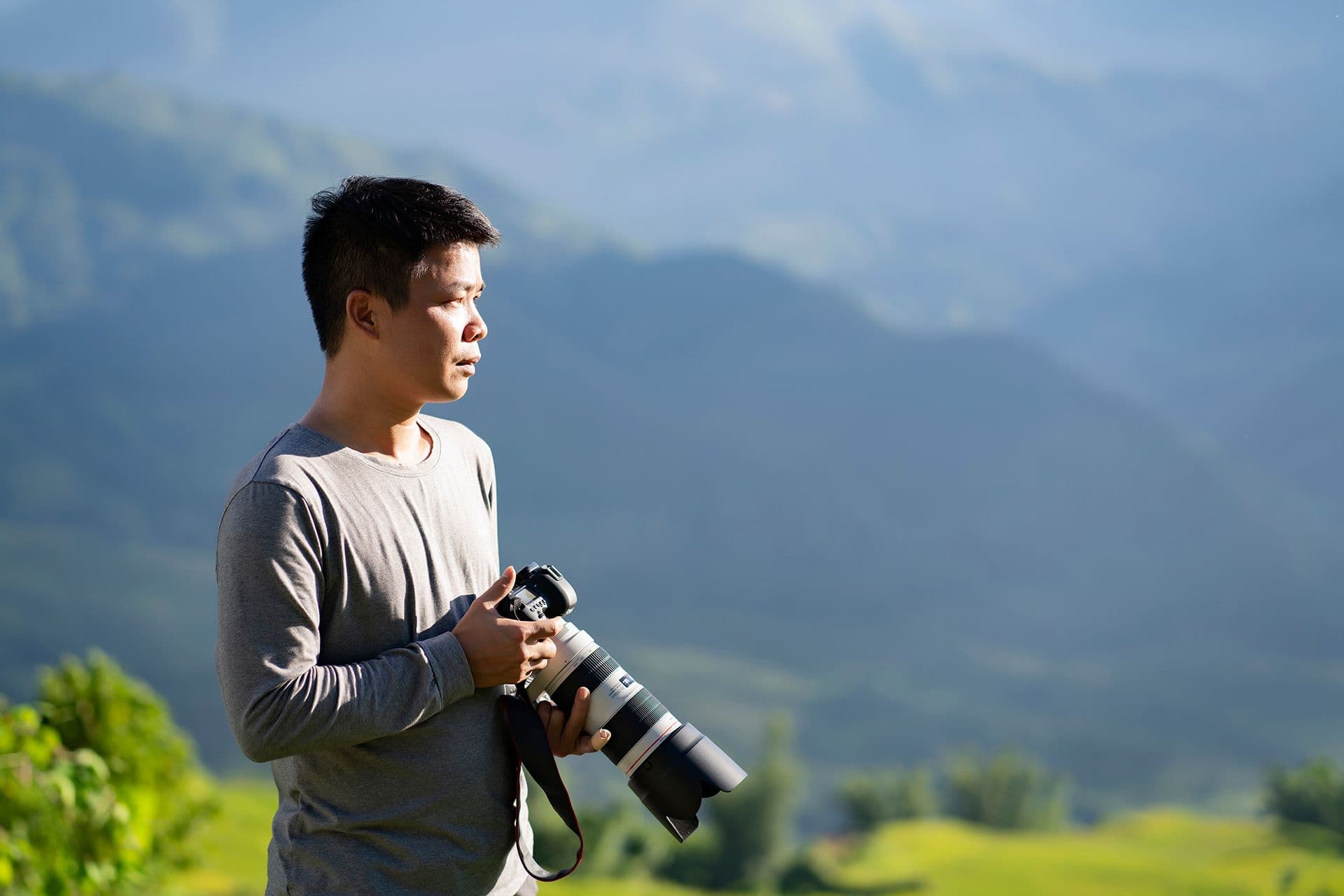
Founder & Photography Guide
Specialties: Culture, landscape, portrait, hiking, active and adventurous tour
Besides my unlimited passion for traveling, a professional tour guide for over a decade, I have been taking photographs since sitting at Hanoi of the University of Culture in the early 2000s. Photography started as a hobby but it was seriously taken due to my work relations and my significant passion for the beauty of our world, especially in Southeast Asian parts such as Vietnam, Laos, Cambodia, and Myanmar.
Within a few years of taking photographs, my works began to be recognized by many reliable international publications such as AFAR Travel, The Times, and The Daily Telegraph newspaper. In addition, I continuously add to my growing profile by winning numerous major awards: 3rd Position of The Independent Photographer 2018, 1st Position of Amateur Photographer of the year 2018, Grand Prize Winner of the AFAR Travel Photography 2019, and a Gold Award of San Francisco Bay International Photography 2020.
I photograph a wide variety of subjects, from travel to landscapes to street scenes. I enjoy documenting the East’s rich cultural heritage and its land soaked in glorious sunrise or sunset light in remote and secluded spots. And, I am very happy to share my knowledge and experience with you. You can visit Luminousvietnamtour to explore tour!